Parenting
Parenting Tips: Help your child put down the mobile phone and bond with books—try these 5 easy ways..

In today's digital age, where children spend most of their time on mobile phones, TV, and video games, their interest in books is waning. Naturally, almost every parent wishes for their child to pick up a book voluntarily, enjoy reading, and view learning as something that extends beyond mere exam preparation. However, the habit of reading is not developed overnight; it requires the right environment, consistent practice, and patience. If studying is made engaging, practical, and aligned with the child's interests, they begin to learn without feeling pressured—and you can achieve this by adopting a few simple yet effective strategies.

**Strengthen Basic Concepts**
Understanding any subject begins with building a solid foundation.
If a child grasps the initial concepts well, subsequent learning becomes much easier for them.
Therefore, encourage children to understand the subject matter rather than simply rote-learning it.
Explain complex topics using simple examples, illustrations, and stories.
Additionally, incorporate activities like games, puzzles, and quizzes.
When learning becomes fun, children naturally gravitate towards books.
**Connect Studies to Daily Life**
Help children realize that learning is not confined to textbooks but applies to everyday life.
Simple activities—such as identifying fruits and vegetables while cooking, teaching counting and comparison while shopping, telling time using a clock, or reading a calendar—make learning easier and more engaging.
When a child understands the connection between their studies and real life, their interest grows organically.
**Cultivate a Daily Reading Habit**
Consistent practice is essential for developing a reading habit.
Set aside a specific time—about 15 to 20 minutes—each day for reading.
Start with small, achievable goals, such as reading one page, discovering a new story, or learning a new word daily.
Gradually, this practice will become an integral part of the child's routine.
Regular reading will not only improve their comprehension but also boost their self-confidence.
Turn mistakes into learning opportunities.
It is completely natural for children to make mistakes.
Instead of scolding or scaring them, give them a chance to correct their errors.
Gently explain that making mistakes is part of the learning process.
Periodically assess their understanding through short tests, Q&A sessions, or fun activities.
This boosts their self-confidence and motivates them to learn new things without fear.
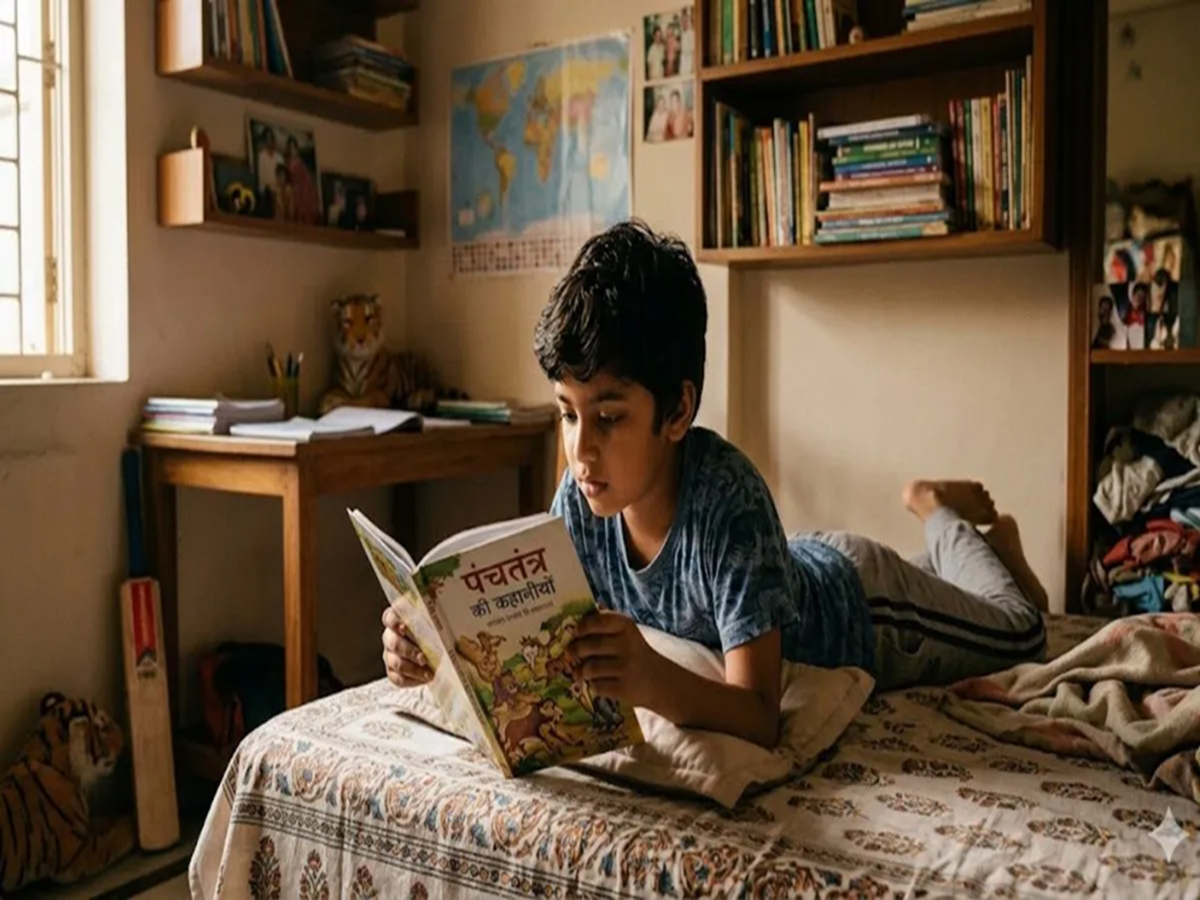
Create a positive reading environment at home.
Children learn from what they see around them.
If adults in the house read books, newspapers, or magazines, it has a positive impact on the children.
Set up a small reading corner at home stocked with colorful books, story collections, and picture books.
Sit with your children to read stories and discuss them.
This turns reading into a fun family activity and naturally draws children closer to books.
PC Social Media