LIFESTYLE
What items must be placed in the *karwa*? Find out which things are essential for the fast to be considered complete..
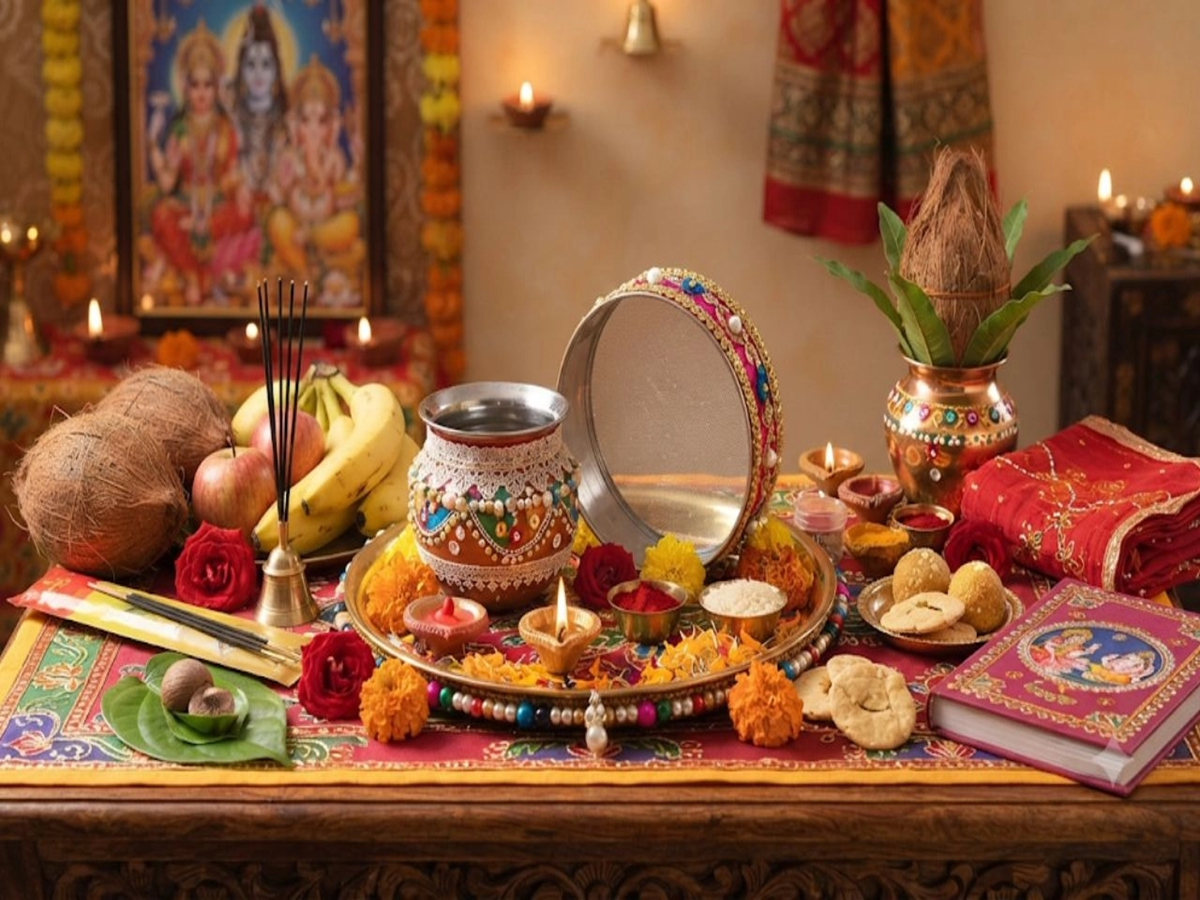
Karwa Chauth 2026 – Ritual Essentials (Samagri): The Karwa Chauth fast will be observed on Thursday, October 29. On this day, women fast from sunrise until moonrise, praying for the longevity, good health, and a blissful married life of their spouses. Consuming food or water is strictly prohibited during this fast. A *karwa* (a traditional earthen pot) is used, without which the fast cannot be considered complete; the *karwa* is regarded as a symbol of 'Karwa Mata' (the deity associated with the festival). The fast concludes only after offering *arghya* (a ritual offering) to the moon, followed by *paran* (breaking the fast). Do you know what items are placed inside the *karwa* for the ritual? If you are observing this fast for the first time, it is important to be aware of these details.
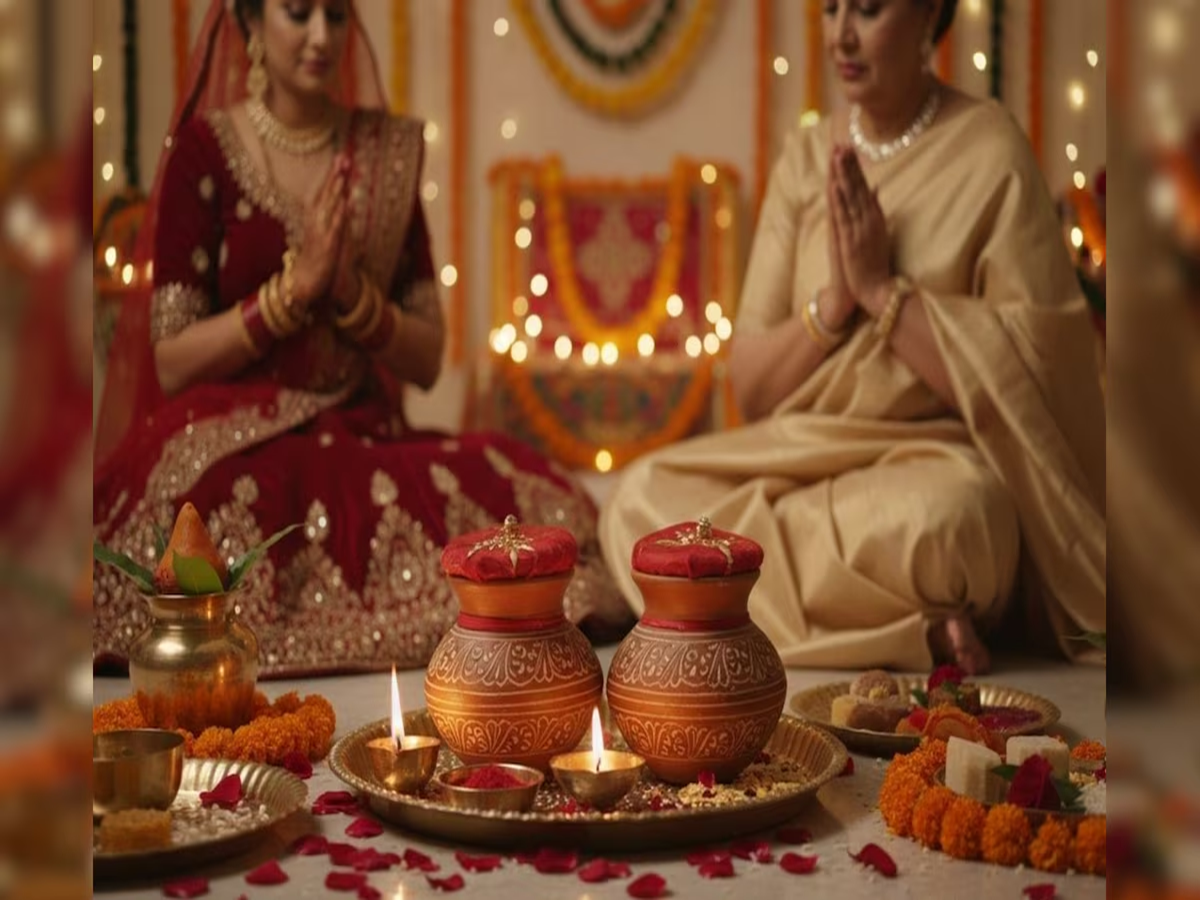
What items are placed inside the *karwa*?
The rituals for Karwa Chauth may vary slightly depending on the region. Women fill the *karwa* used for the *puja* with pure water, often adding a small amount of *Gangajal* (holy water from the Ganges).
In addition to water, one may also add raw (unboiled) cow’s milk to the *karwa*. However, if milk is not available, there is no need to worry.
Since the *karwa* is used to offer *arghya* to the moon, items such as *akshat* (unbroken rice grains) and white sandalwood paste are added to it.
Additionally, you may also place white flowers inside the *karwa*.
All the items placed in the *karwa* are associated with the moon, as the vessel is specifically used for making the *arghya* offering.
In some traditions, a second *karwa* is also kept, which is used for the ritual of *pherna* (an exchange or rotation of the vessel).
This second *karwa* is filled with items such as wheat or rice, barley or chickpeas, *kheel-batashe* (puffed rice and sugar drops), *makhana* (fox nuts), cashews, almonds, raisins, jaggery or sweets, and a coin.
In some customs, instead of raw grains, the *karwa* is filled with items like *puris* (deep-fried flatbreads), *laddus* made from rice flour, or other sweets. Once the *puja* is concluded, these items are distributed among others as *prasad* (blessed food). Make your preparations in accordance with the rituals or traditions associated with 'Karwa' that are followed in your household.
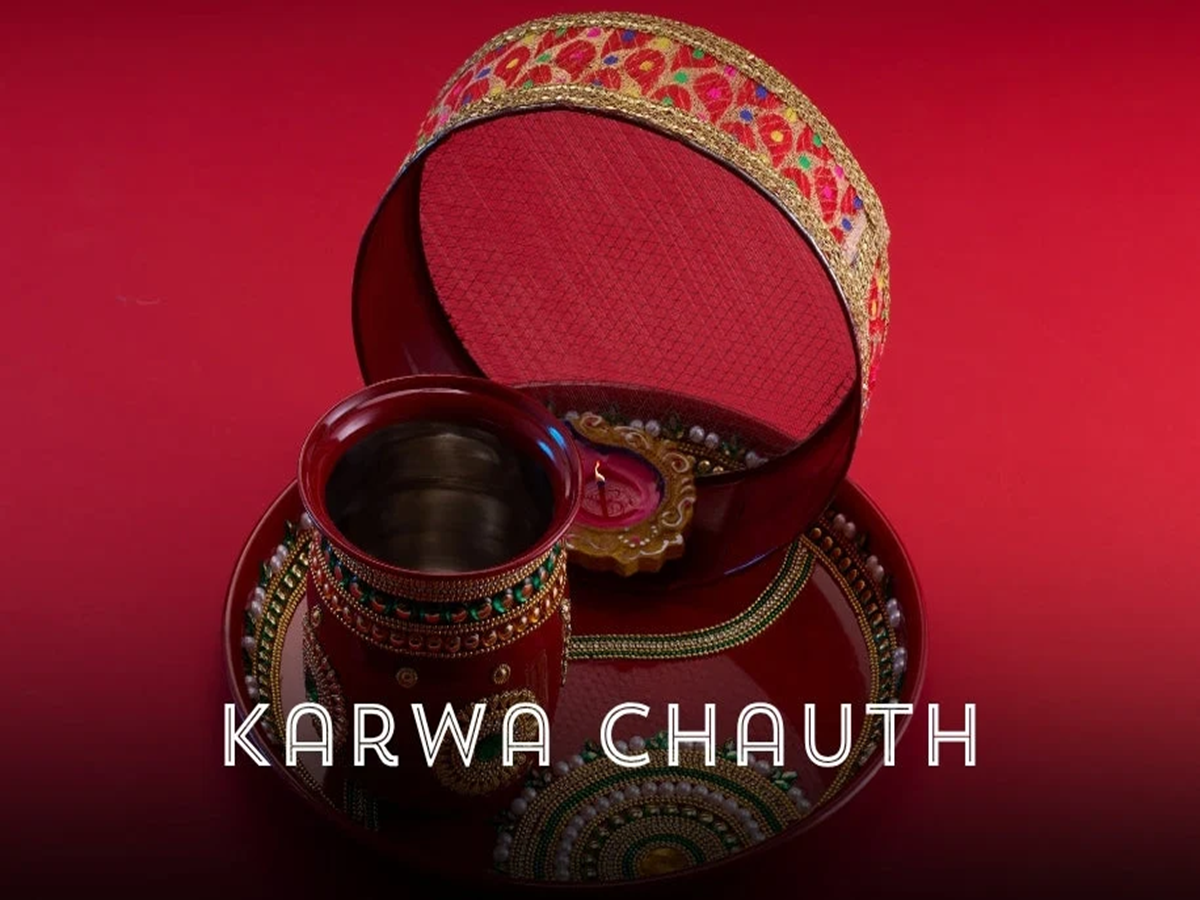
Materials for decorating the 'Karwa' (earthen pot)
A lid for the 'Karwa'
A lamp (diya) with ghee
'Kusha' grass or a reed stalk
'Kalava' (sacred red thread)
'Roli' (vermilion powder) — to be used for drawing a 'Swastika' on the 'Karwa'
PC Social Media