Parenting
Why are children more interested in boxes, spoons, and remote controls than in toys? There is a reason behind this..
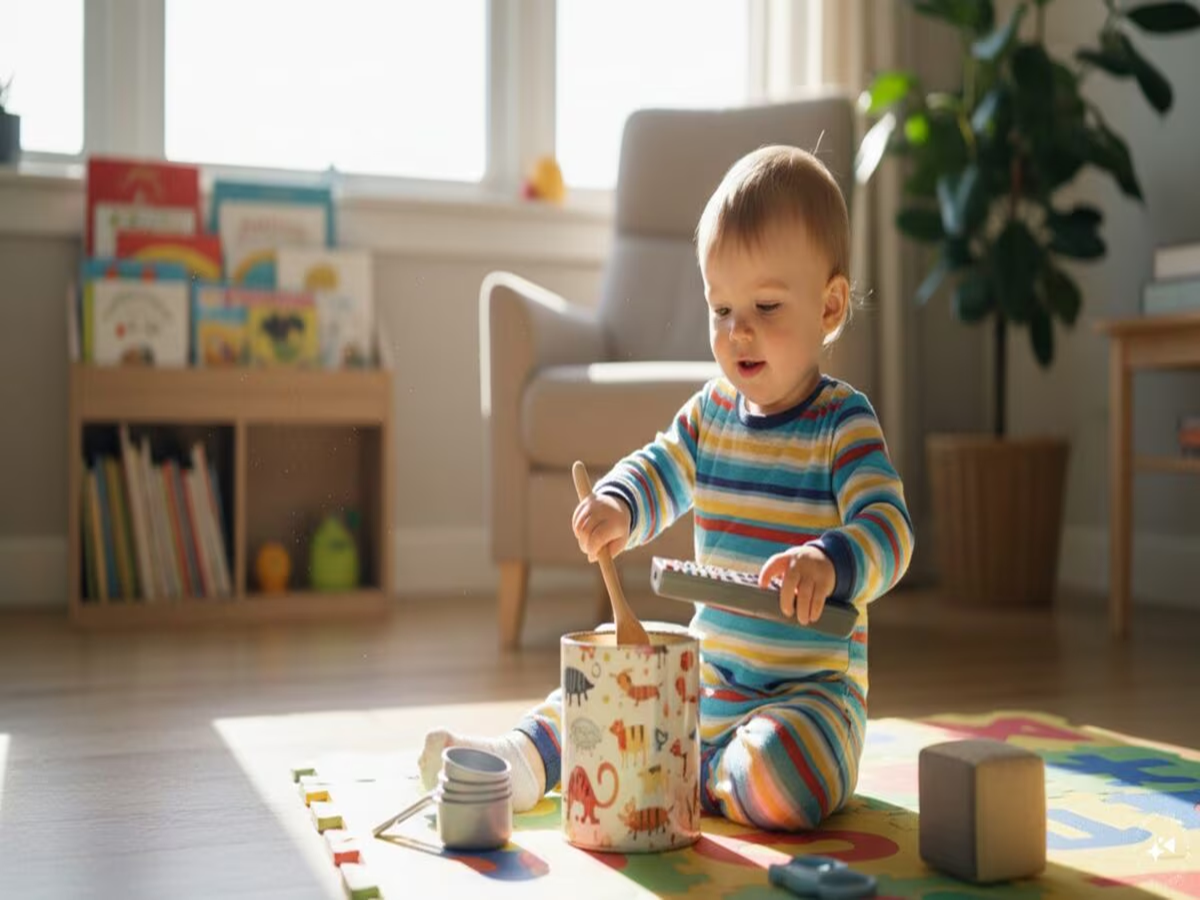
Children's Interests: Have you ever noticed that even after bringing home an expensive toy for your child, their attention eventually settles on the TV remote, a kitchen spoon, or an empty box? This is a common sight for parents. Children often abandon their toys to play with everyday household items, sometimes remaining engrossed in them for hours. While this might seem odd at first glance, it actually reflects a child's natural way of learning and understanding the world.
For children, every new object represents a mini-discovery. They do not view an item solely based on its intended purpose; instead, they try to understand it by touching, turning, tapping, and using it in various ways. This is why ordinary household items often seem more interesting to them than flashy, expensive toys.
Why do children show more interest in household items?
A child's curiosity is considered the primary reason for this. When looking at a toy, they often already know what it is and what it does. In contrast, an empty box, a spoon, or a plastic container presents a world of open possibilities. For instance, a child might turn an empty box into a car, fill it with other objects, or try repeatedly opening and closing its lid. In other words, a single object offers multiple uses. Through this process, the child learns about the world around them.
A remote might attract a child because it has buttons; the child notices the changes that occur when a button is pressed. Similarly, a spoon is easy to hold and can be used to create sounds. A child might drop it into a vessel, tap it against a table, or incorporate it into a game involving food. This play is not merely for entertainment; it is a way for the child to grasp the relationship between cause and effect—what happens when I press the button? What sound does the box make when dropped? What change occurs when I strike a vessel with the spoon?
Why do everyday items seem more appealing than expensive toys?
Familiar objects hold a unique appeal for children. Children often see their parents using spoons in the kitchen, storing items in containers, or operating the TV with a remote. Consequently, playing with these objects allows them to mimic the adult world. This is why a child might pretend to serve tea using an empty cup or fill a container with items and carry it around. Such "pretend play" can play a role in developing their imagination and social understanding.
What should parents keep in mind?
This does not mean that a child should be given every household item to play with; safety is paramount. Small lids, batteries, sharp objects, glassware, electrical items, and anything the child might put in their mouth should be kept out of reach. Instead, under supervision, they can be given large, safe plastic containers, wooden spoons, or other household items that are safe for their age group. Rather than constantly providing new toys, it can also be beneficial to give the child opportunities to explore and play independently with safe, everyday objects.
PC Social Media