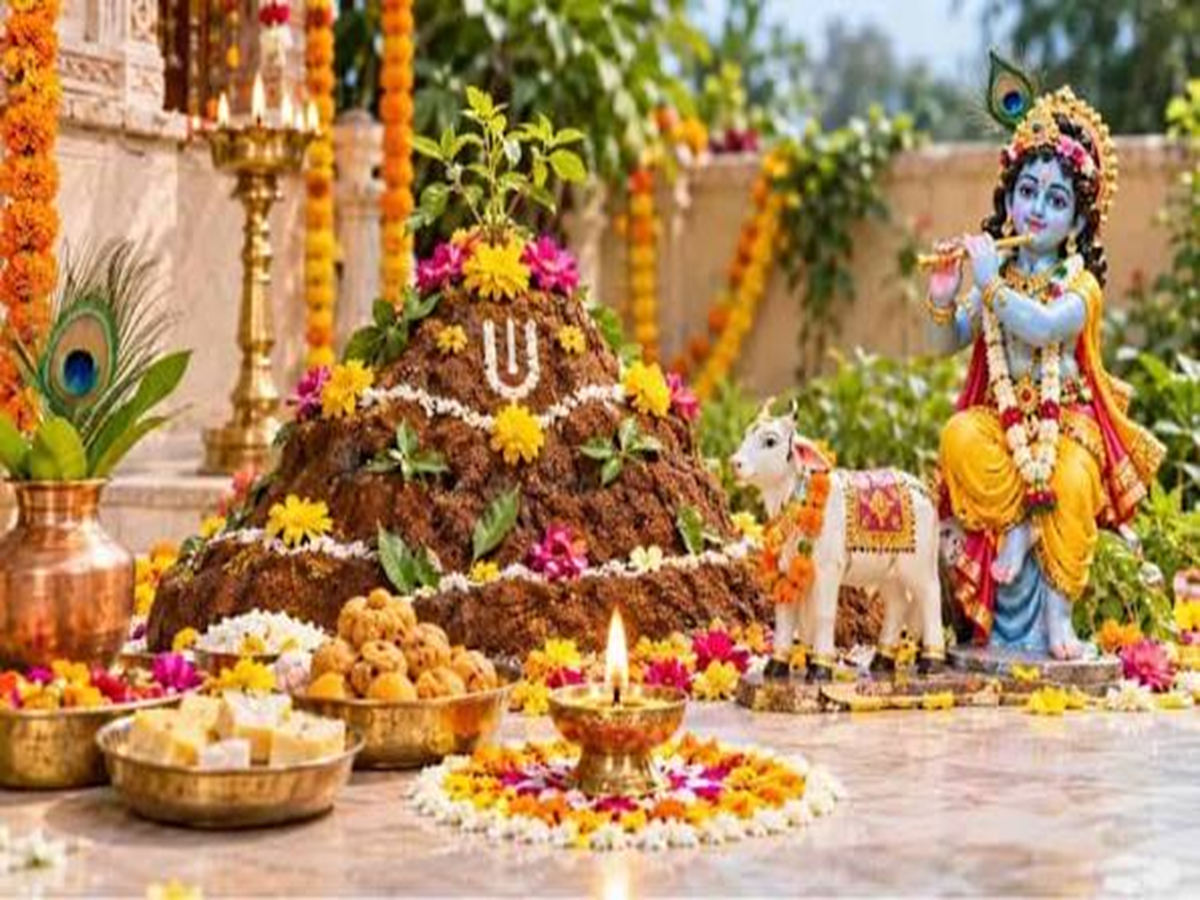
Govardhan Puja 2026: On the day following Diwali, many households create a representation of Mount Govardhan using cow dung. Lord Krishna is worshipped, and an offering known as 'Annakoot'—consisting of a variety of food dishes—is presented to Him. On this day, temples are also adorned with an array of culinary delicacies. But have you ever wondered how Govardhan Puja began, and what story involving Lord Krishna lies behind it?
According to religious tradition, this festival is linked to an episode involving Lord Krishna and Indra, the King of the Devas (celestial beings). It is not merely a story about lifting a mountain; it also carries a profound message regarding nature, cattle, agriculture, and the importance of cooperation.
Why did Lord Krishna put an end to the worship of Indra?
According to mythology, during the Dvapara Yuga, the people of the Braj region worshipped Indra, the deity of rain. They believed that it was through Indra’s grace that rain fell, providing water essential for agriculture and their livestock. Once, the young Krishna asked his father, Nanda Baba, why the villagers worshipped Indra.
Krishna explained that the lives of the people of Braj depended on Mount Govardhan, the forests, the cattle, and the resources derived from them. Therefore, he argued, they should express their gratitude toward nature and the cattle instead. Following Krishna’s counsel, Nanda Baba and the villagers chose to worship Mount Govardhan—offering a variety of food dishes—rather than Indra.
When Indra, the King of the Devas, discovered that the people of Braj had ceased his worship, he became enraged. According to the legend, he unleashed torrential rain and a fierce storm upon the region. As the rain poured down incessantly, the village began to flood, and the lives of the inhabitants were placed in grave danger.
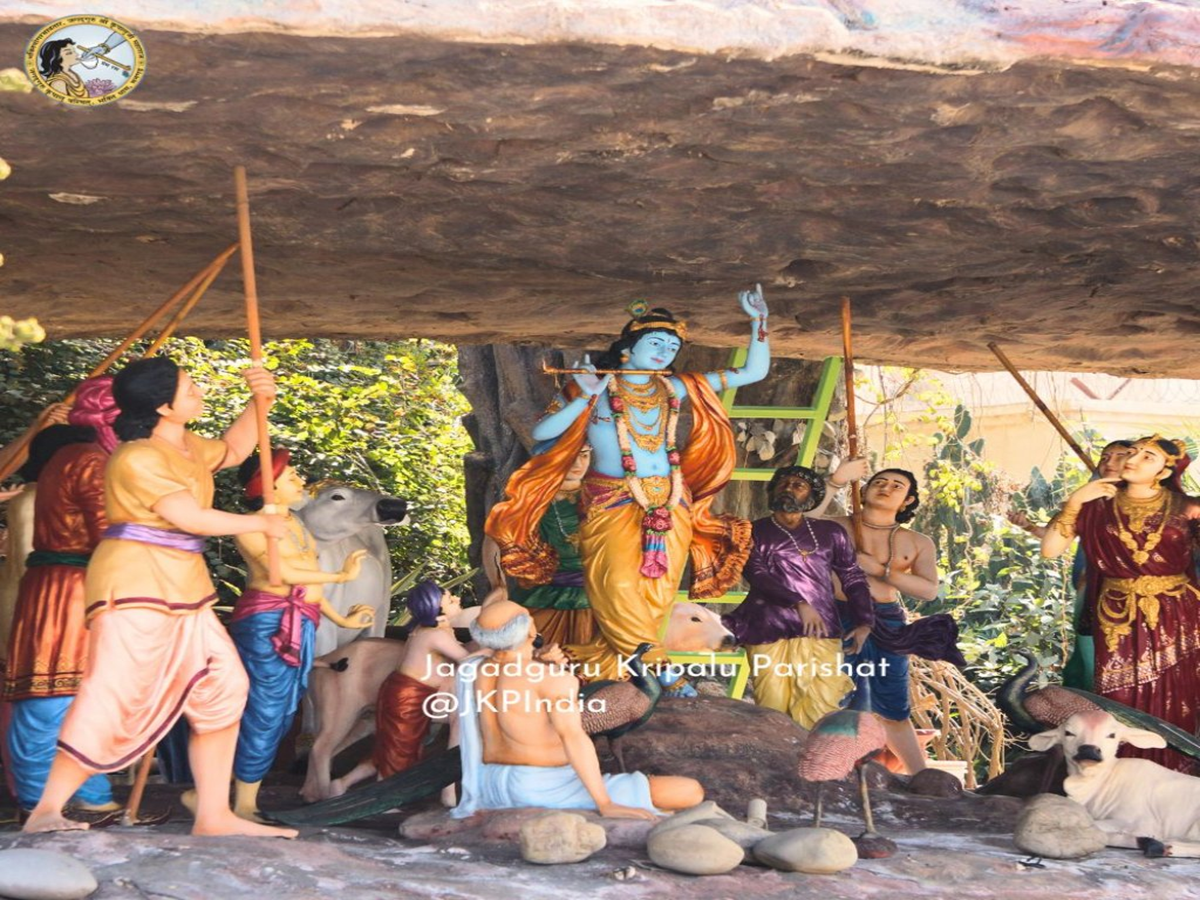
In this dire situation, Lord Krishna lifted Mount Govardhan upon his little finger. He instructed all the villagers and their cattle to take shelter beneath the mountain. Tradition holds that the rain continued for seven consecutive days, yet those who had sought refuge beneath Mount Govardhan remained completely unharmed. Eventually, Indra realized his mistake and sought forgiveness from Lord Krishna. In this way, Lord Krishna protected his devotees and also shattered Indra’s pride.
Why is the 'Annakoot' offering made?
Govardhan Puja is also known as 'Annakoot'. The term 'Annakoot' literally means a 'heap of food grains'. On this day, a wide variety of dishes—including sweets, vegetables, lentils, rice, and other culinary preparations—are offered to Lord Krishna.
This tradition is linked to the worship of Mount Govardhan and the legend of Lord Krishna. It is believed that, at the behest of Krishna, the people of Braj offered various types of food to Mount Govardhan. In remembrance of this, an 'Annakoot' (a grand display of food) is still arranged in temples today.
In many temples, a 'mountain' of food, consisting of hundreds of different dishes, is prepared before Lord Krishna. After the worship, this food is distributed among the people as 'prasad' (a sanctified offering).
Why are cows worshipped during Govardhan Puja?
There is also a tradition of worshipping cows on the day of Govardhan Puja. This is rooted in the lifestyle of the Braj region and Lord Krishna’s identity as a 'Gopal' (a protector/herder of cows). The lives of the people of Braj were dependent on cows, which provided essential food items like milk, curd, and ghee. Cattle also played a crucial role in agriculture and daily tasks.
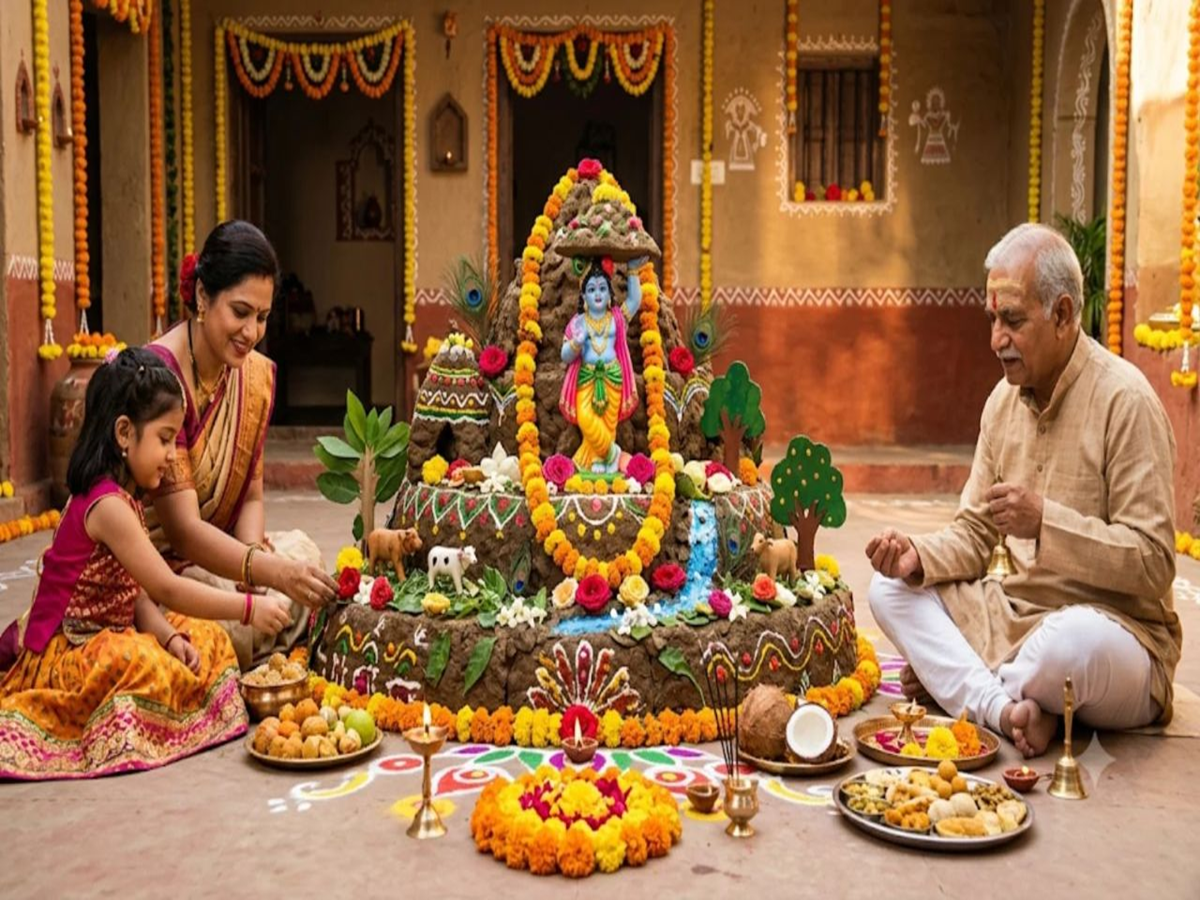
For this reason, on this day, cows are bathed, decorated, and fed a hearty meal. In many households, a representation of Mount Govardhan is crafted from cow dung and worshipped. This tradition is seen as a way to express respect for nature, animals, and the resources that sustain life.
What lesson does Govardhan Puja offer?
The legend of the Govardhan festival is not merely a story about the power of Lord Krishna and the pride of Indra; it also offers profound insights into life.
Respect for Nature: Human life is intrinsically linked to mountains, forests, water bodies, and vegetation. It is essential to care for and protect them. Avoiding arrogance: The story of Indra teaches that one should not be proud of one’s power or position.
Facing difficulties together: The people of Braj supported one another during times of crisis.
Respect for food and livestock: Food and livestock are vital parts of our lives; we should express gratitude toward them.
PC Social Media