
56 Bhog Tradition: In our country, worship is not just a religious act, but a heartfelt experience, like being in one's own home. Here, devotees don't just remember God; they serve Him as a member of their family. The tradition of offering bhog (food offering) is connected to this sentiment. From everyday meals to major festivals, offering different dishes to God has been a part of our lives. But among all these, one name stands out: Chhappan Bhog (56 offerings). People often ask why exactly 56 offerings are made to God? Why not any other number? The answer to this question is not limited to just taste or tradition, but is connected to a very interesting story, which hides the depth of love, devotion, and respect.
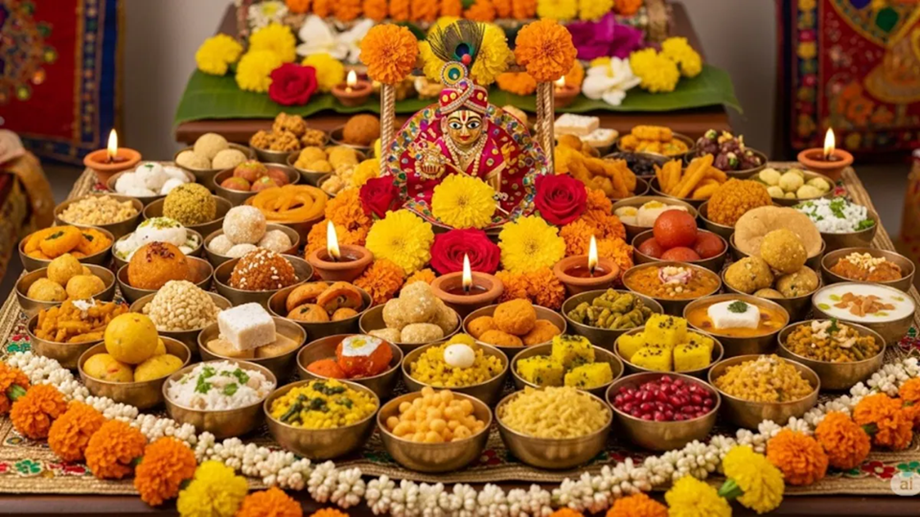
This incident between Krishna and the people of Gokul not only holds religious significance but also shows that in our culture, food is not just a means of satisfying hunger, but the simplest and most beautiful form of devotion. This is why, even today, offering 56 bhog at temples during major festivals like Janmashtami, Annakoot, or other special occasions has become an essential part of the celebrations.
1. The Tradition of Offering Bhog
Offering bhog to God is one of the most common and cherished traditions in India. People offer fruits, sweets, cooked food, or simple homemade dishes to God during worship. Many families offer bhog during their daily morning or evening prayers, while others do it only on special auspicious days. This is why bhog is considered not just food, but a symbol of love and respect.
2. Why 56 Offerings to God, and not 60 or 100?
The number fifty-six (56) is not just a number. It symbolizes the 56 different dishes offered to God. But the question remains, why exactly 56? Why doesn't this number change? The answer lies in the story where Krishna protected his devotees by remaining hungry for seven days. After this incident, the people of Gokul started a tradition to express their love for God, a tradition that is still followed with the same devotion today.
3. The Story of Indra and Govardhan
According to the story, the people of Gokul worshipped Indra every year to ensure good rains and a bountiful harvest. But young Krishna explained to them that the real source of sustenance was Mount Govardhan, as it was the mountain that held back the clouds, providing the basis for rain and crops.
The people of Gokul listened to Krishna, which angered Indra.
Indra unleashed a torrential downpour on Gokul for seven days and seven nights. To protect them from this calamity, Krishna lifted Mount Govardhan on his little finger, providing shelter to the entire village. During these days, Krishna did not eat. Seeing this, the people of Gokul realized their mistake and felt that they should honor Krishna's hunger. Therefore, they decided to offer him eight times the amount of food they would normally offer in a single day.
4. How did the number 56 come about?
According to the story, Krishna ate only once a day. The people of Gokul decided to offer him eight times that amount of food. Since Krishna had not eaten for seven consecutive days:
8 (times) × 7 (days) = 56
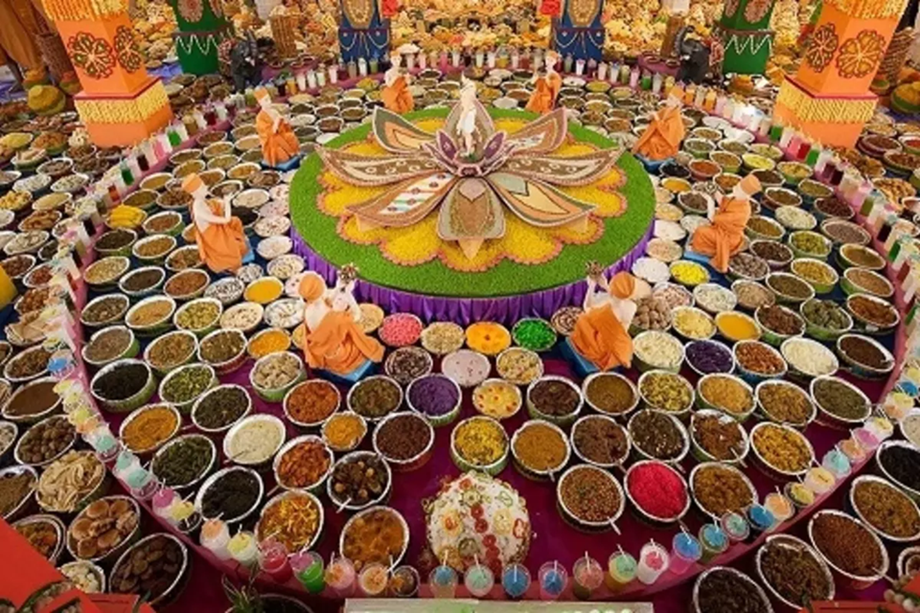
This calculation is considered the root of the tradition of Chappan Bhog (56 offerings). Therefore, devotees offer 56 types of dishes to the Lord – sweets, grains, drinks, savories, fruits, pulses, everything.
5. The Significance of 56 Offerings
Chappan Bhog is not just a collection of dishes. It symbolizes the feeling with which devotees honor God as a member of their family. Each dish included represents Krishna's preferences and the flavors associated with his life. This offering is considered a beautiful expression of devotion, love, and gratitude. In many temples and homes, it is offered with great enthusiasm, music, and devotion.
PC Social Media