Food & recipe
Are you, too, consuming adulterated milk? No need for a lab—check its purity right at home using these 3 simple methods..

Milk is a vital part of our daily diet, especially for children. But do you know whether the milk delivered to your home is pure or not? Driven by the greed for profit, milk is nowadays being adulterated with substances ranging from water and starch to even dangerous chemicals like detergents. Instead of providing nutrition, such adulterated milk can pose a serious threat to health.
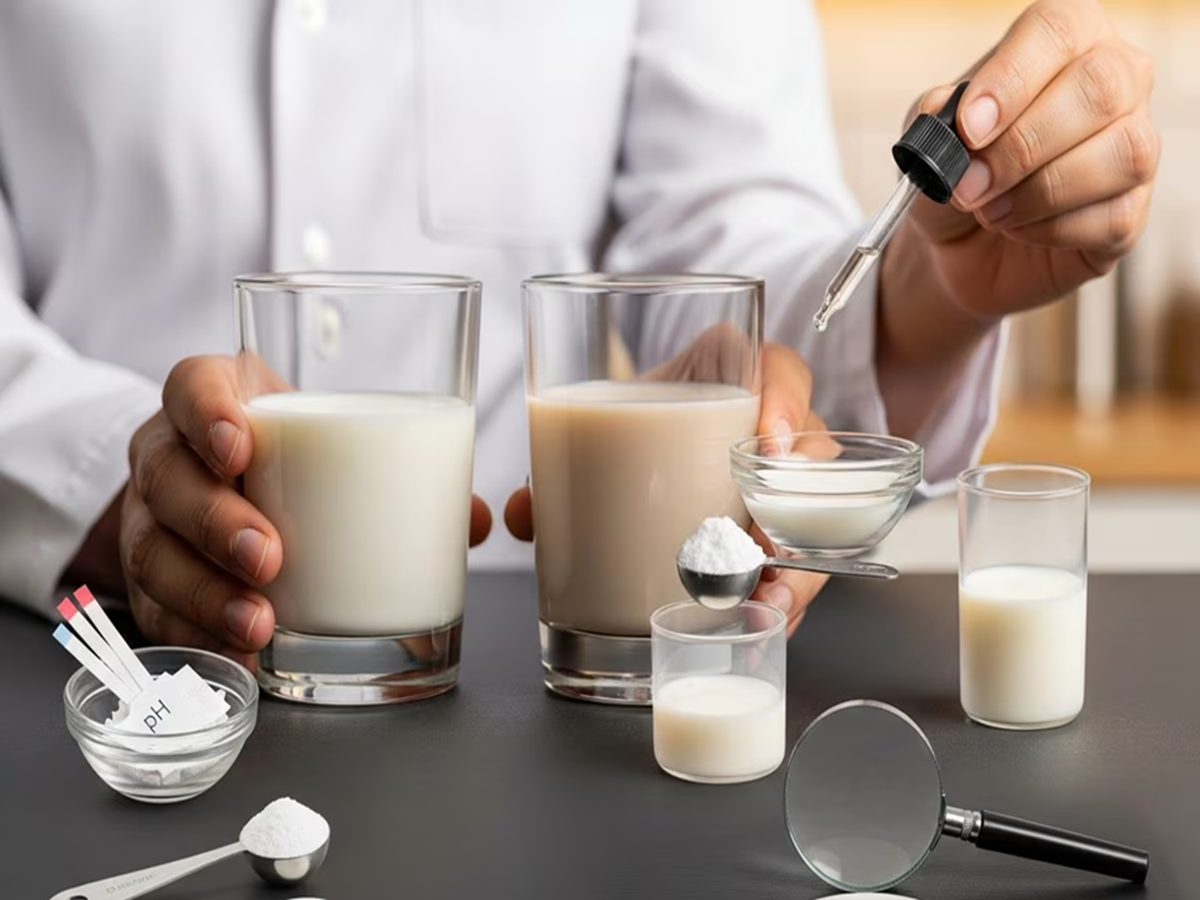
The good news is that you do not need to visit a laboratory to detect adulteration. Let's explore three simple home-based tests recommended by the FSSAI that can help you identify adulterated milk in just a few minutes.
**Testing for Water Adulteration in Milk**
Water adulteration is the most common form of tampering. To check for this, all you need is a slanted surface.
**Method of Testing:**
* Place a smooth, polished surface (such as a stone slab) at a slight incline.
* Drip a single drop of milk onto this surface.
**Result:**
* **Pure Milk:** If the milk is pure, the drop will either stay put or flow down very slowly, leaving a white trail behind it.
* **Adulterated Milk:** If the milk has been diluted with water, the drop will flow down immediately without leaving any trace.
**Testing for Detergent Adulteration in Milk**
Detergents are often added to milk to make it appear thicker or to create foam; however, this is extremely harmful to the digestive system.
**Method of Testing:**
* Take a sample of 5 to 10 milliliters of milk in a glass vial or test tube.
* Add an equal amount of water to the vial.
* Now, shake the mixture vigorously.
**Result:**
* **Pure Milk:** When shaken, pure milk will form only a very thin layer of foam.
* **Adulterated Milk:** If the milk contains detergent, shaking it will produce a thick, dense layer of foam that persists for a considerable amount of time.
**Testing for Starch Adulteration**
Starch is frequently added to milk, *khoya* (reduced milk solids), *paneer* (cottage cheese), or *chhena* (fresh curd cheese) to increase their thickness or consistency. Testing Method:
For Milk: Take a sample of 2–3 ml of milk.
For Khoya/Paneer/Chhena: Boil a small sample with 5 ml of water, and then allow it to cool down.
Now, add 2–3 drops of Tincture Iodine to it.
Result:
Adulterated: If the milk or milk product turns blue after adding the iodine, it indicates the presence of starch.
Pure Product: There will be no such change in the color of pure milk.
PC Social Media