LIFESTYLE
Chandra Grahan: This eclipse is significant not only for scientific reasons but also for religious reasons..

In the world of science and astrology, whenever eclipses are discussed, terms like penumbra and umbra repeatedly come up. Simply put, when something is exposed to light, two types of shadows are formed. The penumbra is the dark, dark region where light cannot reach at all, while the penumbra is the outer, hazy region where a little light still reaches. According to astrologers, the period of penumbra is considered a major eclipse because the light of the Sun or Moon is likely to be completely blocked. This is not just a celestial event, but it also directly impacts our mind and energy flow, making it spiritually significant.
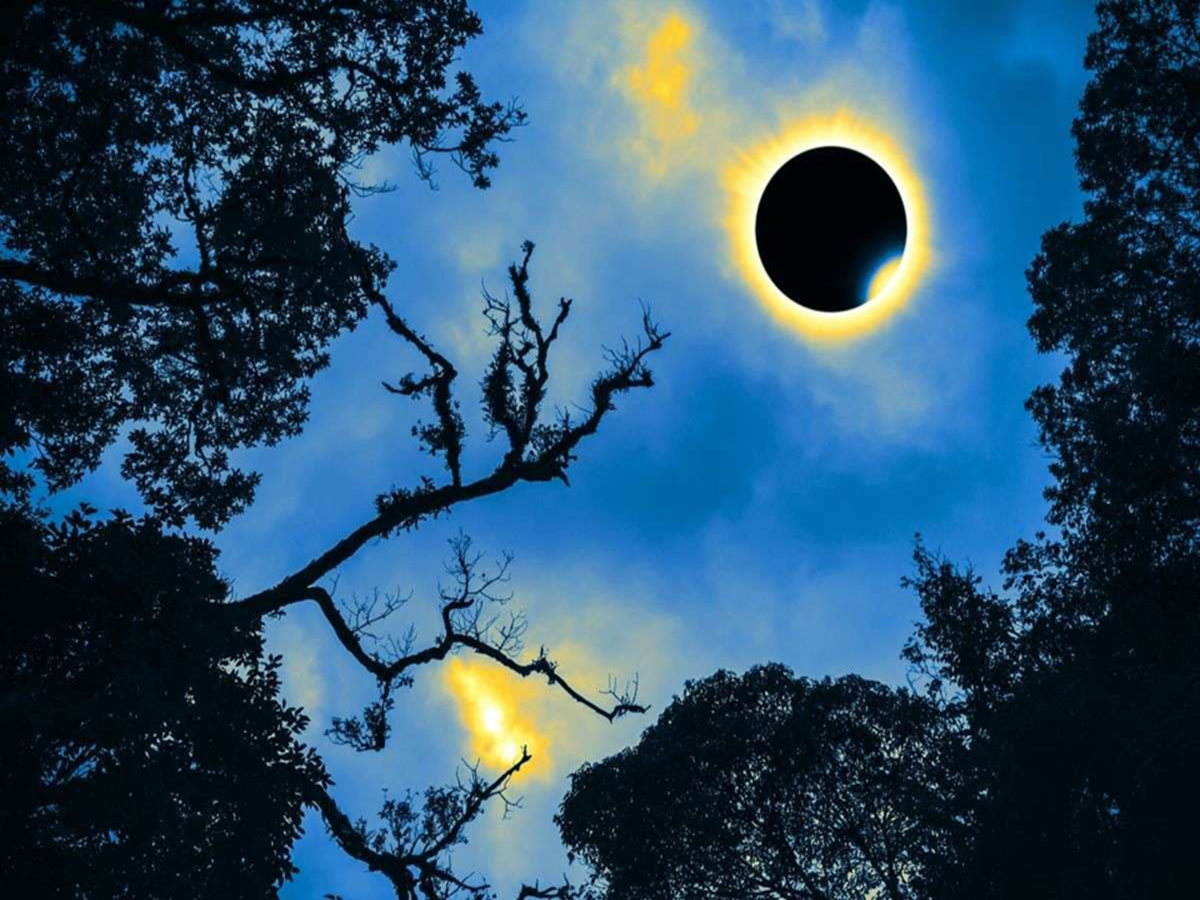
The Difference Between Penumbra and Penumbra
Understanding the difference between penumbra and umbra is essential to understanding the intensity of an eclipse. The penumbra is the area where the source of light appears to be completely obscured, resulting in complete darkness. In contrast, in the penumbral region, the source of light is only partially obscured. According to astrological calculations, a total lunar eclipse is considered when the Moon passes through the Earth's deep shadow. If the Moon passes only through the penumbra, it is called a "penumbral lunar eclipse." The Moon's brightness is slightly dimmed, but it does not become completely dark.
Why is it important to pay attention to the penumbra during an eclipse?
From a religious and astrological perspective, the penumbra holds special significance because the Sutak period and other rules are based on it. According to scriptures, the rules and Sutak period are effective only when the eclipse occurs in the penumbra and is clearly visible to the naked eye. Penumbral eclipses are often not classified as total eclipses, so the strict rules of Sutak are not considered mandatory. However, there is a possibility of increased negative energy during the penumbra, so it is advisable to avoid eating, sleeping, and auspicious functions during this time.
Scientifically, looking at the Sun with the naked eye during a penumbral eclipse can be detrimental to eye health. Therefore, one should make changes to their daily routine only after knowing the exact time of the penumbral eclipse.
The Impact of Penumbral Eclipses and Religious Beliefs
People often wonder whether they should perform a puja or donate during a penumbral eclipse. According to astrology, the Moon's image does not darken during a penumbral eclipse; it only appears dull. Therefore, it is not considered an eclipse and does not require any observance of Sutak. Nevertheless, many people choose to meditate during this time to attain peace of mind and positive energy.
Meditating on God during this time is considered auspicious. A penumbral eclipse does not pose any major obstacles to business or daily activities. Understanding these scientific aspects of an eclipse is beneficial for everyone to fulfill their greatest desires and gain mental clarity.
PC Social Media