LIFESTYLE
Fasting During Periods: Women who observe fasts during menstruation must be aware of these rules related to worship and rituals..
Fasting During Periods: Whether there is a *Puja* (worship ceremony) at home, a major religious fast, or special occasions like *Sawan*, *Navratri*, and *Ekadashi*, a question often arises in the minds of women: can one observe a fast if one gets one's periods? In many households, there are varying beliefs regarding this matter. In some places, women are asked to refrain from participating in worship rituals, while in others, they are simply advised to rest. Consequently, women themselves often find themselves confused as to what the correct approach truly is. When examining religious beliefs and scriptures, menstruation is regarded as a natural physiological process of the body.
This is precisely why this subject is now being discussed much more openly than in the past. Experts in astrology and religion also acknowledge that women can observe fasts during their periods; however, it is considered essential to adhere to certain specific guidelines regarding worship rituals. Faith and devotion are considered to be the most fundamental pillars of such practices.
What Do the Scriptures Say About Fasting During Periods?
According to religious beliefs, women are permitted to observe fasts during menstruation. Nowhere in the scriptures is it explicitly stated that observing a fast during this time is strictly prohibited. However, certain guidelines regarding worship rituals and temple visits have indeed been outlined. It is believed that women require physical rest during this time; therefore, they are advised to refrain from engaging in strenuous worship rituals or sitting at the altar for extended periods. Nevertheless, if a woman has undertaken a fast with sincere intent and remembers the Divine with true devotion, her fast is considered to be complete and valid.
Why is Mental Worship Considered Auspicious?
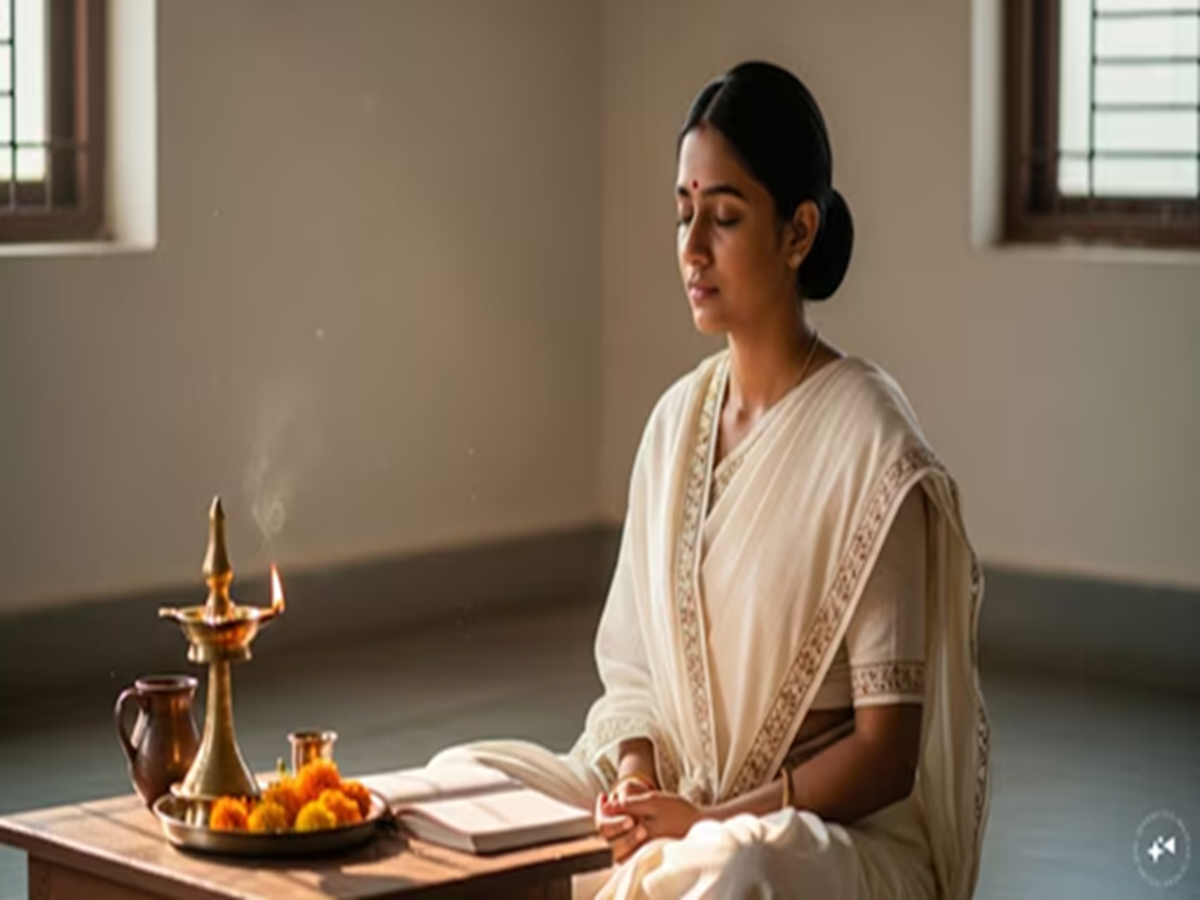
Remembering the Divine with one's mind is also considered a form of worship. In religious scriptures, mental devotion is accorded the highest significance. Consequently, during their periods, women can engage in meditation on the Divine, chant mantras, and listen to religious narratives (*Vrat Kathas*). Nowadays, thanks to mobile phones and the internet, people can also listen to religious stories and *Aartis* online; therefore, it is not considered necessary to completely distance oneself from worship during this time. Many women choose not to visit temples during this period, but instead remember the Divine with a calm and peaceful mind within the confines of their home. Religious scholars assert that meditation performed with a sincere heart yields the same spiritual merit as direct, physical worship.
What Are the Rules Regarding Worship Materials?
**Advice on Avoiding Contact with Religious Objects:** According to tradition, women do not touch the *puja* (worship) plate, idols, religious scriptures, or other worship materials while menstruating. This practice is viewed through the lens of ritual purity. However, many people with a modern mindset consider this to be a matter of personal faith.
If a major fast or *puja* ceremony is being observed in the home, other family members may perform the rituals. Women may sit at a slight distance, observe the worship, and offer their prayers silently in their hearts.
**What Precautions Should Be Taken During a Fast?**
Women who choose to fast while menstruating must pay special attention to their health. Prolonged periods of fasting can sometimes lead to issues such as weakness, fatigue, or dizziness. Therefore, it is essential to consume fruits and water as needed to maintain one's strength.
Religious belief also emphasizes that fasting is not merely about abstaining from food; during this time, an individual must exercise self-restraint in both their thoughts and behavior. Speaking ill of others, using abusive language, or engaging in arguments are considered violations of the rules of fasting.

**Changing Perspectives in Families and Society**
While this subject was once rarely discussed openly, the new generation has now begun to view it from a more pragmatic perspective. Many women believe that menstruation is not a state of impurity, but rather a normal physiological process of the body. Consequently, people are now advocating for a balance between religious faith and physical health.
PC Social Media