LIFESTYLE
From the Offering of Curd Rice to the Miraculous Lamp! Discover These Unique Secrets of the Tirupati Balaji Temple..
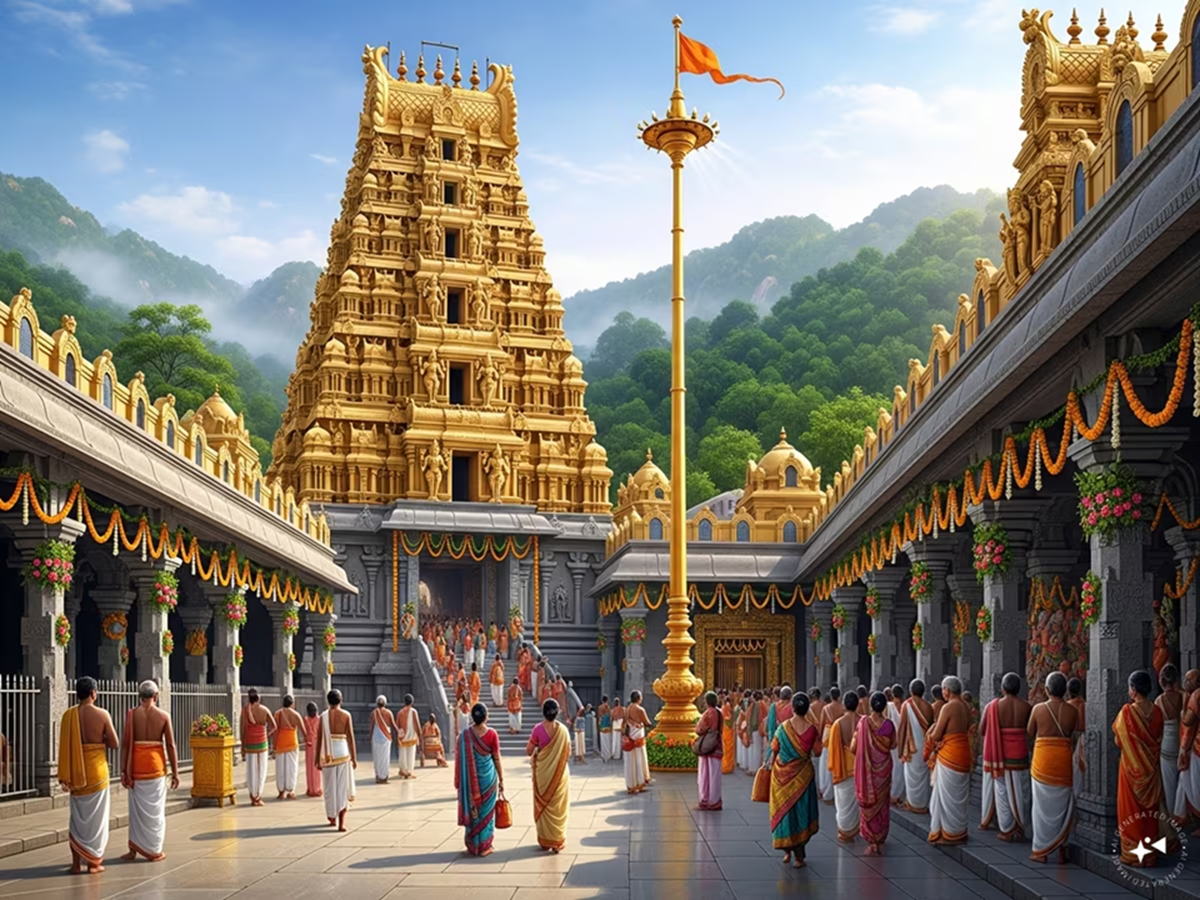
Situated atop the Tirumala hills in Chittoor, within the Indian state of Andhra Pradesh, the Tirupati Balaji Temple stands as one of the world's wealthiest and most prominent Hindu pilgrimage sites, dedicated to Lord Venkateswara Swami.
While numerous temples across the country harbor unique mysteries of their own, the Tirumala Tirupati Balaji Temple is globally renowned not only for the deep faith it inspires but also for the profound mysteries associated with it. In this article, we will explore some fascinating facts surrounding the Tirupati Balaji Temple.
**The Tradition of Donating Hair at Temples**
The Tirupati Balaji Temple observes a unique tradition of donating hair. It is believed that Lord Vishnu once borrowed a sum from Kubera—the deity of wealth and prosperity—and pledged that the entire debt would be repaid by the end of the *Kali Yuga* (the current cosmic era).
To assist in repaying this very debt, devotees visiting the temple donate their hair upon the fulfillment of their prayers or vows. At the Tirupati Temple, the donation of hair by devotees serves as a symbolic installment towards the repayment of this divine debt.
**Not *Chhappan Bhog*, but Curd-Rice is the Favorite Offering**
The Tirupati Balaji Temple in South India is a sacred site where Lord Vishnu is worshipped in the form of Sri Venkateswara Swami. According to mythological beliefs, this location is considered to be the personal abode (*Nija Nivas*) of Lord Vishnu during the *Kali Yuga*.
According to devotees who visit the temple, every prayer offered here is granted. When it comes to presenting *Bhog* (sacred food offering) to Lord Venkateswara Swami, the *Prasad* (blessed food) offered consists not of *Laddoos* or a lavish spread of *Chhappan Bhog* (fifty-six different dishes), but rather a simple offering of curd-rice.
**Mysteries Surrounding the Deity's Idol**
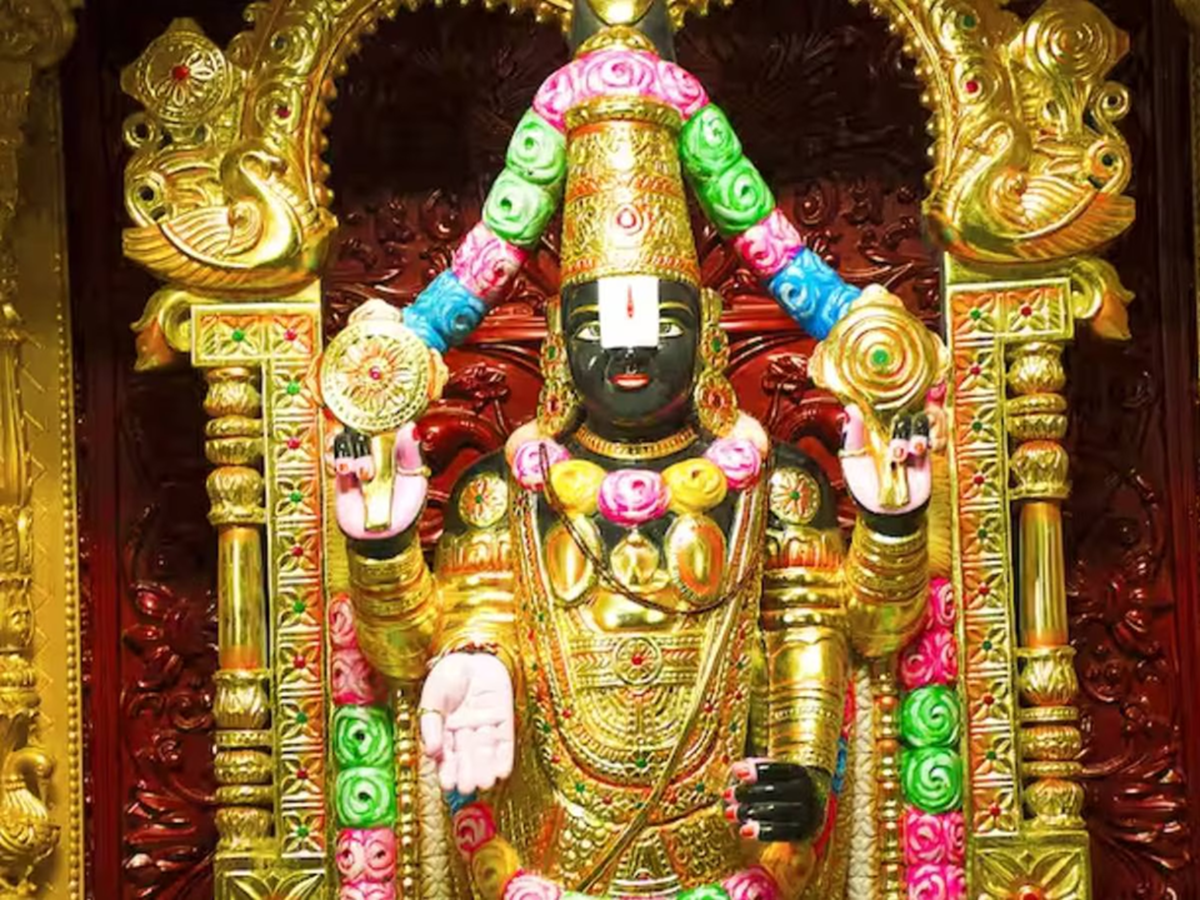
The idol (statue) of the Tirupati Balaji Temple is not only magnificent in appearance but also holds immense spiritual significance. According to local beliefs, the distinct sound of ocean waves can constantly be heard emanating from behind the idol; indeed, any devotee who places their ear close to listen can distinctly hear the rhythmic sound of the sea.
Lord Venkateswara, the presiding deity of the temple, is adorned with garments typically worn by both Goddess Lakshmi and Lord Vishnu, as the idol is revered as a divine manifestation embodying the essence of both Goddess Lakshmi and Lord Vishnu.
**The Hair on Lord Venkateswara's Idol is Real**
The hair adorning the idol of Lord Venkateswara Swami at the Tirupati Balaji Temple is real; it never tangles or becomes disheveled. The hair always appears dark and lustrous. Furthermore, during the summer months, the idol of Sri Venkateswara Swami is observed to perspire—a fascinating phenomenon that serves as a palpable reminder of His divine presence.
**The Miraculous Lamp Within the Temple**
A lamp burns perpetually within the Tirupati Balaji Temple; remarkably, it requires neither ghee nor oil to sustain its flame, yet it continues to burn ceaselessly. To this day, this lamp remains a source of mystery and wonder for the devotees who visit the temple.
According to mythological beliefs, this lamp was lit by Lord Brahma Himself during the Treta Yuga. It has burned continuously and without interruption ever since, and is revered as a symbol of eternity.

**The Significance of the Staff Kept in the Temple**
To the right of the main entrance of the Tirupati Balaji Temple stands a staff. Local folklore surrounding this staff suggests that it was once used to chastise Balaji during His childhood incarnation. This incident resulted in an injury to His chin; consequently, from that time until the present day, a paste of sandalwood has been applied to His chin to soothe and heal the wound.
The mysteries and miracles associated with the Tirupati Balaji Temple draw their primary basis from the *Skanda Purana* and the *Varaha Purana*, the temple's ancient inscriptions, and the local religious beliefs and traditions that have been upheld for centuries.
PC Social Media