Food & recipe
Ghewar Recipe: Make market-style, lacy, and crispy Ghewar at home; here is the recipe..
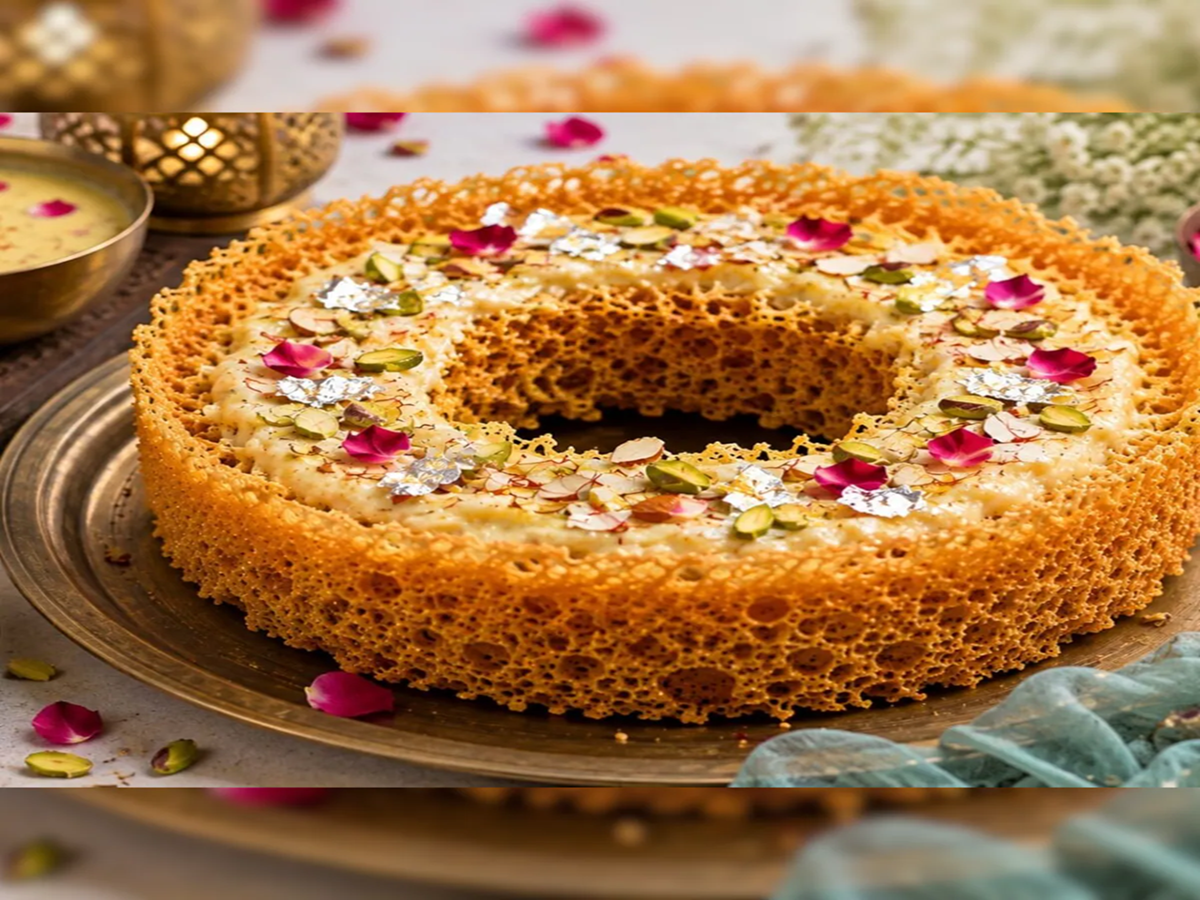
Ghevar is one of Rajasthan's most popular traditional sweets, prepared and enjoyed especially during festivals like Teej, Sawan, and Raksha Bandhan. Its distinctive lacy texture, crispy taste, and toppings of *rabri* (thickened sweetened milk) and dry fruits make it truly special. If you wish to make delicious, halwai-style Ghevar at home, you can follow this simple recipe.
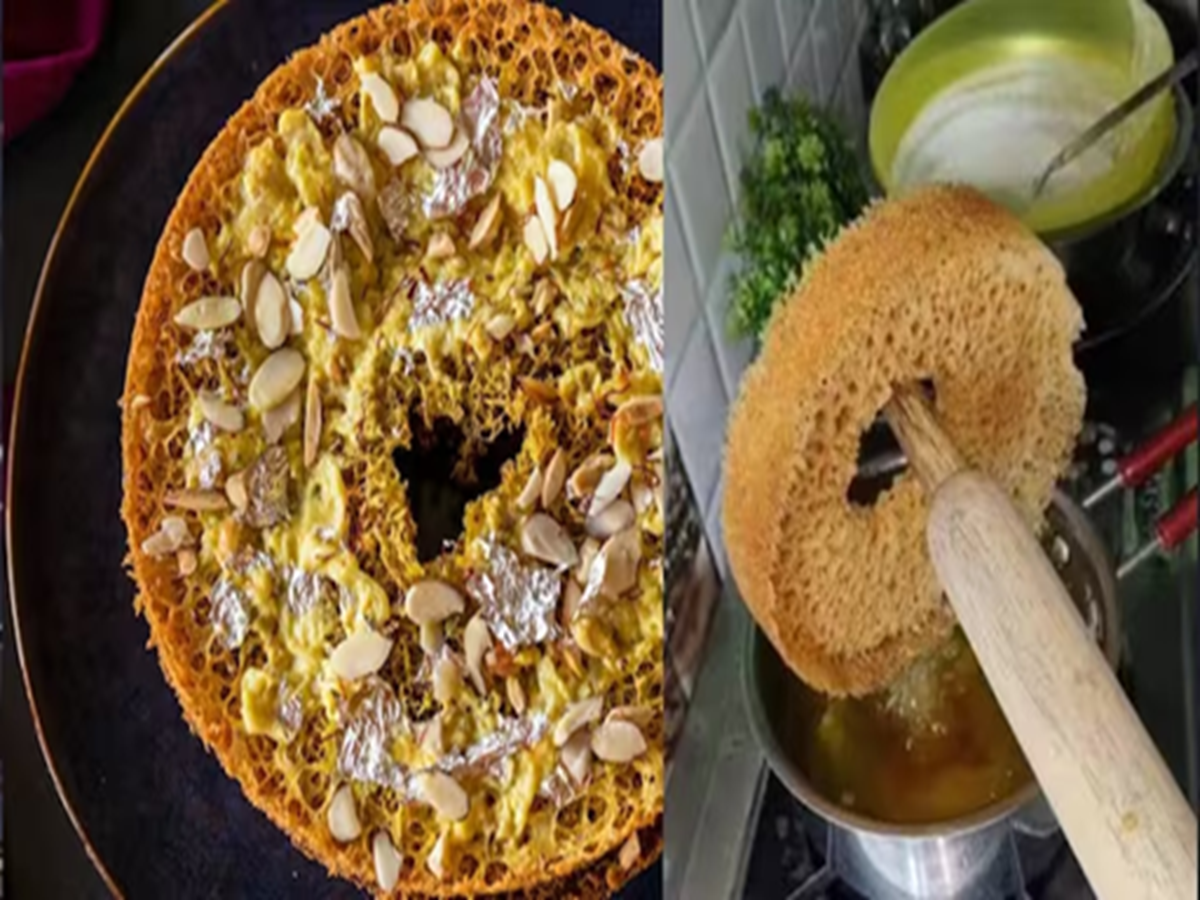
Ghevar is a famous traditional Rajasthani sweet, typically made during festivals such as Sawan, Teej, and Raksha Bandhan. It is characterized by its lacy texture and crispy flavor. Garnishes like *malai* (cream), *rabri*, nuts, and saffron enhance its taste further. Instead of buying it from the market, you can easily prepare Ghevar at home; the key lies in achieving the right batter consistency and using the correct frying technique.
To make Ghevar, start by taking 2 cups of all-purpose flour (*maida*), about half a cup of *ghee*, and chilled water as needed. You will also need *ghee* or oil for frying, along with sugar and water to prepare the sugar syrup. For garnishing, you can use *rabri*, chopped almonds and pistachios, and a little saffron. Begin by placing the *ghee* in a large bowl and whisking it thoroughly. Gradually add chilled water while whisking the mixture until it becomes light and creamy.
Next, add the flour in small batches while whisking continuously. Then, add chilled water as required to create a thin, lump-free batter. The batter should neither be too thick nor contain any lumps of flour; it should be thin enough to pour easily into the frying pan. Keeping the batter chilled for a while can also help achieve a better lacy texture.
Now, heat *ghee* or oil in a deep, wide pan. Ensure there is ample space in the pan, as the Ghevar expands while frying. Once the oil is thoroughly heated, use a spoon or a small bowl to pour the batter into the center of the pan in a very thin, steady stream. As soon as the batter hits the oil, bubbles and a lacy pattern will begin to form. After the first layer sets, pour a small amount of batter into the center again. Continue adding layers in this manner as required.
Fry the Ghevar over medium heat until it turns golden and crispy. Exercise caution when removing it from the pan and allow the excess ghee or oil to drain off. Next, prepare a single-string consistency sugar syrup and drizzle a light amount over the prepared Ghevar. If you wish to make Rabri Ghevar, spread a layer of thick Rabri over the cooled Ghevar and garnish it with almonds, pistachios, and saffron.
To make the perfect Ghevar, ensure the batter remains thin and avoid pouring it into the pan in a forceful stream. Maintaining the correct temperature of the oil or ghee is also crucial; in oil that is too cool, the Ghevar will not develop its characteristic lacy texture, whereas excessively hot oil may cause the batter to burn quickly. Apply the Rabri or sugar syrup only after the Ghevar has cooled down completely. By following this simple method, you can prepare delicious, crispy, and market-style Ghevar at home for the Sawan season and other festivals.
PC Social Media