Food & recipe
Haryanvi kadhi tempered with desi ghee, paired with plain rice—a truly delightful combination..
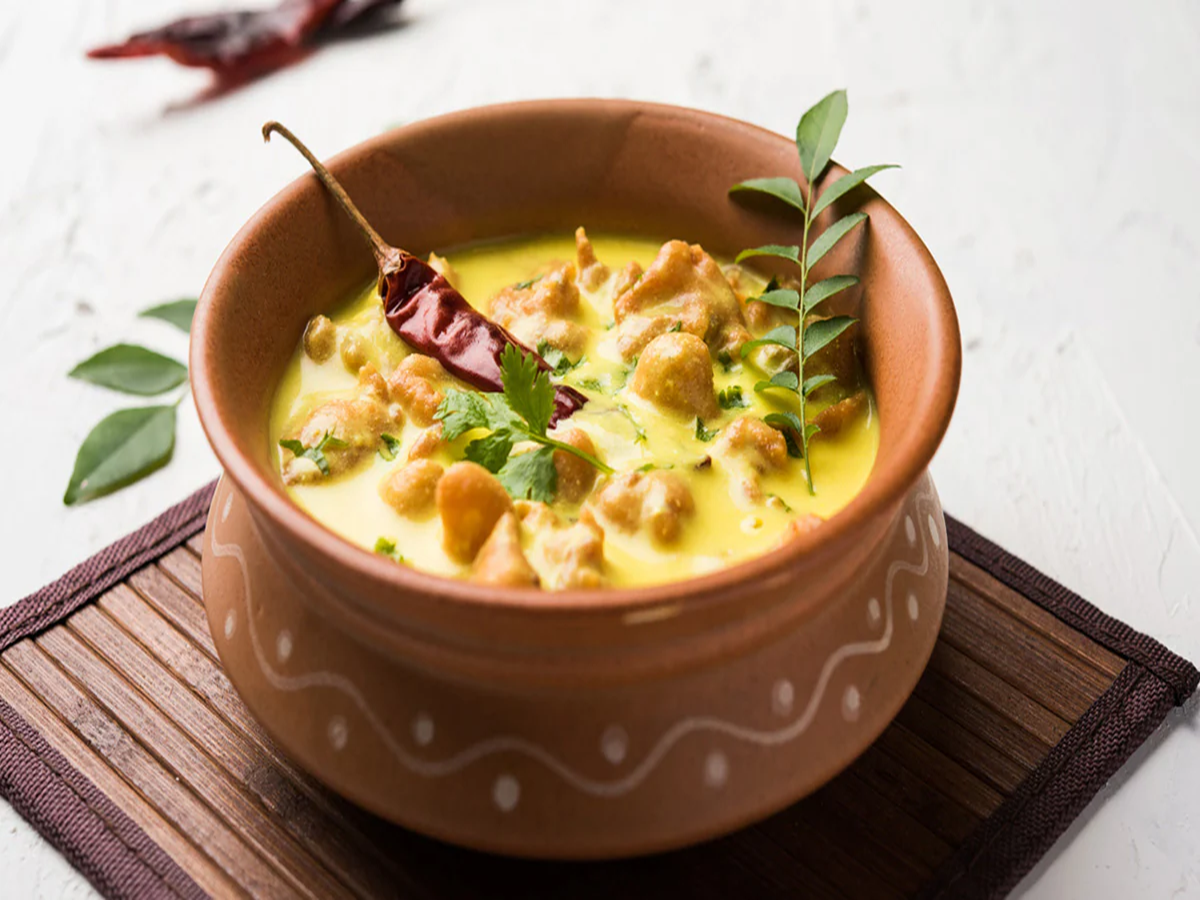
Haryanvi Kadhi Recipe: The aroma of a warm *kadhi*—made from yogurt and gram flour (*besan*)—wafting through the kitchen is enough to whet anyone's appetite. When served with soft *pakoras* (fritters) and topped with a *tadka* (tempering) of cumin, mustard seeds, and whole red chilies in *desi ghee*, it makes for a delicious meal, especially when paired with plain steamed rice. This Haryanvi-style *kadhi* with *pakoras* is easy to prepare at home and requires no exotic spices or an extensive list of ingredients. However, making a great *kadhi* involves more than just mixing yogurt and gram flour and bringing it to a boil; it is essential to ensure there are no lumps in the batter, to stir it continuously at the start, and then to cook it thoroughly over a low flame.
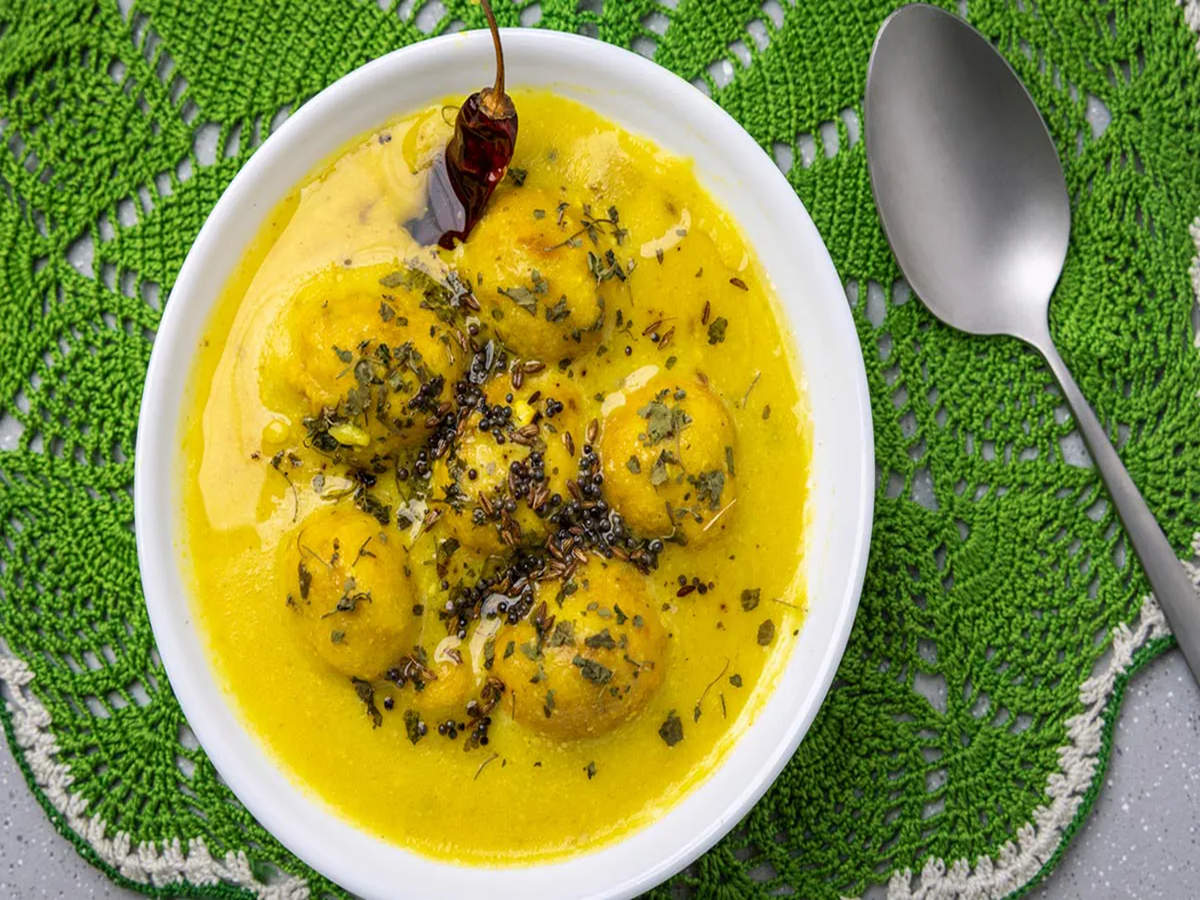
This process removes the raw taste of the gram flour and allows the flavors of the yogurt and spices to meld together perfectly. If you are looking for a simple yet flavorful dish for a family lunch, this *kadhi* is an excellent choice. Having the *pakoras* prepared in advance speeds up the process, but do ensure you give the *kadhi* ample time to cook properly.
Ingredients for Four Servings
To prepare the *kadhi*, you will need one cup of gram flour, two cups of plain yogurt, and four cups of water (to begin with). Additionally, keep on hand one teaspoon of cumin seeds, half a teaspoon of fenugreek seeds (*methi dana*), a quarter teaspoon of asafoetida (*hing*), one teaspoon of turmeric powder, and salt to taste. You may also add red chili powder—anywhere from half to a full teaspoon—depending on your preference. You will also need about one cup of prepared onion *pakoras* to add to the dish. Since this recipe uses a generous amount of gram flour, the *kadhi* will turn out quite thick; therefore, keep some extra hot water on hand to adjust the consistency if needed.
Ingredients for the *Tadka* (Tempering)
For the final *tadka*, you will need two tablespoons of *desi ghee*, one teaspoon of mustard seeds, one teaspoon of cumin seeds, and two whole dried red chilies. You may also use some finely chopped fresh coriander leaves for garnishing. Cumin is used both in the initial preparation and in the *tadka* (tempering); therefore, keeping the ingredients for each part separate will make the cooking process easier. If you prefer a milder level of spiciness, use less red chili powder and add the whole dried red chilies to the *tadka* without breaking them.
Prepare a smooth batter of yogurt and gram flour (*besan*)
Place the yogurt in a large bowl and whisk it thoroughly. Gradually add the gram flour, mixing it in bit by bit. First, create a thick, smooth paste, then slowly add water; this makes it easier to break up any lumps of gram flour. Adding all the water at once can cause small lumps to remain in the mixture. If you still notice lumps after mixing, you can strain the batter through a sieve. Next, add turmeric powder, red chili powder, and salt. You may use slightly sour yogurt if you prefer, but ensure it is not spoiled or emitting an unpleasant odor.
Begin cooking in a heavy-bottomed vessel.
Pour the prepared batter into a large, heavy-bottomed pot. Add cumin seeds, fenugreek seeds, and asafoetida (*hing*), then heat over medium flame. Stir the mixture continuously at the start, ensuring your spoon reaches the bottom of the pot so the gram flour does not settle and stick. Leave some space at the top of the pot, as the *kadhi* may rise when it begins to boil. Once it reaches a rolling boil, reduce the heat. Allow the *kadhi* to simmer gently, stirring occasionally.
Ensure the gram flour is fully cooked rather than rushing the process.
Just because the *kadhi* appears thick does not mean it is fully cooked. It needs time over a low flame to lose the raw taste of the gram flour. After it comes to a boil, let it cook for about 25 to 35 minutes—or longer, if necessary. The finished *kadhi* should have no lingering raw smell of gram flour. If the mixture becomes too thick while cooking, simply add a little hot water and stir it in. Do not add too much water at once, or the *kadhi* might become thinner than desired. Keep in mind that it will thicken further as it cools.
If you are making *pakoras* (fritters), ensure the batter is thick.
To prepare the *pakoras*, take about half a cup of gram flour (*besan*) in a separate bowl, add one small, finely chopped onion, some salt, and green chilies to taste. Gradually add water to create a thick batter—do not add so much water that the mixture starts dripping off the spoon. Heat oil in a pan, drop in small portions of the batter, and fry over medium heat until golden brown on both sides. Ensure the gram flour inside is cooked through. Remove the *pakoras* and let the excess oil drain off. Smaller *pakoras* are easier to incorporate into the *kadhi* and simpler to serve.
Add the *pakoras* at the right time.
Once the *kadhi* is thoroughly cooked, add the prepared *pakoras*. Simmer over low heat for about five to seven minutes so that the *pakoras* absorb the flavors of the *kadhi* and become soft. Adding them too early may cause them to overcook and fall apart. Once the *pakoras* are added, do not stir the *kadhi* vigorously; use a light hand. At this stage, also check the consistency. If the *pakoras* absorb a significant amount of liquid, add a little hot water and bring the *kadhi* to a gentle simmer once again.
Finally, add a fragrant *tadka* (tempered spice infusion) of *ghee*.
Heat some *ghee* in a small pan. Add mustard seeds, and once they begin to crackle, add cumin seeds. Next, add whole dried red chilies and sauté for a few moments. Turn off the heat before the spices become too dark, as burnt cumin or chilies can make the *kadhi* taste bitter. Carefully pour the prepared *tadka* over the *kadhi* and stir it in gently. Cook on low heat for another minute or two. Garnish with fresh coriander leaves and turn off the stove.
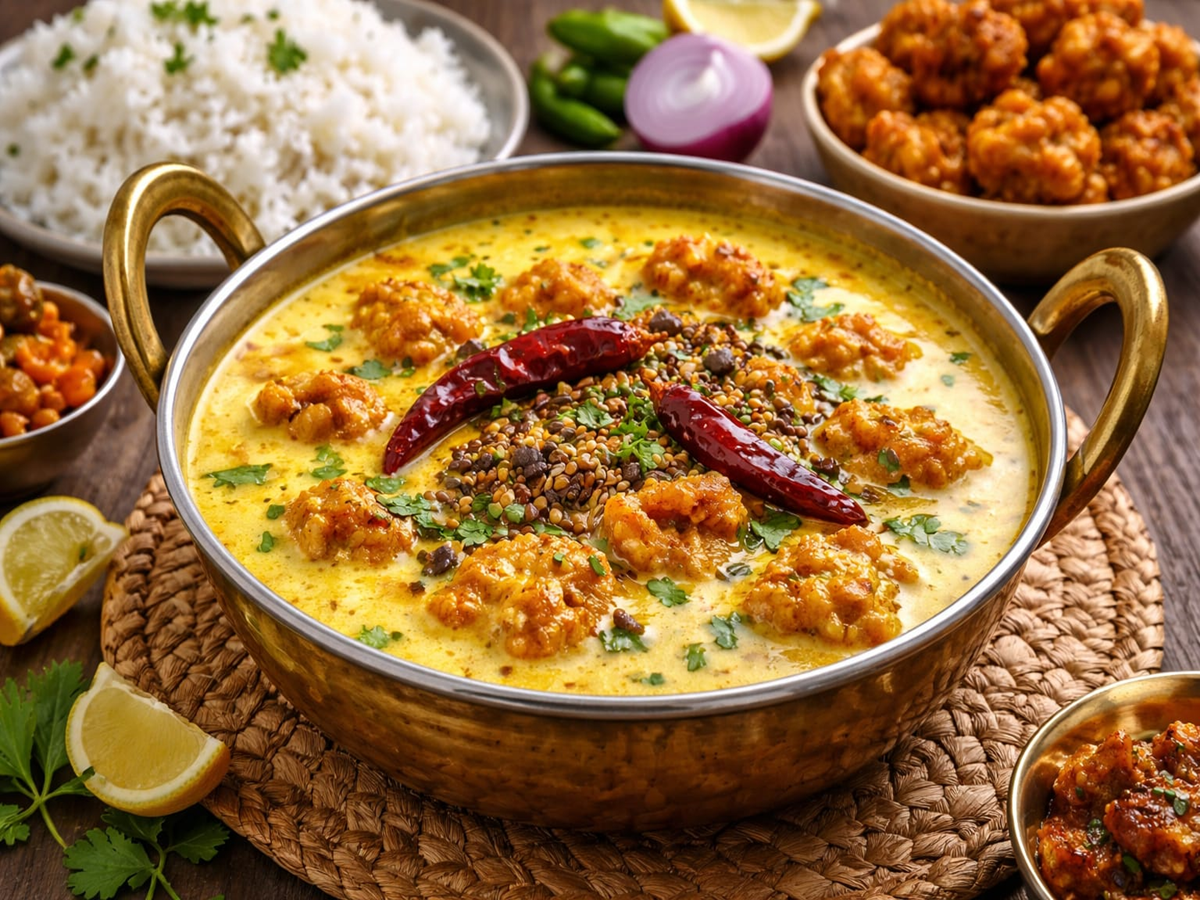
Serve hot with rice or *roti*.
Before serving, taste the *kadhi* to check the salt level and consistency. It can be served with plain rice, cumin rice (*jeera rice*), or hot *rotis*. Adding some sliced onions and a bit of pickle on the side will further enhance the meal. If there is any leftover *kadhi*, do not leave it out for long; once it has cooled, cover it and store it in the refrigerator. You may need to add a little water when reheating it. Heat it thoroughly over a low flame, stirring constantly, so that it reaches the right consistency without sticking to the bottom of the pot.
PC Social Media