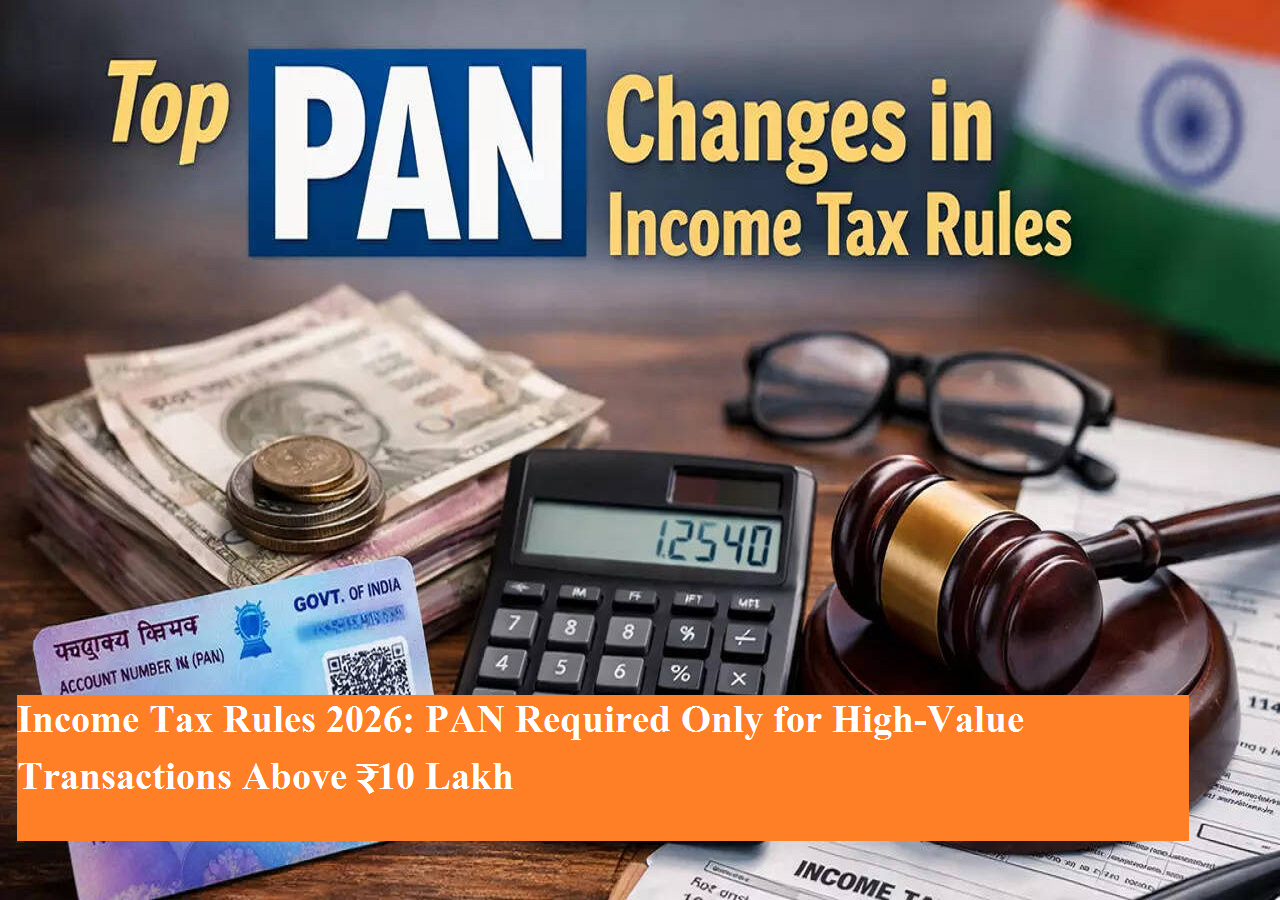
Managing personal finances in India is set to become easier with the upcoming changes under the Income Tax Department’s Income Tax Rules 2026. The government has proposed revised PAN requirements aimed at reducing routine paperwork and aligning compliance thresholds with current economic realities.
From banking transactions to vehicle purchases and hotel bills, the updated rules seek to simplify everyday financial activities for individuals and small businesses. Here’s a clear breakdown of what is changing and how it may impact you.
Relief in Cash Deposits and Withdrawals
One of the most notable updates relates to bank transactions. Under the proposed framework, a PAN card will be mandatory only when total cash deposits or withdrawals exceed ₹10 lakh in a financial year.
What was the earlier rule?
Previously, PAN was required for cash deposits above ₹50,000 in a single day. This often created repeated compliance hurdles for:
- Small traders
- Self-employed individuals
- Households handling cash transactions
What changes now?
- Fewer PAN submissions for routine banking
- Reduced paperwork burden
- Smoother cash handling for small businesses
This move is expected to improve ease of banking for the middle class and informal sector participants.
Vehicle Purchases Become Simpler
The automobile buying process is also getting a compliance upgrade.
New rule
You won’t need to provide PAN for purchasing cars or two-wheelers priced below ₹5 lakh.
Why this matters
Currently, PAN is required for most motor vehicle purchases regardless of value. The revised threshold could:
- Reduce showroom paperwork
- Speed up purchase formalities
- Encourage entry-level vehicle demand
This may particularly benefit first-time buyers and middle-income households.
Higher Limit for Hotel and Event Payments
Planning weddings, parties, or family functions may now involve less documentation.
Under the updated rules, PAN will be required only if hotel, restaurant, or event bills exceed ₹1 lakh.
Earlier threshold
- PAN needed above ₹50,000
Impact
- More flexibility for small gatherings
- Reduced compliance for routine celebrations
- Better alignment with rising hospitality costs
Property Transactions Get Breathing Room
Real estate documentation norms are also being relaxed.
New threshold
PAN will be mandatory only for property transactions above ₹20 lakh, compared to the earlier ₹10 lakh limit.
Who benefits?
- Small homebuyers
- Plot purchasers
- Middle-income families
This change is expected to simplify registration processes for lower-value property deals.
Additional Relief for Salaried Employees
The proposed rules also include benefits for salaried individuals.
Key highlights
- Company or government car users may receive ₹8,000–₹10,000 monthly car allowance (including driver expenses)
- Revised rules on free meals may reduce deductions from take-home salary
These tweaks aim to improve in-hand income and simplify employer-provided benefit taxation.
Digital Currency and Crypto Compliance Tightened
While PAN norms are being relaxed in many areas, reporting requirements for cryptocurrencies are becoming stricter.
At the same time, Central Bank Digital Currency (CBDC) has been formally recognized as a valid electronic payment mode, signaling the government’s push toward regulated digital finance.
What Taxpayers Should Do Now
Although the changes promise greater convenience, taxpayers should:
- Track official notifications
- Maintain proper transaction records
- Consult professionals for large financial decisions
Implementation timelines and fine details may evolve as the rules are rolled out.
The Income Tax Rules 2026 aim to strike a balance between compliance and convenience. By raising PAN thresholds across banking, automobiles, hospitality, and property sectors, the government is working to reduce unnecessary paperwork and improve ease of living.
For taxpayers and small businesses, understanding these updates early can help streamline financial planning and avoid last-minute hassles.
Disclaimer: This article is for informational purposes only and does not constitute financial or legal advice. Tax provisions may change based on official notifications. Readers should consult a certified tax professional or refer to official sources before making financial decisions.