
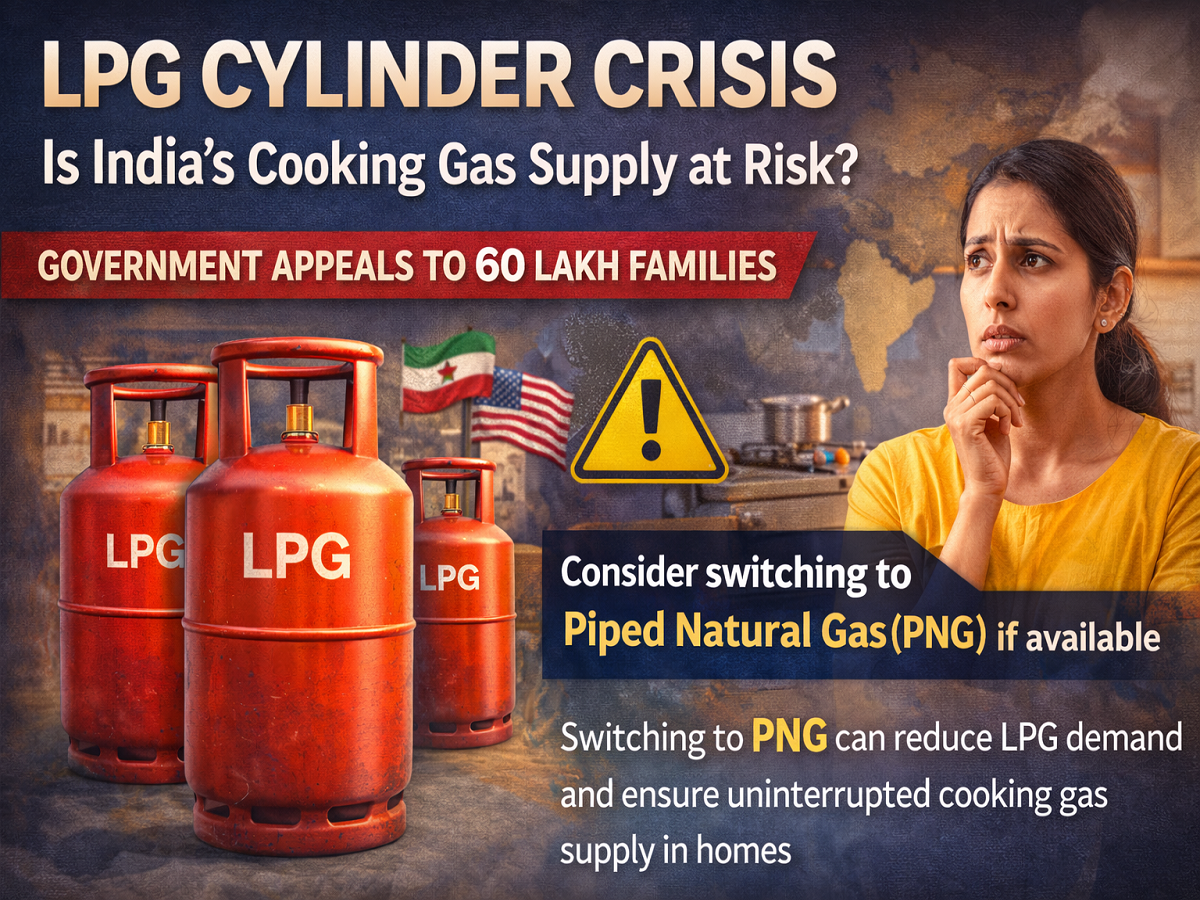
Reports of LPG cylinder shortages in several parts of India have sparked concern among households that rely on cooking gas for their daily needs. Rising geopolitical tensions in West Asia and disruptions in global energy markets have created uncertainty around fuel supply chains. As a result, many people are worried about whether cooking gas availability could be affected in the coming days.
In response to these concerns, the Government of India has issued an important appeal to nearly 60 lakh households, urging them to consider shifting to Piped Natural Gas (PNG) where the infrastructure is available. The move is aimed at reducing pressure on LPG cylinders while ensuring uninterrupted fuel supply for households across the country.
What Caused the LPG Supply Concerns?
The current situation is largely linked to geopolitical developments in West Asia, where tensions involving countries such as Iran, the United States and Israel have affected global energy markets.
One of the key routes impacted by the instability is the Strait of Hormuz, a major shipping corridor between Iran and Oman through which a significant share of the world’s oil and gas shipments pass. Any disruption along this route can influence global fuel supply and pricing.
Although these global developments have raised concerns, officials say India has taken steps to secure alternative crude oil imports to maintain domestic fuel availability.
Government’s Appeal to 60 Lakh Households
According to Sujata Sharma, Joint Secretary in the Ministry of Petroleum and Natural Gas, the government is focusing on households located near existing PNG pipeline networks.
Authorities have identified around 60 lakh families living close to piped natural gas infrastructure who could potentially shift from LPG cylinders to PNG connections.
If these households adopt PNG, it would help ease the demand for LPG cylinders and improve distribution efficiency for regions where pipeline gas is not available.
PNG provides cooking gas directly through underground pipelines, which means users do not have to depend on cylinder refills or deliveries.
LPG vs PNG Usage in India
Currently, India has approximately 33.37 crore LPG consumers, making it the primary cooking fuel for most households.
However, only about 1.5 crore households currently use PNG connections.
Experts believe that expanding the use of PNG in urban areas could significantly reduce dependency on LPG cylinders while offering a more convenient and continuous supply of cooking gas.
For households living in areas where PNG infrastructure already exists, switching to piped gas can eliminate the need for cylinder bookings and delivery waiting times.
Panic Booking Behind the Surge in Demand
Government data shows that the sudden increase in LPG demand is mainly due to panic booking by consumers, rather than an actual supply shortage.
Under normal circumstances, the country records an average of about 55.7 lakh LPG refill bookings per day.
However, recent figures show that bookings surged to around 75.7 lakh in a single day, indicating that many consumers were ordering extra cylinders due to fears of shortages.
Officials have reassured citizens that such panic-driven bookings are unnecessary.
Increase in Domestic LPG Production
To address concerns, the government has also increased domestic LPG production.
Since March 5, production levels have reportedly increased by around 30 percent, ensuring that adequate supply remains available for consumers.
Oil marketing companies are currently supplying more than 50 lakh cylinders per day, and authorities say that stock levels remain stable.
Warning Against Hoarding and Black Marketing
During times of uncertainty, authorities have warned that some individuals may attempt to exploit the situation through hoarding or black marketing.
The Petroleum Ministry has instructed state governments to closely monitor LPG distributors and dealers. Strict legal action will be taken against anyone found stockpiling cylinders or selling them illegally.
Officials emphasised that such activities can disrupt the distribution system and create unnecessary shortages for genuine consumers.
Priority Supply for Essential Services
To maintain stable distribution, the government has also established priority categories for LPG supply.
Domestic households, hospitals and educational institutions will continue to receive uninterrupted gas supply.
Meanwhile, the supply of LPG to some commercial sectors such as large hotels and restaurants may be slightly reduced to ensure that household needs are met first.
What Consumers Should Do
Authorities have urged consumers to remain calm and avoid unnecessary bookings.
Officials confirmed that the country has adequate LPG stocks and supply systems are functioning normally.
For families living in areas where PNG pipelines are available, switching to piped natural gas could be a practical solution. PNG provides continuous supply, improved convenience and greater reliability during periods of supply pressure.
Government Assures Stable Fuel Supply
Despite global energy uncertainties, the government has assured citizens that India’s cooking gas supply remains stable.
Officials say the focus remains on maintaining uninterrupted delivery to households while expanding alternative gas infrastructure such as PNG.
Consumers are advised to avoid rumours circulating on social media and rely only on official updates from government agencies and authorised gas distributors.