Food & recipe
Make a warm soup using ragi flour and colorful vegetables; learn how to prepare the mixture..
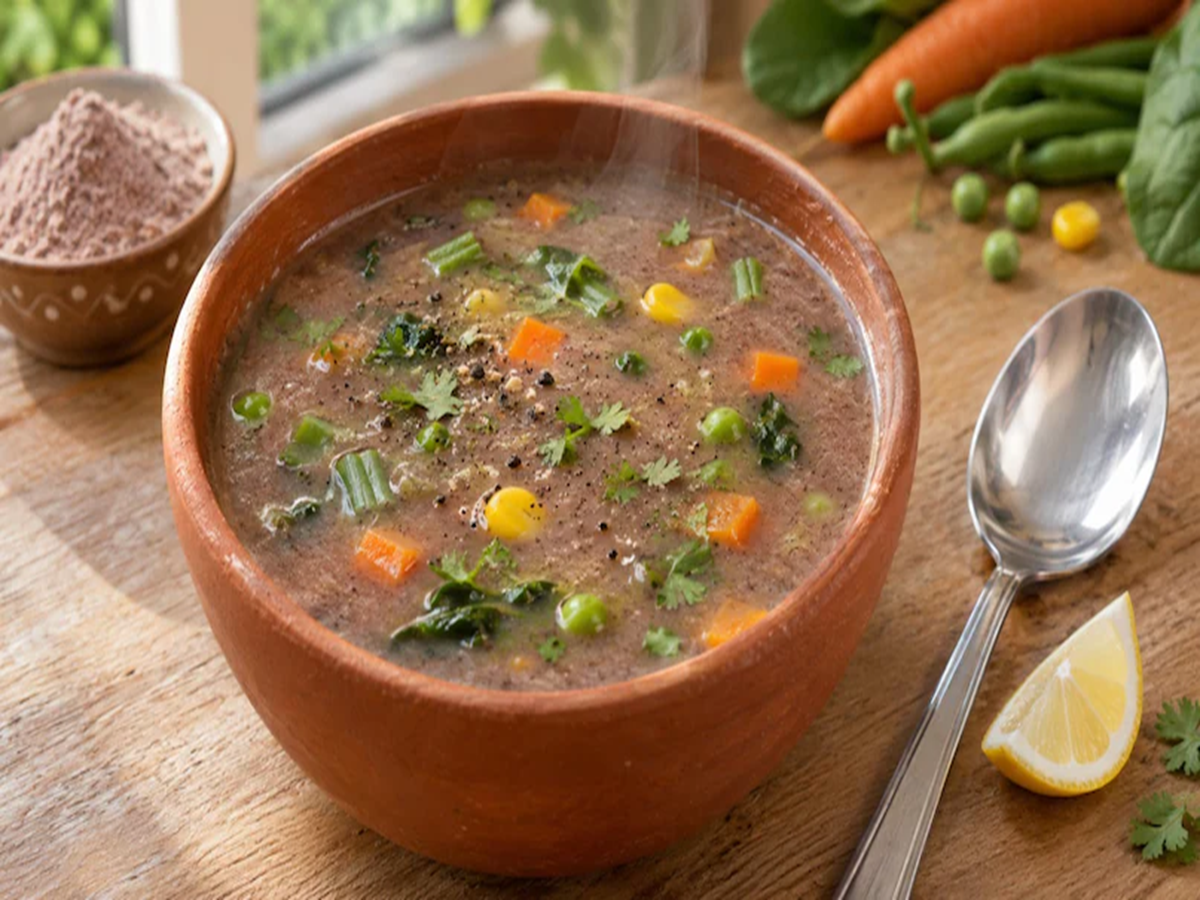
Ragi Soup Recipe: If you’re craving something warm during a mild chill, a vegetable-packed ragi (finger millet) soup is a great choice. Prepared with carrots, peas, beans, and spinach, this soup is infused with the aroma of ginger and garlic, while black pepper adds a subtle, spicy kick. Ragi flour acts as a natural thickener, eliminating the need for cream or cornflour. A final touch of lemon juice provides a hint of tanginess that complements the flavors of the vegetables. It can be served in small bowls as an evening snack or as a starter before a meal.

While the preparation is simple, some care is needed when adding the ragi flour; if added directly to hot water, it may form lumps. Conversely, using too much flour with too little water will make the soup excessively thick. By preparing a smooth slurry and incorporating it gradually, you can easily make a delicious ragi soup at home.
Gather your ingredients: For this soup, you will need one cup of ragi flour, one finely chopped onion, half a cup of diced carrots, half a cup of chopped spinach, half a cup of finely chopped beans, half a cup of peas, and half a cup of sweet corn. You may also add about half a cup of finely chopped cabbage. For aroma, grate a one-inch piece of ginger and finely chop two cloves of garlic. You will also need salt, crushed black pepper, a little oil or ghee, and fresh coriander leaves. Add one to two tablespoons of lemon juice, depending on your taste preference.
Adjust the water based on desired consistency: Start with four cups of water, and use a separate portion of room-temperature water to prepare the ragi slurry. Keep in mind that one cup of ragi flour combined with these vegetables will result in a very thick soup; therefore, you will need to add more hot water as required to achieve the desired consistency. If you wish to prepare a lighter soup for just two people, you can reduce the quantities of ragi flour and vegetables. Rather than adding the entire amount of water at once, it is easier to add it gradually while the soup cooks, adjusting based on the desired consistency.
Cut the vegetables into small, uniform pieces: Begin by washing all the vegetables thoroughly. Keep the pieces of carrot and beans small, so they cook quickly and are easy to consume with a spoon. Finely chop the spinach and cabbage as well. If the pieces are too large, some vegetables may cook through while others remain tough. Preparing and chopping all the ingredients beforehand ensures you won’t have to pause the cooking process. You may also adjust the quantities of specific vegetables according to your preference.
Lightly sauté the ginger and garlic: Heat a little oil or ghee in a large, heavy-bottomed pot. Add the ginger and garlic, and sauté over low to medium heat. Do not let them turn dark brown; simply cook them until the raw aroma disappears. Next, add the onions and stir for a while. Once the onions have softened slightly, add the carrots, beans, peas, and sweet corn. Sauté the vegetables for about three to five minutes, stirring occasionally. Then, add the cabbage and spinach, as they require less time to soften.
Add water and cook the vegetables: Pour four cups of water into the sautéed vegetables and stir. Add some salt and crushed black pepper. Bring the water to a boil and cook the vegetables until they are tender enough to eat—there is no need to cook them until they are completely mushy. You can test them by taking a piece of carrot or bean and pressing it with a spoon; if it feels too firm, continue cooking for a little longer. If the liquid seems insufficient, you can add a bit more hot water at this stage.
Prepare a smooth ragi slurry using cold water: Place the ragi flour in a separate bowl. Gradually add room-temperature water to the ragi flour, mixing well with a spoon or whisk. The consistency should be thin enough to pour easily, and there should be no lumps of dry flour. If the mixture has been sitting for a while, stir it again before adding it to the pot, as the flour may have settled at the bottom. Avoid sprinkling dry ragi flour directly into boiling soup, as it can be difficult to break up any lumps that form.
Stir continuously while adding the mixture: Once the water containing the vegetables begins to boil, reduce the heat to medium. Pour the ragi mixture in a thin, steady stream with one hand while stirring the soup constantly with the other. After adding the entire mixture, ensure you stir all the way to the bottom and along the sides of the pot. Ragi thickens as it cooks, so if the soup appears thin initially, do not add more flour right away; check the consistency only after it has cooked for a while. If necessary, add hot water to adjust the thickness to your preference.
Cook thoroughly until the raw taste is gone: After adding the ragi, let the soup simmer gently. Stir occasionally to prevent the flour from sticking to the bottom. Do not turn off the heat as soon as the mixture is incorporated; it is essential to cook it long enough to remove the raw taste of the flour—the time required will depend on the quantity and the heat level. Taste a small, cooled portion of the soup; if it still tastes like raw flour, continue cooking for a bit longer. The finished soup should flow easily from a spoon. If it becomes too thick, simply add a little hot water and bring it to a boil again.

Finish with lemon juice and fresh coriander: Once the soup is cooked, turn off the heat. Add a little lemon juice, taste it, and then add more if needed. Garnish with fresh coriander and a pinch of crushed black pepper, and serve hot. Do not view this soup solely as a weight-loss remedy; your weight is influenced by your total daily food intake, portion sizes, and overall lifestyle habits. This ragi and vegetable soup can be a delicious way to add variety to your diet.
PC Social Media