LIFESTYLE
Nautapa 2026: Nautapa Begins on May 25—Why Is the Heating of the Earth Essential for Farmers and Rainfall?
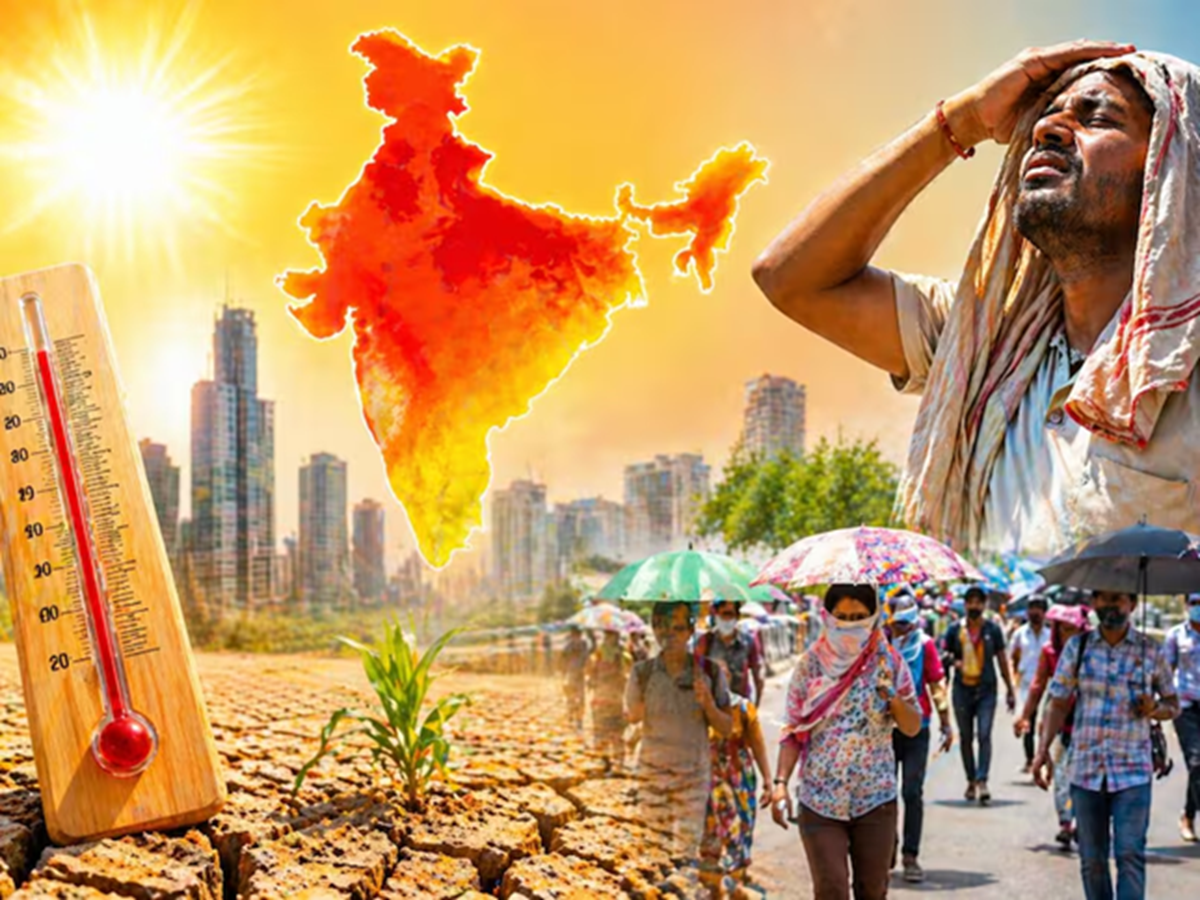
Nautapa 2026: With the onset of the summer season, a mention of Nautapa is inevitable; for Nautapa does not merely signify a period of nine days, but also serves to determine the nature of the upcoming monsoon season. In the year 2026, Nautapa is set to commence on Monday, May 25th, and will conclude on Tuesday, June 2nd. During Nautapa—that is, for these nine days—the Sun God (Surya Dev) is positioned in proximity to the Earth; consequently, his rays strike directly, leading to a significant intensification of the heat.
It is believed that if Nautapa does not manifest its full intensity—meaning if the heat does not reach its expected peak—the summer season tends to linger for an extended period, potentially causing severe repercussions for those engaged in agriculture. So, let us explore—based on both astrological calculations and scientific principles—precisely what Nautapa is and why it holds such significance.
Nautapa is Essential for Agriculture: According to experts, Nautapa is not merely a matter of religious or astrological belief; rather, it is underpinned by scientific rationale. During this period, the Sun's rays strike the Earth almost vertically, resulting in a rapid surge in temperature. Meteorologists posit that this intense heat constitutes an integral part of the natural climatic cycle, playing a pivotal role in the formation of the monsoon. Although people often pray for Nautapa to pass without excessive severity—seeking relief from the scorching heat—its intensity has a direct and profound impact on our farmers' crops and the subsequent monsoon season. The hotter and drier the days of Nautapa prove to be, the more robust and prolonged the ensuing monsoon tends to be.
Astrological Calculations Regarding Nautapa: The term 'Nautapa' literally translates to "nine days of intense heat"; for this reason, it is also referred to as 'Navatap.' This year, Nautapa will span from May 25th to June 2nd, and this specific timeframe will serve to determine the nature of the upcoming monsoon. These nine days are characterized by scorching heat, with hot winds (known as *Loo*) sweeping through the region and impacting daily life. According to astrological calculations, Nautapa commences annually during the month of *Jyeshtha*. During this period, the Sun transits into the *Rohini Nakshatra* (lunar mansion) for a duration of fifteen days. The initial nine days of this transit are collectively designated as Nautapa.
Why the Heat Intensifies During Nautapa — On the first day of Nautapa in the month of Jyeshtha, as the Sun enters the Rohini Nakshatra (lunar mansion), it exerts a significant influence ranging from 10 to 20 percent. Conversely, the presiding deity of the Rohini Nakshatra is the Moon; however, in the presence of the Sun, the Moon's cooling influence diminishes, and the intensity of the heat increases significantly. This is the reason behind the long-standing tradition of placing water out for birds during Nautapa—a practice observed when the Moon's influence is weakened—as it is believed to help strengthen the Moon.
Nautapa's Connection to the Monsoon Season — 'Nautapa' also shares a distinct connection with the monsoon season. It is widely believed that the more intense the heat during these nine days, the more robust the subsequent monsoon will be. The rising heat helps warm the ocean waters, thereby aiding in the formation of clouds and preparing them to yield rain. During this period, Kharif crops receive ample water, which plays a crucial role in their maturation. These crops require a combination of both moisture and warm temperatures to ripen effectively. Furthermore, this period is also considered beneficial for eliminating various germs and disease-causing pathogens.

The Threat of Drought — In recent years, the heat experienced during Nautapa has been less intense than usual. For instance, during the Nautapa period in 2025, the heat was not as scorching as it typically should be; this had a direct and immediate impact on the monsoon. Consequently, the monsoon was weak that year, crops did not receive adequate water, and several states were forced to grapple with drought-like conditions.
PC Social Media