Parenting
Parenting: Do your children also feel scared of strangers coming to your house? This is how to handle the situation..

Children are naughty and self-willed and are no less than a lion in their house. The nature and personality of all children is different. But many children always keep laughing and when a stranger, that is, your friend or relative, comes to the house, they get scared. Often, it is natural for children who meet fewer people to get scared of seeing strangers. Parents also ignore it, but if it happens all the time, then it is a matter of concern. Too much fear is not a positive sign for your child's development. In such a situation, you need to understand the problem of the children and resolve it. If your child also has such symptoms, then definitely pay attention to the things mentioned here.
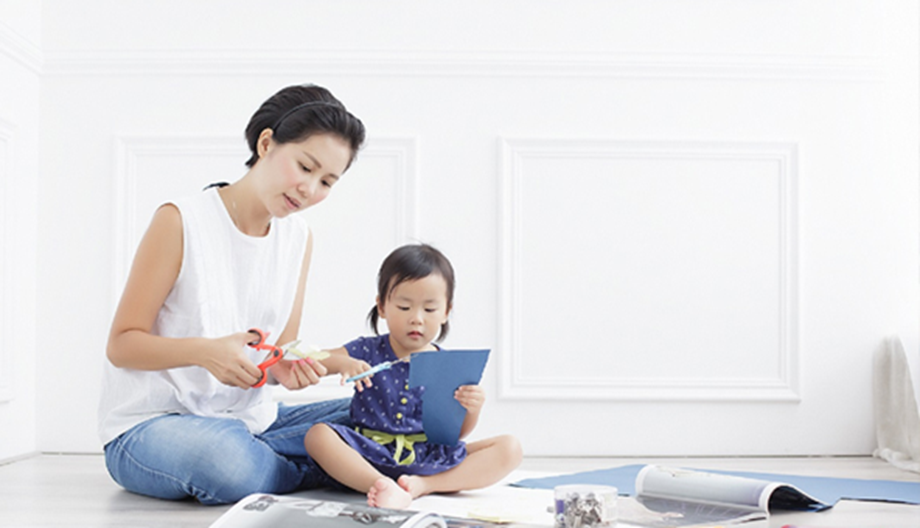
Make the child feel comfortable.
First of all, understand that it is natural for a child of seven months to one year to behave like this. If a child older than this is afraid of seeing strangers, then his behavior is worrying. To make your child comfortable in meeting strangers, introduce him to his friends at home, school, and park, and teach him to talk to them. But, do not make the mistake of sending him to anyone by putting pressure. Give the child some time to get comfortable and be around him while introducing him to any new person. Take the child to public places often. This will give him a chance to meet many people at once. By doing this, the fear of meeting strangers will gradually go away from his mind.
Identify your child's fear.
Identify your child's fear and try to know those things and situations that make him afraid. Your child may be afraid of even small things that may seem trivial to you but do not ignore his fear because your child is worried and scared about those fears. Not only this, never tell him that "stop being a child", "don't be afraid", "your friend is not afraid", etc. In such a situation, your child will feel that being afraid is wrong and he will never share his fear with you. Instead, tell your child that it's okay to be afraid. Tell him to always share his fears and ask for help.
Understand their sensitivities
Don't ignore your child's fears. If your child is not immediately comfortable around a new person, don't force him to mingle with them. Don't keep telling him not to be shy, go talk or play with them. If your child is feeling uncomfortable around a new person, hug him take him in your arms, and move away from the person in whose presence he is feeling uncomfortable. Reassure your child that you are not angry or upset with him.
Keep your child away from scary characters.
Your child may not be able to differentiate between reality and fantasy, and may even get scared of fictional characters on TV. Therefore, keep a close watch on what your child is watching on TV, and do not let him watch scary shows. Instead, show shows that match your family values.
Prepare the child beforehand.
Do not introduce the child to a new person suddenly. Prepare the child mentally beforehand that you are going to introduce him to a new person. Explain to him that the guest coming is close to me and he wants to be friends with you too. Explain the child's problem to your friends beforehand. Just as you explain to the child, explain to the guests in the same way that your child gets upset about meeting someone suddenly, so they should not try to forcibly take him in their arms or love him.
Do not make fun of the child's fear.
Accept the child's fear as true and help him at all times. Never make fun of the child's fear, because this will not reduce his fear; instead, his curiosity will increase and at the same time his self-esteem will be hurt and many other serious problems including phobia can arise. Remember, the child's fear can be overcome only with your love and care.
Be patient
It is very important to be patient while dealing with a child. His fear will not end in a day. If you put pressure on the child, it can hurt him. Instead, teach him to face strangers playfully. Play a game with the child and ask the child to play the role of a stranger sometimes yourself and sometimes the child. Teach him how to meet a stranger and what to do if a stranger forcibly loves him or picks him up in his lap. By doing this, your child's attention will be diverted towards behaving according to the situation and any kind of fear towards strangers will go away from his mind.
Take the help of a child counselor.
Sometimes children can become victims of social anxiety due to being too scared and meeting people. In such a situation, you should take the help of a child counselor to overcome this problem of the child. They can overcome this problem with the help of therapy.

Make them self-reliant
Usually, the fear of meeting strangers disappears automatically in children above two years of age. If the child is older than this and is still afraid of strangers, then also try to find out whether any stranger has ever scared him or done something wrong to him. If this is not the case, then introduce him to new people. He will gradually come out of his protective shell and learn to meet others.
PC Social media