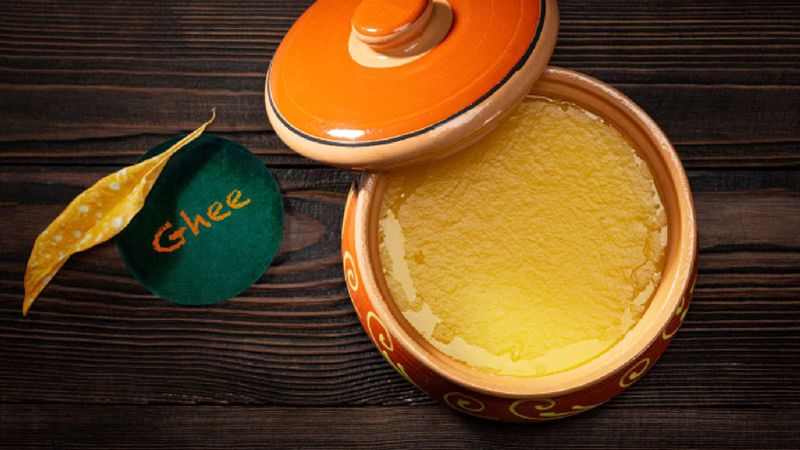
Ghee is a type of butter that is often used to enhance the taste of rotis or Indian breads due to its taste. It is eaten not only because of its taste but also because of the health benefits it provides. To make ghee, butter is cooked on low flame. Due to this the water and impurities of the butter are removed. (How to check the purity of ghee ) It aids digestion and increases immunity. But you can enjoy its health benefits only if it is not adulterated. Often people add starch and vegetable oil to ghee. Are you also worried about the quality of ghee? So you do this easy test for the purity of ghee at home.

How to check if your ghee is pure?
You can get the benefits of ghee only if it is not adulterated. Here are some easy tests to check the purity of ghee at home. With which you can check the purity of ghee.
1. Freezing test
Put a little ghee in a glass vessel and keep it in the fridge for a few hours. If the ghee is pure, it will solidify uniformly, but if the ghee solidifies in different layers or does not solidify completely, it may be adulterated with soybean, coconut or sunflower oil.
2. Heating test
Heat a tablespoon of ghee in a pan on low flame. Experts say, “If the ghee is pure, it will melt quickly and it will turn into a clear liquid. If it takes more time to melt or is not turning into a clear liquid, then the ghee may be adulterated.
3. Iodine test
Add a few drops of iodine solution to a little ghee. If the ghee turns blue, it means that it contains starch, and this ghee is adulterated and you should not consume it.
4. Palm test
Place a little ghee on your palm and see how it reacts to the heat of your body. Pure ghee will melt in a few seconds. If it remains solid or takes a long time to melt, it may contain vegetable oil or fat.
5. Solubility test
Do you want to know how to check the purity of ghee with water? Dissolve a teaspoon of ghee in a glass of water. Pure ghee will float on the surface, but if it mixes with water or settles at the bottom, it may be adulterated with oil.
6. Spoon test
Take a teaspoon of ghee and heat it on the flame. Pure ghee will melt completely and turn into a clear liquid. If there is some sticky feeling or smell, the ghee may be impure.
7. Taste test
Take half a teaspoon of ghee and taste it. (How to check purity of ghee) Pure ghee has a dry-like taste. Experts say, oily or greasy taste may indicate adulteration in ghee.
8. Paper test
Put a drop of ghee on a white paper or cloth and leave it for a few minutes. Pure ghee leaves an oily stain (How to check the purity of ghee) which gradually disappears. If the stain persists or is unusually greasy, it may be adulterated with vegetable oil.
Why should you avoid adulterated ghee?
Adulterated ghee often contains adulterants such as starch, hydrogenated fats, or low-quality oils, which can cause problems like indigestion, bloating, gas, and stomach upset.
Adulterated ghee contains unhealthy trans fats derived from hydrogenated oils, which increase cholesterol levels, increasing the risk of heart disease.
Adulterated ghee may cause allergies, especially in people who are sensitive to certain chemicals or substances used during adulteration. Its symptoms can range from mild rashes to severe respiratory problems.
Pure ghee is rich in essential vitamins, but adulterated ghee does not contain these nutrients, which can cause problems with eye, bone health, immune system and skin health.
The taste and quality of food are affected due to adulterated ghee.
Adulterated ghee has many side effects, so make sure that the ghee you are consuming is pure and of high quality (How to check the purity of ghee). But eat it in limited quantities to enjoy its health benefits.
PC Social media