LIFESTYLE
Religious Journey: It’s not just Banke Bihari and Radharaman—Thakur Ji has seven forms; find out where to see them..
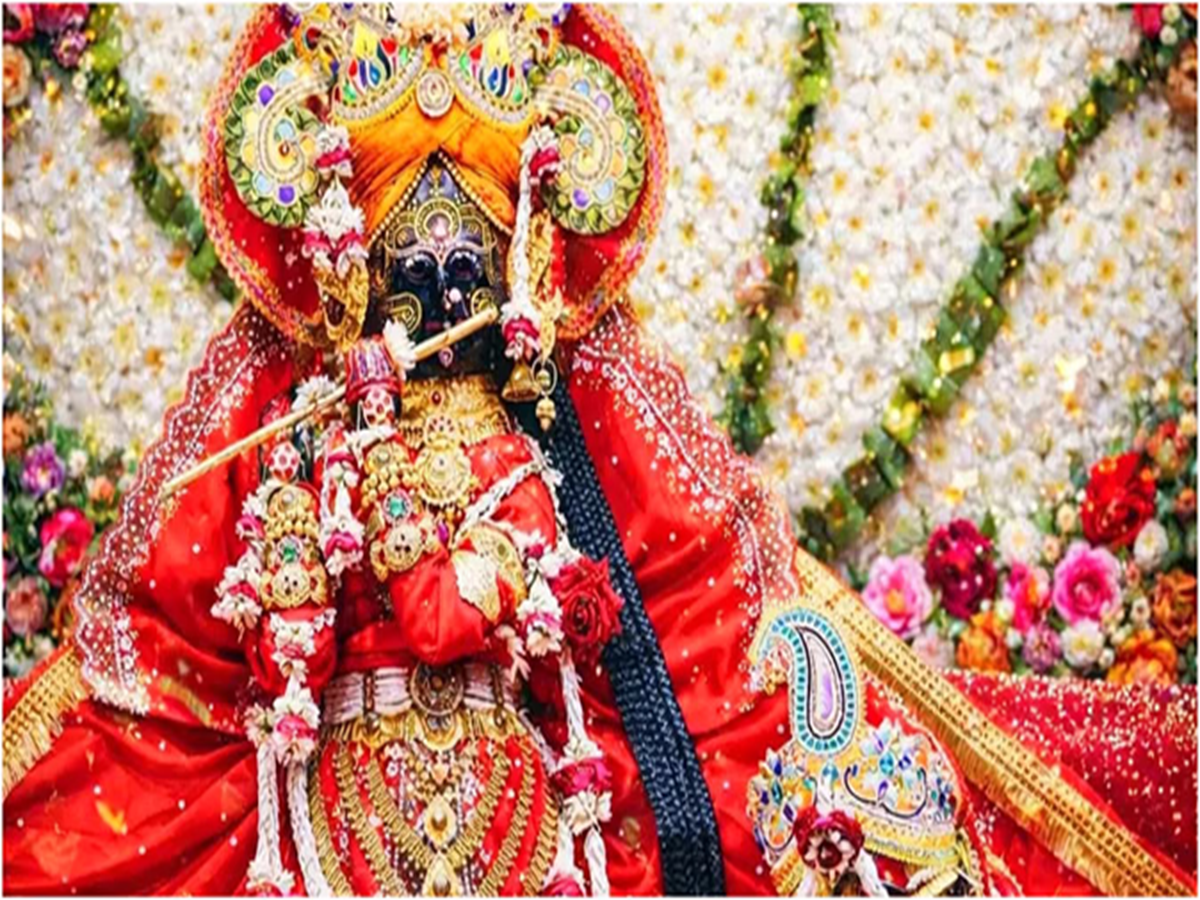
Sapt Devalaya: Braj is the land of Sri Krishna. Here, the glory of Krishna is visible everywhere—from the lanes of Gokul and Vrindavan to Mathura and Barsana. Devotees experience the presence of Kanha by visiting the many ancient temples in Vrindavan. While the Banke Bihari Temple and Radha Raman Temple are popular destinations attracting devotees from far and wide, did you know that there are not just these two forms, but a total of seven divine forms (Swaroops) of Thakur Ji enshrined here?
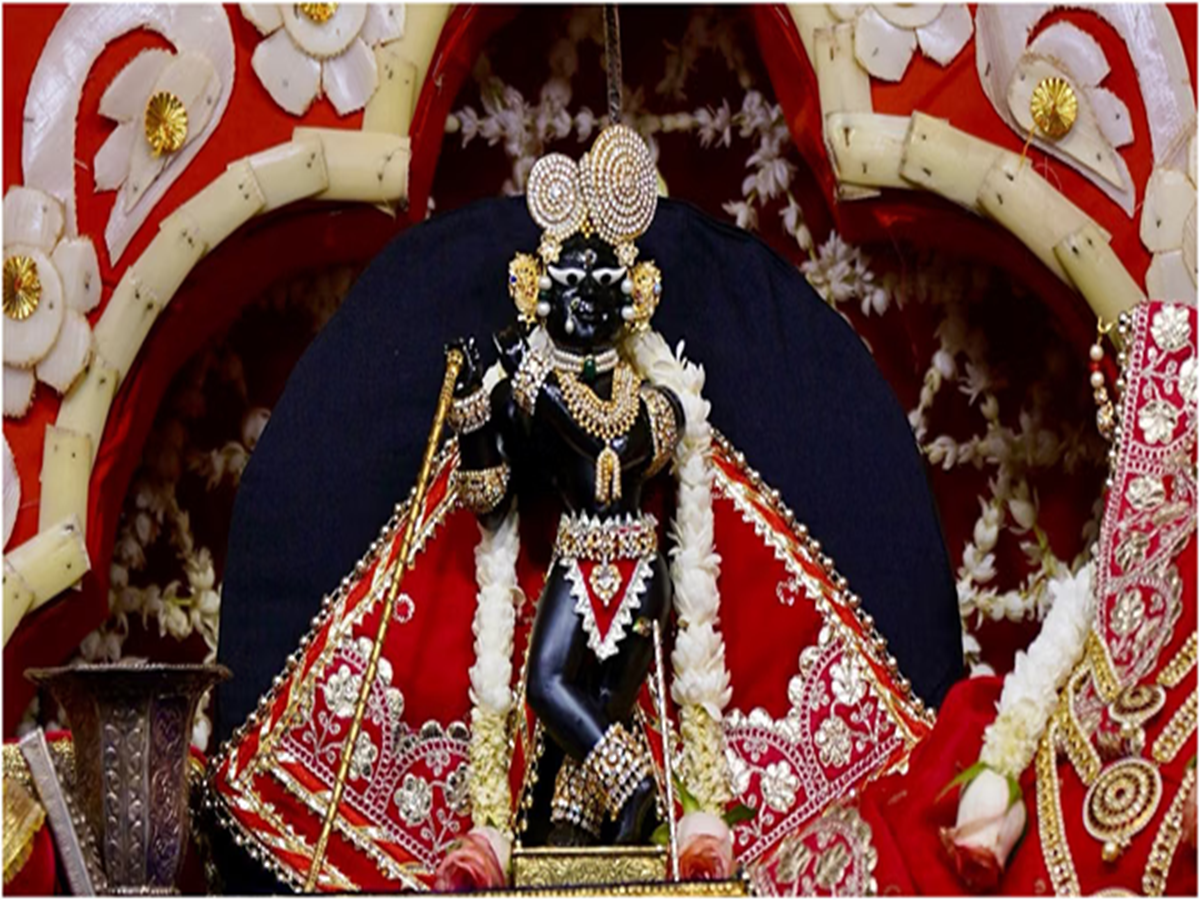
These are known as the 'Sri Vigrahas' of Vrindavan. All these forms of Krishna either manifested on their own or were discovered by the Goswamis; in other words, they are all *Swayambhu* (self-manifested). Following the ritual of *Pran Pratishtha* (consecration), these seven idols of Thakur Ji reside here as living, divine entities.
If you have not yet visited the principal Sri Vigrahas of Vrindavan, it is worth learning the names of these seven forms of Thakur Ji and where each one is enshrined.
The 7 Sri Vigrahas
1. Govind Dev Ji
2. Madan Mohan Ji
3. Gopinath Ji
4. Banke Bihari Ji
5. Radha Raman Ji
6. Radha Vallabh Ji
7. Jugal Kishore Ji
In the 16th century, acting on the instructions of Chaitanya Mahaprabhu, his disciples came to Vrindavan to perform spiritual practice (*Sadhana*) and discovered these divine idols—either from the earth or from within mounds of soil. Three of these prominent disciples were Rupa Goswami, Sanatan Goswami, and Loknath Goswami.
Govind Dev Ji
Five thousand years ago, Maharaja Vajranabh—the great-grandson of Lord Sri Krishna—commissioned the creation of three beautiful idols of Krishna, based on descriptions provided by his grandmother. The third and final idol was that of Govind Dev Ji, which featured an incredibly precise depiction of the Lord's divine countenance. Over time, this divine idol was lost. Later, Rupa Goswami discovered this idol at the 'Goma Tila' (a mound) in Vrindavan. It is believed that Lord Krishna appeared in a dream to Goswami-ji in the guise of a shepherd boy and revealed the location of this specific form of the deity. Currently, however, the deity of Govind Dev-ji resides in Jaipur, Rajasthan.
King Man Singh had originally commissioned the construction of a magnificent temple for Govind Dev-ji in Vrindavan. However, when temples faced a threat during the reign of Aurangzeb, the temple priests relocated the deity to the palace of Maharaja Sawai Jai Singh II in Jaipur. There, a temple was established near the Jai Niwas Garden within the City Palace complex, and Govind Dev-ji was enshrined.
Madan Mohan-ji
Of the three idols crafted by Vajrabhan, the first was that of Madan Mohan-ji; this form is believed to reveal a glimpse of Lord Krishna's lotus feet. In the Kali Yuga, either Advaita Acharya or Sri Sanatan Swami discovered this idol beneath a tree at Kalidaha (also known as Dwadashaditya Tila) in Vrindavan. A merchant later commissioned the construction of a grand temple for Madan Mohan-ji using red sandstone.
However, during Aurangzeb's invasions, King Gopal Singh of Karauli brought the original idol of Madan Mohan-ji to Karauli, where it remains enshrined in a magnificent temple to this day.
Gopinath-ji
This sacred deity manifested near Vamshivat in Vrindavan but is currently worshipped in Jaipur. It is the second of the three idols created by Lord Krishna's great-grandson. Over time, this deity was lost from sight. Later, Parmanand Bhattacharya discovered the idol—which had been buried under the sands near Vamshivat due to erosion and flooding caused by the Yamuna River. He installed the deity near Nidhivan and entrusted the responsibility of worship and service to Madhu Pandit Goswami. However, during the reign of Aurangzeb, Shri Khushhali Ram Bohra—the Diwan of Jaipur—brought this sacred idol to Jaipur and enshrined it in a *haveli* located in Purani Basti.
**Banke Bihari Ji**
It is believed that Swami Haridas Ji discovered the *Banke Bihari* form of the deity in the Vanshivat region. Legend has it that, pleased by Swami Haridas Ji’s musical devotion and boundless faith, the divine couple—Radha and Krishna—suddenly manifested themselves as a single idol. Initially, this *Tribhanga* (tri-bent posture) idol was worshipped in Nidhivan, but later, a famous temple dedicated to the deity was established in Vrindavan Dham. Today, the Banke Bihari temple ranks among the largest temples in Vrindavan.
**Radha Raman Ji**
The saint Gopal Bhatta Goswami visited the Gandaki River, where he obtained twelve *Shaligram* stones; he brought them to Vrindavan and began worshipping them. The story goes that one day, a devotee expressed a desire to offer clothes and ornaments to the deity (*Thakur Ji*). Gopal Bhatta Goswami thought to himself that if the *Shaligram* stone were in the form of the deity—taking on the actual shape of *Thakur Ji*—he would be able to adorn it with such offerings. Pleased by his devotion, that very night in 1542, one of the twelve *Shaligram* stones miraculously transformed into a divine idol of Krishna playing the flute in the *Tribhanga* posture.
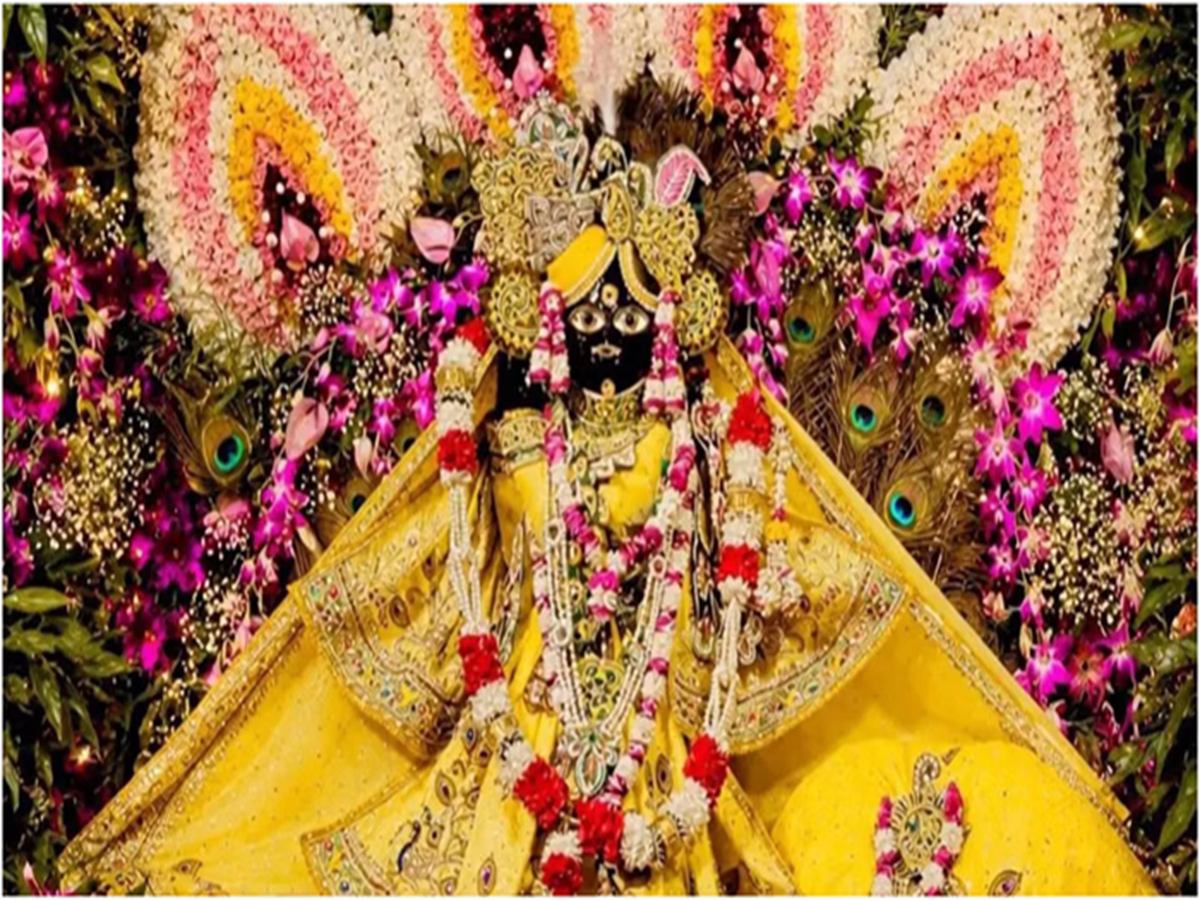
Radha Vallabh Ji
This divine idol, consecrated by Hit Harivansh Mahaprabhu, graces the holy land of Vrindavan. It is believed that this idol of Radha Vallabh Ji originally belonged to Lord Shiva (Bholenath). Once, a Brahmin named Atmadev performed penance to please Lord Shiva. He sought a boon, asking for the object dearest to Shiva's heart. Lord Shiva manifested the divine idol of 'Lal' (Radha Vallabh) from his own heart and entrusted it to Atmadev. Later, Shri Hit Harivansh Mahaprabhu married Atmadev's daughters and received this idol of Radha Vallabh as part of the dowry. He brought the idol to Vrindavan, where he installed it and commenced the worship of Radha Vallabh.
PC Social Media