LIFESTYLE
Sawan: How did the tradition of swinging in Sawan start? Know its deep meaning related to nature, love and separation..
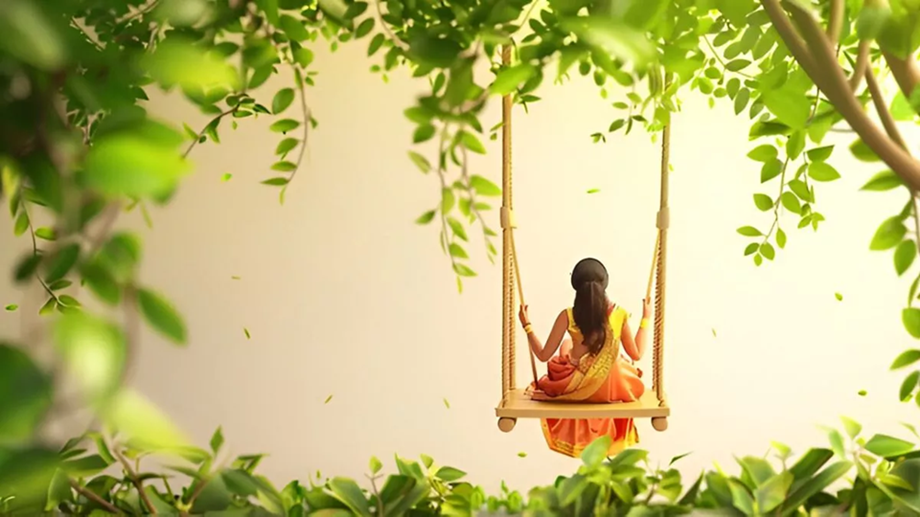
In Indian philosophy of life, the goal of life is to attain supreme bliss, and this supreme bliss is not to be attained by oneself but to be given to others; only then is your bliss meaningful. This is the reason why many festivals are respectfully present in the Indian way of life, and probably this is the reason why swinging is considered an important part of our culture.
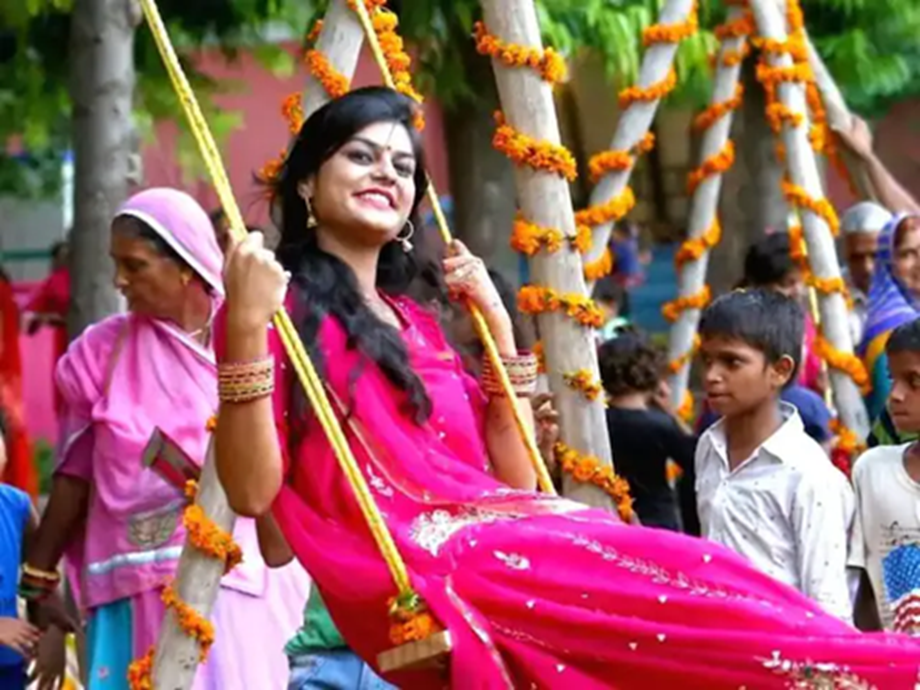
The tradition of swinging in India is not just for enjoying, but it is a celebration of emotions. Swinging is not just a means of swinging for a woman; it is the flight of the soul. As soon as the month of Sawan arrives, when the sky is drenched in greenery, moist winds kiss the earth, then only one aspiration rises in the mind of the Indian woman on seeing the colors of nature.
If seen, swinging is like that dance in our life which adds flavour to monotony and makes one experience movement in stability. It is not just a means made of rope and wood; it is that emotional gust which binds love, memory, separation, and devotion together.
Silent dialogue of separation
While on one hand, the swing is a symbol of celebration, on the other hand, it is also the softest and silent dialogue of separation. In the greenery of the month of Saavan, when everything from the leaves to the winds is drenched in love, then in the same season, there is a woman for whom the swing becomes the melody of waiting. Where the swing becomes the step of separation. In the pleasant month of Saavan, when the beloved is far away, then some memory or the other swings on each side of the swing-
...and these memories take her back to her childhood where there was the happiness of her maternal home, mother's loving lap, innocent fights with brother, dolls, friends, laughter-
That is why the tradition of swinging on the swing has a special significance. It is not just a game of Saavan; it is a silent testimony of all those months that the woman has lived. The swing on which she sits and swings not only her body but also her emotions, a suppressed call hidden on every side. Therefore, when an Indian woman sits on a swing, she does not merely repeat her childhood, but gives expression and movement to the innermost feelings of life. For her, the swing is not a festival, but a place where memory, waiting, and the play of love swing together.
Symbol of Indian philosophy
The cultural prevalence of the swing is amazing. There are various folk traditions associated with the swing in many provinces of India. In Uttar Pradesh and Bihar, women put up swings and sing songs on festivals like Teej, Kajri, Jhula, and Hariyali. In Rajasthan, the festival of swings is associated with Hariyali Teej, where adornment and mehndi songs become the celebrations of women's lives. In the Malwa region of Madhya Pradesh, Phaag, Gangaur, and Jhoolan festivals are traditionally celebrated with the swing. One thing common in all of these is the collectiveness of women, exchange of laughter, songs, and memories with the swing as the center. The swing also represents that ancient memory, where the child finds the first swing of his life in the lap of the mother.
In Indian homes, wooden cradles are a form of swings that are the first experience of love, security, and affection. The swing swings like a mother's lap, sometimes fast, slow, and every time it sings a new lullaby to the soul. If we look deeply, the swing itself becomes a symbol of the Indian philosophy of life. The pace of life is like a swing, sometimes up, sometimes down, but just as the swing feels free even when it is tied to its rope, similarly, in Indian life too, there is a feeling of being free within the bondage. Now times have changed and swings have become very few. Not only in metros but even in small towns, the days of Sawan can now be spent only on swings in parks. Time is changing and with it many traditions too, but people will have to think that they will have to go to the traditions necessary for mental and physical health...a swing is not just a plank tied with two ropes. A swing is the flight of the mind, a leap of enthusiasm! Gopis are swinging with their friends.
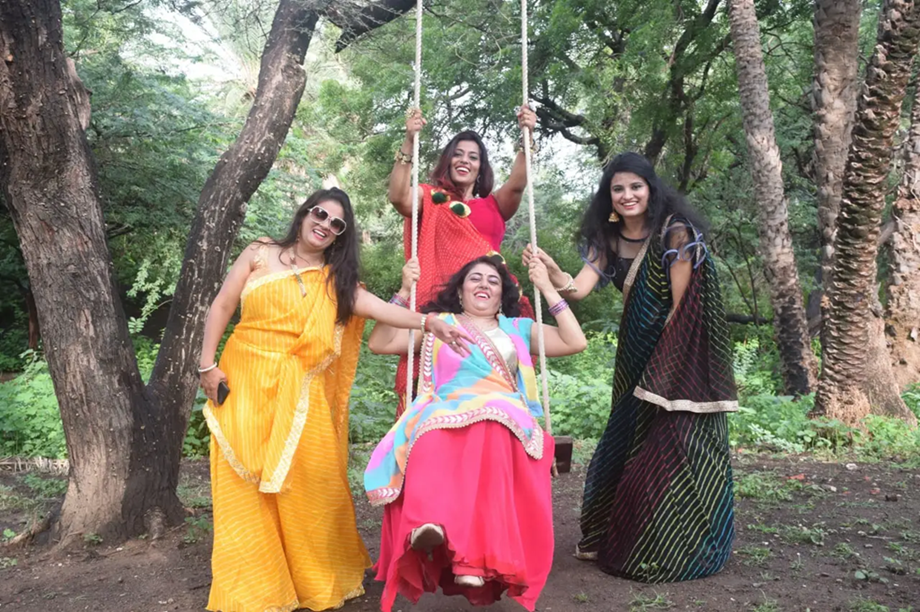
Music and literature are filled with the stories of Radha and Kanhaiya swinging with the cowherd boys and gopikas in Vrindavan. Lord Krishna is at the center of devotional love and spirituality. Krishna's simplicity helps attain him. That is why Krishna is everyone's friend; he swings with everyone and also performs Raas. The sweetest scene that emerges with the image of Bal Gopal is the cowherd boys and gopis swinging Kanha on a Kadamba tree or Manmohan swinging Radharani. This scene of ecstasy is considered to be the peak of devotion. Saints, Krishna devotees, and artists have described this scene of Kanha, Radharani, boys, cowherd boys, and gopikas swinging in this way-
The festival of swings is celebrated as Jhoolan Utsav in Haridwar, Vrindavan, Mathura, and many temples of India. Here devotees swing Kanha in swings decorated with silver, gold, flowers, or silk clothes, decorate tableaus, and sing songs.
PC Social media