LIFESTYLE
Solar Eclipse: A solar eclipse will occur at the beginning of 2026. Will it be visible in India? Know the date, time, and sutak period...

Solar Eclipse 2026: The solar eclipse holds special significance in Hinduism, and in the new year 2026, there will be two solar eclipses. This celestial event, occurring in the sky between morning and afternoon, will be an opportunity for scientists to study, and it is also considered special from a religious and astrological point of view. In Vedic astrology, the Sun is considered the ruler of the body, willpower, health, kingship, and life force. When the Sun's radiance is obstructed during an eclipse, its auspicious energy is also considered to be obstructed; therefore, this time is naturally considered inauspicious. Many people want to know when the first solar eclipse of the new year will occur, where it will be visible, whether there will be a period of impurity (Sutak), and what its effect might be on ordinary people. Let's find out when the first solar eclipse of 2026 is going to occur…
First Solar Eclipse of 2026
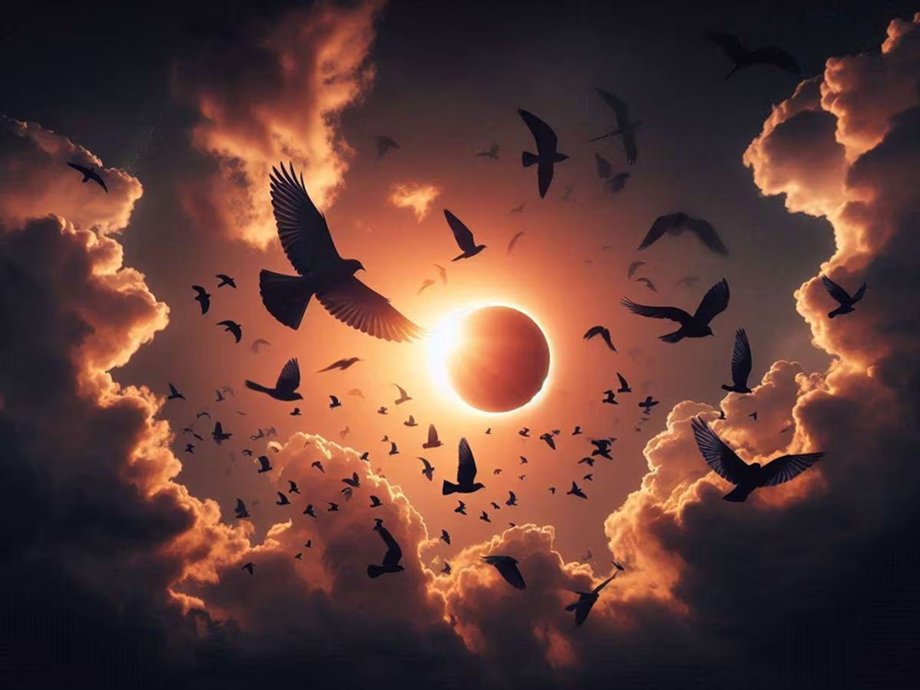
According to astrology, the first solar eclipse of 2026 is going to occur on Tuesday, February 17th. This will be an annular solar eclipse, which will occur at 3:26 PM Indian Standard Time on February 17th. However, this eclipse will not be visible in India; therefore, the period of impurity (Sutak) will not be applicable.
Solar Eclipse in Aquarius
The solar eclipse occurring on February 17th is going to take place in the zodiac sign of Aquarius, ruled by Saturn, and in the Shatabhisha Nakshatra, ruled by Rahu. Although this eclipse will not be visible in India, its effects will be felt on the country, the world, living beings, nature, human life, and the personal and professional lives of all 12 zodiac signs from Aries to Pisces. In Indian astrology, eclipses are considered inauspicious for normal activities, but the scriptures say that chanting, meditation, and charity performed during the eclipse period are many times more fruitful than at other times. This is because the vibrational frequency of nature becomes extremely sensitive at that time.
What is a Solar Eclipse?
A solar eclipse occurs when the Moon comes between the Earth and the Sun and blocks its light for a short time. That is, the sun that you see shining every day is covered by the shadow of the moon for a few minutes. This entire scene looks completely cinematic, as if someone has drawn a curtain over the sun.
What is considered from an astrological point of view?
In India, a solar eclipse is considered special from a religious and spiritual perspective. Many people perform religious activities such as meditation, chanting mantras, or bathing during this time. According to astrology, eclipses occur due to Rahu. Rahu is considered an inauspicious, illusion-creating, and destabilizing planet. When this same Rahu covers the sun, it is naturally considered an inauspicious conjunction. The Puranas mention that the time of the eclipse increases tamasic energy and decreases rajas and sattva. Therefore, avoiding food, sleep, and auspicious activities during the eclipse period is advised to avoid that tamasic influence.
Therefore, Rahu and Ketu swallow the Sun and Moon.
According to the Puranas, the gods and demons (asuras) together churned the ocean. The objective was to obtain Amrita (the nectar of immortality). When the pot of Amrita emerged, both sides became eager to obtain it. The dispute escalated, and the situation worsened. Then Lord Vishnu assumed the form of Mohini, an extremely attractive, radiant, and divine form. Mohini, with her intelligence and captivating form, began distributing Amrita to the gods. During this time, a demon named Swarbhanu secretly sat in the row of the gods. His objective was clear: to somehow take a sip of Amrita so that he, too, could become immortal. Everything was going according to plan, but as soon as Mohini put a drop of Amrita in his mouth, the Sun God and Moon God immediately recognized that he was not a god. They loudly declared that he was a demon.
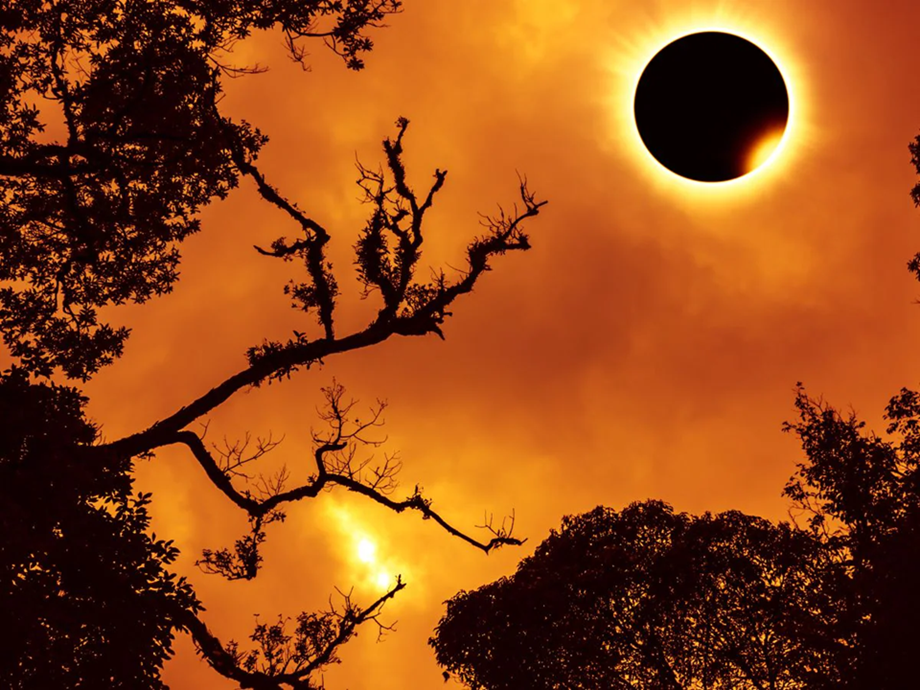
Upon learning of Swarbhanu's deception, Lord Vishnu unleashed his Sudarshan Chakra, and at that moment, Swarbhanu's head and torso were separated. But the drop of Amrita was about to go down his throat, so he did not die, but remained alive in two parts. The head part of Swarbhanu became Rahu, and the torso part became Ketu. Both are called shadow planets because their bodies were not complete. According to the legend, Rahu and Ketu were extremely angry with the Sun and Moon gods because it was due to them that their deception was exposed. Therefore, it is believed that whenever Rahu or Ketu approach the Sun or Moon, they swallow them, and at that moment a solar or lunar eclipse occurs. However, after some time, the Sun and Moon gods reappear because Rahu and Ketu are only shadow planets and cannot completely swallow them.
Where can you see the solar eclipse?
On February 17, 2026, a spectacular solar eclipse will be visible in the sky, and it will be an annular solar eclipse, meaning a ring of fire will be visible around the sun, with a magnitude of 0.963. This eclipse will not be visible in India, but a partial solar eclipse will be visible in Antarctica, southeastern Africa, the southern tip of South America, and the Pacific, Indian, Atlantic, and Southern Oceans. You can also view it from research stations in Antarctica and from various islands, cities, and locations within the partial eclipse zone.
PC Social Media