Parenting
Is it right or wrong to praise children for everything they do? How does it affect their confidence?

Gentle Parenting Tips: Every parent naturally feels the urge to shower their child with love and praise for every achievement, big or small. However, a debate has recently emerged—both on social media and within parenting circles—regarding the practice of praising children. Some argue that frequent praise makes children dependent on external validation and approval, which can diminish their intrinsic (internal) motivation. So, the question arises: is praising children actually harmful? Or is it an effective way to foster their growth and strengthen their bond with their parents? Let’s explore this through the lens of research and science.

What does the research say? (Does praise make children dependent or stronger?)
According to *Psychology Today*, many believe that praise leads to dependency on others. Scientific research, however, suggests otherwise. Studies indicate that when praise is delivered appropriately, it consistently has a positive impact on children.
Research has shown that well-delivered praise encourages children to excel academically, assist others, and behave kindly toward those around them. It also boosts their self-confidence and enhances their ability to understand others. Furthermore, praise can help children cultivate honesty and approach situations with an open mind. Consequently, offering praise is an essential component of effective parenting.
It is important to note, however, that the *way* you praise a child matters significantly. Let’s look at seven simple yet effective ways to praise children—methods that are also backed by scientific reasoning.
7 Effective and Scientifically-Backed Ways to Praise Children:
1. Praise their effort, not their inherent traits—
Instead of simply telling a child, "You are so smart" or "Your drawing is beautiful," focus your praise on the effort they have put in. For instance, if a child solves a difficult problem, you might say, "You put in such a great effort to solve this." This helps the child understand that through hard work and persistent effort, they can learn anything. In psychology, this is known as "process praise"—praising the effort and hard work rather than the outcome. Such praise encourages children to take on challenging tasks and to try again if they make a mistake. Conversely, praising only their intelligence or talent can place the child under pressure to maintain a certain image.
2. Offer encouraging praise, not pressure
When praising a child, avoid making them feel as though they did something well solely to please you. For example, if a child scores a goal in a game, instead of saying, "You scored a goal—I’m so happy about that," you could say, "It looks like you really enjoyed playing!" This allows the child to pursue activities based on their own joy and personal preferences. It also shows them that their parents respect their efforts and their individual interests.
3. Avoid praising by comparing the child to others-
Sometimes, parents might say, "Look, you did even better than your friend!" While this may sound like a compliment, it can foster a competitive urge to get ahead of others. Instead of focusing on their own hard work and progress, the child may begin to fixate on whether others are better than them. Therefore, rather than comparing them to a friend, sibling, or classmate, acknowledge their own individual effort—for example, by saying, "Your handwriting has improved significantly since last time." This helps the child recognize the progress they have made themselves.
4. Don’t just offer generic praise; specify what they did well.
When a child does something well, don’t simply stop at "Very good!" or "Well done!" Take a moment to explain exactly what it was that you appreciated about their actions. For example, saying, "You put away all your toys yourself after playing today—that’s a wonderful habit," helps the child understand exactly what they did right and encourages them to continue such behavior. While general praise is fine occasionally, being specific allows the child to better grasp the value of their positive actions.
5. Combine praise with affectionate gestures—
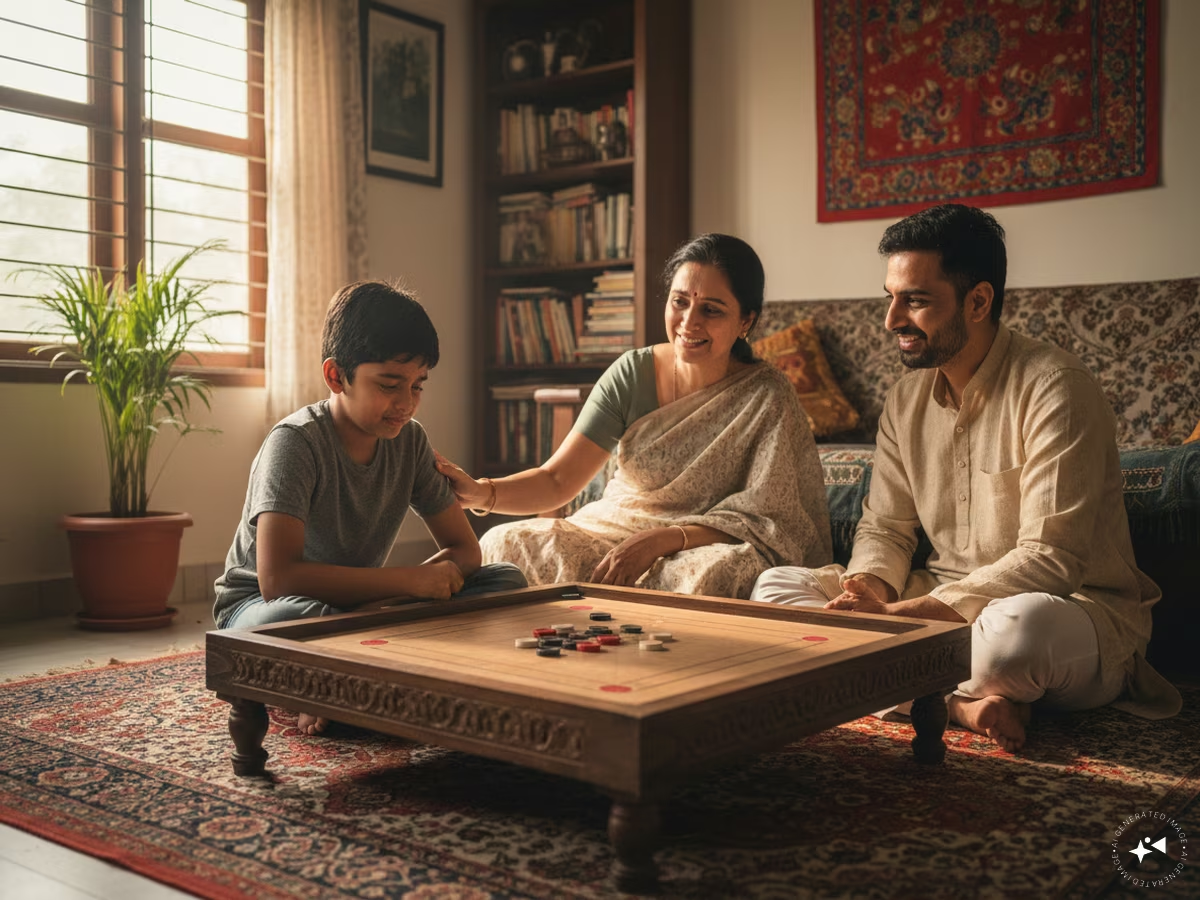
You don’t always need words to express love to children. Try patting them on the back, smiling at them, giving them a hug, or offering a high-five. These small gestures show the child that you share in their joy and value their efforts. For instance, if a child manages to tie their own shoelaces for the first time, you could smile and hug them. This will boost their confidence and motivate them to try on their own again next time.
6. Avoid insincere or excessive praise—
Praise should always be genuine. If a child’s painting is merely average, there is no need to call it the most beautiful painting in the world. Instead, you might say, "You’ve chosen some great colors here," or "I really appreciate how hard you worked to finish this." When a child perceives your praise as sincere, they are more likely to trust it. Conversely, over-praising every minor action can diminish the significance of your words. Therefore, offer praise only when—and to the extent—that it is truly warranted.
7. Along with praise, give your child time and love—
Children need your love and attention not just when they do something well, but on ordinary days too. When your child shares something with you, listen attentively. Play with them, join in their small joys, and offer a hug whenever needed. For instance, if your child comes home from school and wants to tell you a little story, put your mobile phone aside and listen. This shows them that their words and feelings matter to you. Praise, when accompanied by love and attention, helps boost a child’s self-confidence.

Remember, parents don’t always need to use specific words or elaborate methods to praise their child. Simply ensure that your praise is genuine and acknowledges the child’s hard work, effort, and good behavior. They should feel confident that you will stand by them, even when they make a mistake. When a child understands that they don’t have to succeed every single time, they become more willing to learn new things and face challenges without fear. Over time, this fosters self-confidence, patience, and self-belief.
PC Social Media