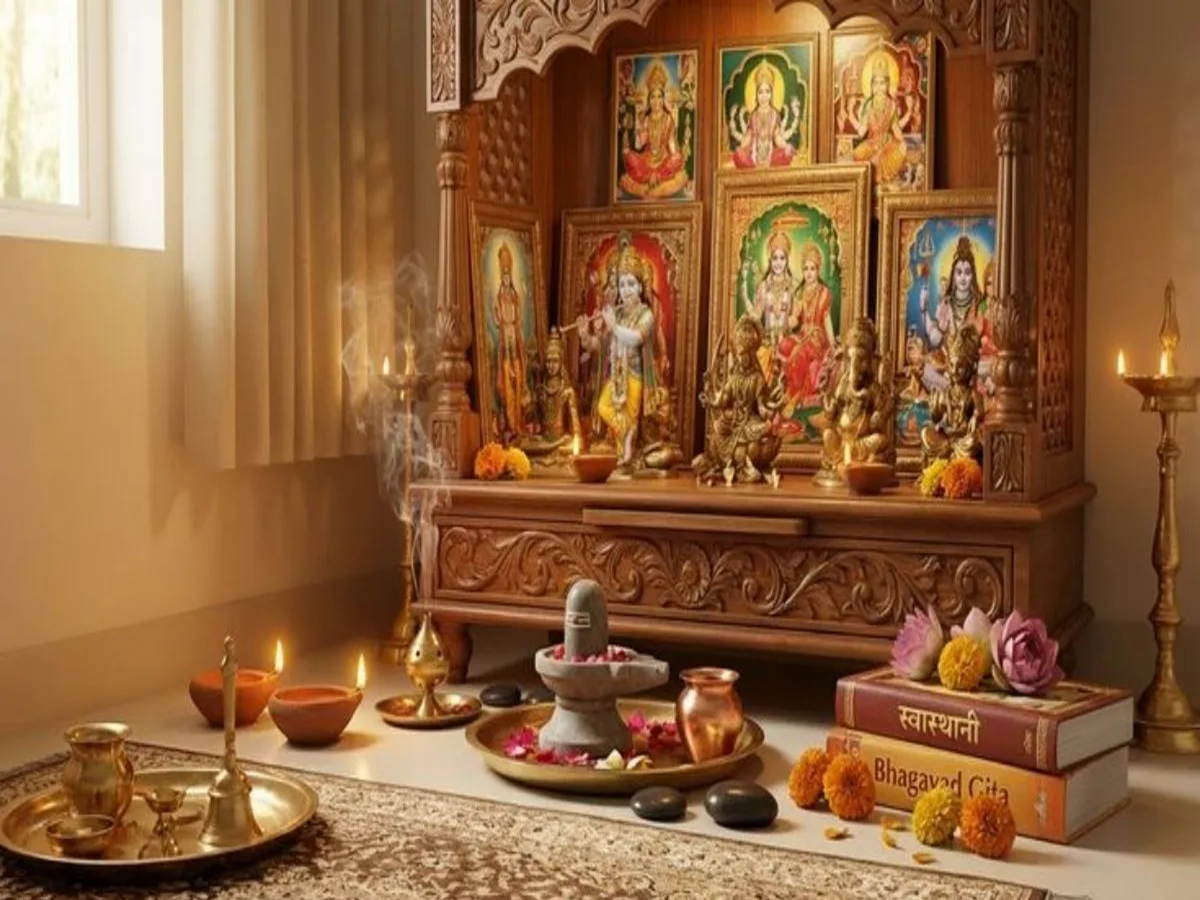
Vastu Tips for Home Worship (Puja): In Hinduism, worship is considered an integral part of daily life. There is a tradition of worshipping the Divine regularly, both in the morning and evening, within the home. According to religious beliefs, performing worship with the prescribed rituals fosters happiness, peace, and positivity in the household. Different days of the week are dedicated to various deities, and worship is conducted accordingly. However, it is not enough to focus solely on mantras and rituals; the correct direction and the proper method of worship are also of great significance. Vastu Shastra outlines several guidelines for worship, and it is believed that adhering to these rules ensures the full spiritual benefits of one's prayers. Let us explore the correct way to perform worship at home, including whether one should be seated or standing.
According to Vastu Shastra, special attention should be paid to the direction while worshipping at home. It is considered auspicious to face either the East or the North during worship. Furthermore, items used in the ritual—such as the bell, incense, lamps, and incense sticks—should be placed on one's right-hand side. The East is regarded as a symbol of power and valor, while facing the North is believed to bring happiness, prosperity, and abundance to the home. Therefore, one should keep these Vastu principles in mind during daily worship.
Vastu traditions also emphasize the importance of placing ritual items in their proper positions. It is believed that essential offerings—such as flowers, *akshat* (unbroken rice grains), sandalwood, water, and other materials—should be kept on one's left-hand side. Following this ensures that the worship is conducted according to the prescribed rituals, leading to auspicious outcomes. Thus, one should be mindful of the arrangement of these items during worship.
According to the tenets of Vastu Shastra, the first step in the worship process should be the application of a *tilak* (a sacred mark) to the deity. After this, it is considered auspicious to apply a *tilak* on one’s own forehead and then on the foreheads of others participating in the worship. Furthermore, one should be mindful of how one sits during the ritual. According to religious beliefs, the worship of the Divine should always be performed while seated comfortably and with a focused mind. It is believed that sitting during worship keeps the mind calm and makes it easier to concentrate. Therefore, rather than rushing, one should perform the prayers with complete devotion and a composed state of mind.
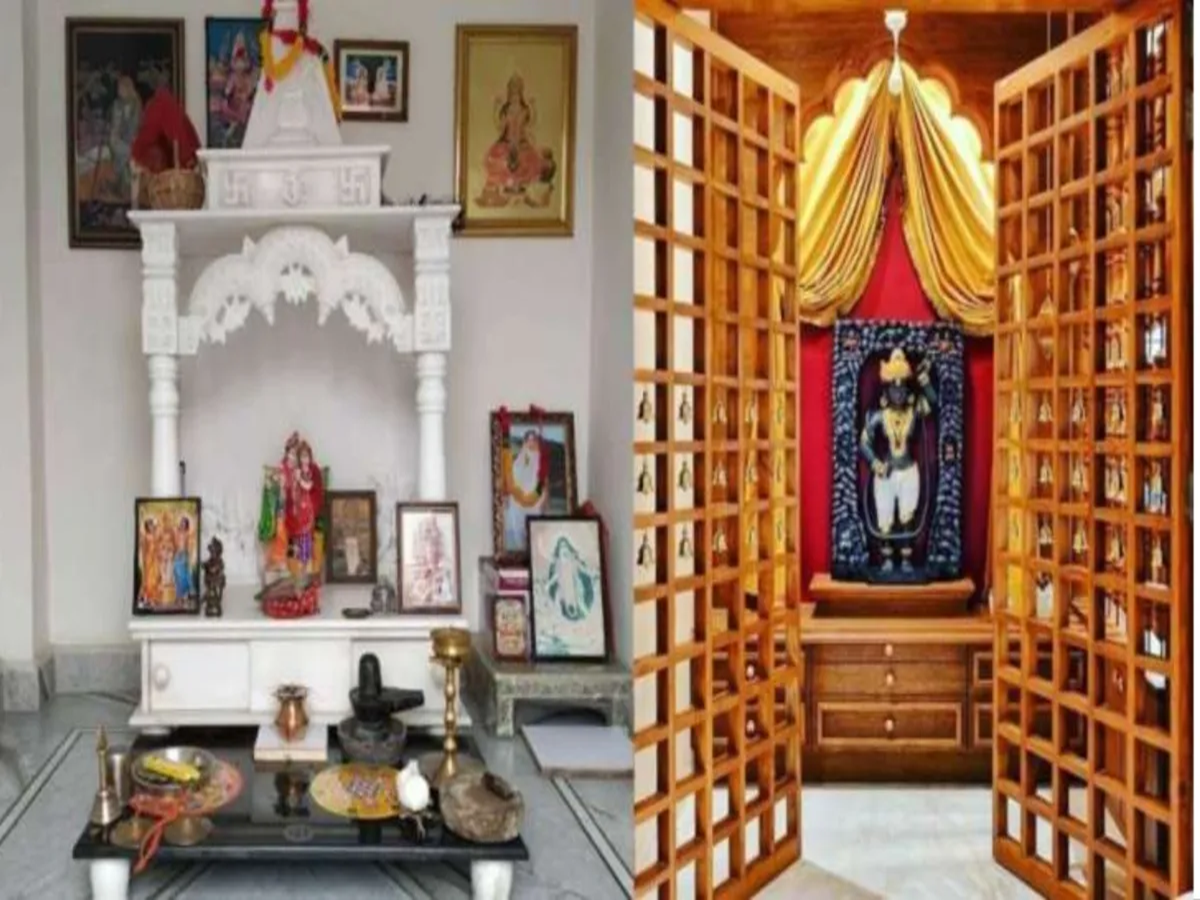
Selecting the right location when setting up a place of worship at home is also considered extremely important. According to *Vastu Shastra*, there should be no toilets in the vicinity of the shrine. Additionally, one should avoid creating a prayer space underneath a staircase. In accordance with religious traditions, the environment of a place of worship should be peaceful, clean, and well-organized. Consequently, one should pay careful attention to these *Vastu* guidelines when establishing a new shrine.
PC Social Media