Business
8th Pay Commission: What If Annual Increment Rises From 3% to 5%? Here's How Your Basic Salary Could Grow
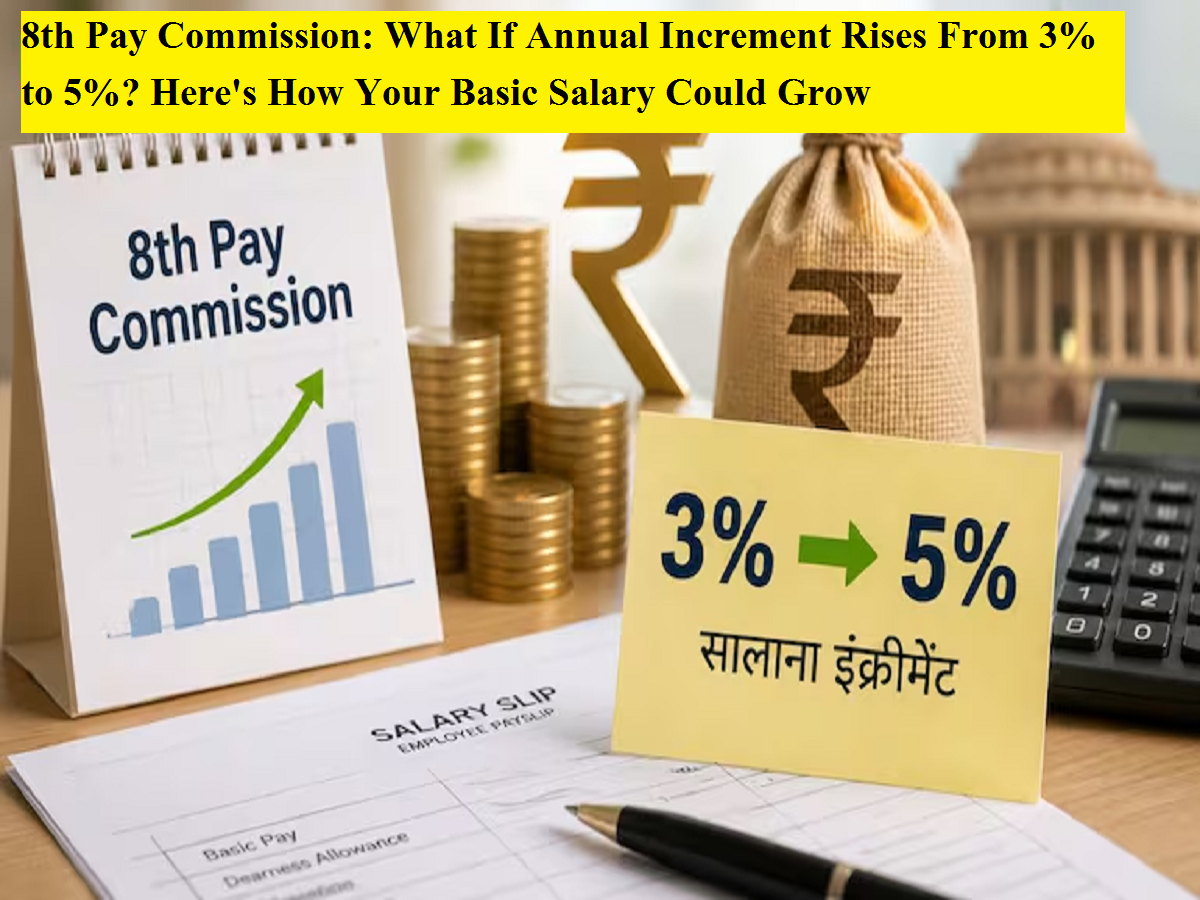
8th Pay Commission News: Discussions surrounding the 8th Pay Commission continue to gain momentum as the government holds consultations with employee unions and other stakeholders. One of the key questions among central government employees is whether the annual increment rate, currently fixed at 3%, could be revised upward.
While no official proposal or confirmation has been issued by the government regarding an increase in the annual increment, experts have analysed the possible impact if the rate were raised to 5%. Their estimates suggest that such a move could significantly boost employees' basic pay over the next five years through the power of compounding.
How the Current Annual Increment System Works
Under the 7th Central Pay Commission, eligible central government employees receive an annual increment of 3% on their basic pay.
The increment follows a compounding method, which means each year's increase is calculated on the revised basic salary rather than the original pay. As a result, employees receive a progressively higher increase every year.
It is important to note that the 8th Pay Commission has not announced any change to this system, and the 3% annual increment remains in force unless officially revised.
What Could Happen if the Increment Is Increased to 5%?
According to expert projections, raising the annual increment from 3% to 5% would accelerate the growth of basic salaries over time.
Because the increment compounds every year, even a 2-percentage-point increase could create a substantial difference in cumulative earnings after five years.
Employees across different pay levels could see noticeably higher basic salaries compared with the existing 3% structure, although the exact increase would depend on their current pay level and years of service.
Why Basic Salary Matters
An increase in basic pay affects much more than just the monthly salary credited to an employee's bank account.
Several allowances and retirement benefits are directly linked to basic pay, including:
- Dearness Allowance (DA): Calculated as a percentage of basic pay, so a higher basic salary results in a higher DA amount.
- House Rent Allowance (HRA): Since HRA is linked to basic pay, any increase in the basic salary also raises HRA.
- National Pension System (NPS): Employee and government contributions increase with higher basic pay.
- Gratuity and Retirement Benefits: These are also influenced by the level of basic salary, potentially improving retirement savings.
As a result, even a modest increase in the annual increment rate could have a long-term impact on an employee's overall financial benefits.
Meetings Related to the 8th Pay Commission
The 8th Pay Commission has intensified consultations with various stakeholders as it prepares its recommendations.
According to the current schedule:
- Delhi: Stakeholder meetings are scheduled for August 7 and August 10.
- Chennai: Discussions are planned for September 7 and 8.
- Puducherry: A meeting is scheduled for September 9.
These consultations are expected to help the commission gather feedback before finalising its recommendations for the government.
No Official Decision Yet
Although discussions about a possible increase in the annual increment have generated significant interest among central government employees, there is currently no official announcement confirming that the rate will be raised from 3% to 5%.
Any change to the increment structure would require formal approval and would be announced by the government after the commission submits its recommendations.
What Employees Should Watch
In the coming months, government employees are likely to keep a close eye on:
- Recommendations of the 8th Pay Commission.
- Official announcements on annual increment policy.
- Decisions on fitment factor and revised pay structure.
- Future changes in DA, HRA, and pension-related benefits.
These factors will collectively determine the overall salary revision under the new pay commission.
Final Take
Speculation about increasing the annual increment from 3% to 5% has sparked widespread discussion among central government employees. While expert estimates suggest that such a change could substantially improve basic pay and related benefits over five years, no official proposal has been approved so far. Employees should rely on government notifications and the final recommendations of the 8th Pay Commission for confirmed updates regarding salary revisions.