LIFESTYLE
Are dreams merely a replay of the day's events? Discover why our own mind plays this game at night...
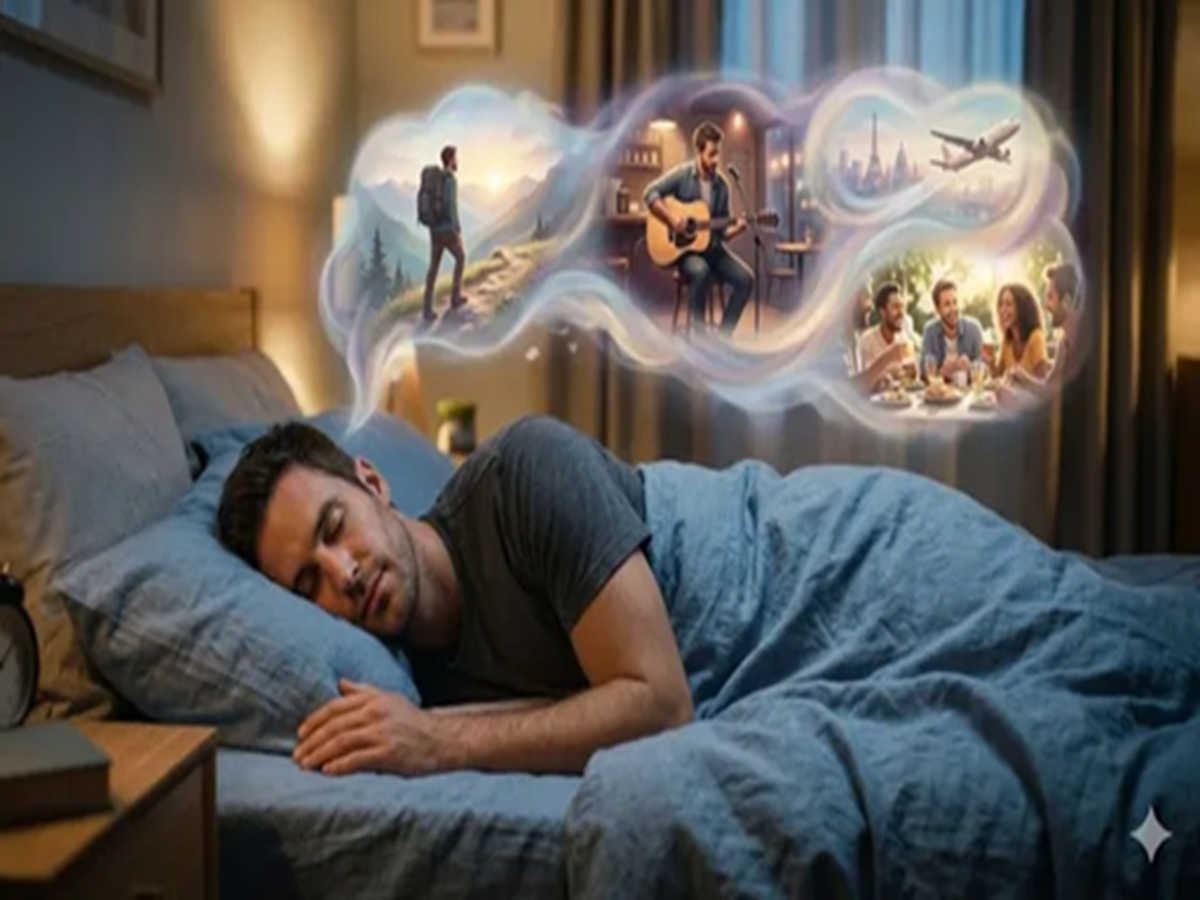
Our dreams are, to a significant extent, intertwined with our real lives, thoughts, and concerns. The subjects we ponder during the day often manifest in our dreams at night.

According to a new study, the content of dreams is neither random nor chaotic; rather, it reflects a complex interplay between individual traits—such as a propensity for mind-wandering, an interest in dreams, and sleep quality—and external events, such as large-scale social experiences like the COVID-19 pandemic.
**Italian Research Based on 3,700 Dreams**
Researchers at the IMT School for Advanced Studies Lucca in Italy analyzed reports of over 3,700 dreams and waking experiences collected from 287 participants aged between 18 and 70. Over two weeks, participants recorded their daily experiences, while researchers gathered data regarding their sleep patterns, cognitive abilities, personality traits, and psychological characteristics. The researchers subsequently analyzed the specific words used by the participants to describe both their daily lives and their dreams.
**Dreams Shape Reality**
The researchers noted that dreams do not merely reproduce our waking experiences; they also reinterpret them. Elements of daily routines—such as work environments, healthcare settings, or educational contexts—do not simply reappear exactly as they are; instead, they are reorganized into vivid, holistic scenarios that often blend disparate contexts and shift perspectives within unfamiliar landscapes. The findings suggest that dreams do not merely mirror reality, but actively reshape it by integrating fragments of past experiences with imagined or anticipated ones.
PC Social Media