Business
Don't jeopardize your retirement in the pursuit of your dream home! Think twice before touching your EPF money..
Buying one's own home is a dream for everyone. To fulfill this dream, people often rely on years of accumulated savings and investments. Seeing the substantial funds accumulated in the Employees' Provident Fund (EPF), salaried individuals often consider withdrawing money from their PF account to ease the burden of a home loan or to make a down payment. The Employees' Provident Fund Organization (EPFO) does permit partial withdrawals for purchasing a home. However, is this a wise financial decision? Financial experts advise thinking twice before doing so. Let us understand, in simple terms, why tapping into your EPF corpus to buy a home could be detrimental to your future and what better alternatives exist.
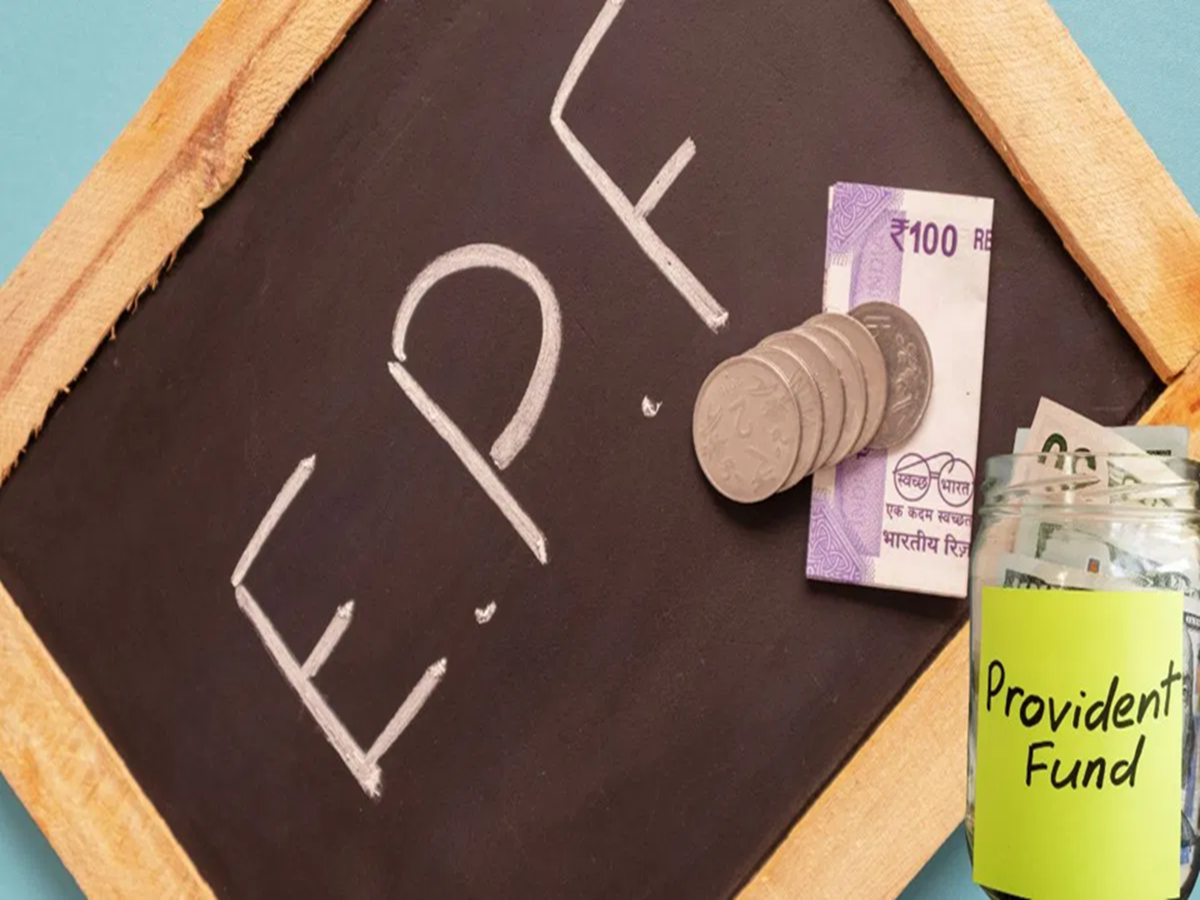
What are the key points to understand?
Relaxation in rules: The EPFO allows withdrawals from the EPF balance for purchasing or constructing a house or plot after completing at least five years of service.
Significant loss due to compounding: The safe and tax-free interest earned on EPF grows your money manifold by the time you retire; a withdrawal eliminates this growth potential.
Retirement risk: Withdrawing PF money significantly erodes your retirement corpus and compromises your financial security in old age.
The math of tax benefits: Taking a home loan offers dual tax benefits, whereas withdrawing EPF money limits this advantage.
What do EPFO rules say?
According to current EPFO regulations, an employee who has completed five years of continuous service can withdraw funds from their EPF account under the following circumstances:
For purchasing land: Up to a maximum of 24 months' basic salary plus Dearness Allowance (DA).
For purchasing a ready-built house or flat: Up to a maximum of 36 months' basic salary plus DA.
For purchasing a house through a housing society: Up to 90% of the total accumulated corpus can be withdrawn. On paper, this rule seems very convenient, but from a financial planning perspective, it can prove to be quite risky.
4 Major Drawbacks of Withdrawing EPF for a Home
Financial advisors warn that EPF is a retirement asset, not a liquid savings account. Withdrawing funds from it for any purpose other than emergencies depletes your retirement nest egg.
Huge Loss Due to Compounding: EPF currently offers a safe and guaranteed interest rate of 8.25%, which is entirely tax-free (under the EEE category). Suppose you are between 30 and 35 years old and withdraw ₹5 lakh from your PF to buy a home. Had this ₹5 lakh remained invested in the PF for the next 25 years, it would have grown to approximately ₹36 lakh to ₹38 lakh by the time of retirement, thanks to the 8.25% compound interest rate. In other words, the real cost of withdrawing ₹5 lakh today is equivalent to a future loss of over ₹37 lakh.
Significant Gap in Retirement Corpus: In the Indian context, EPF is the primary source of retirement savings for most employees. If you invest a large portion of your EPF in real estate during the early or middle years of your career, you will not have a sufficient cash corpus left by the time you retire.
Loss of Home Loan Tax Benefits: If you withdraw money from your EPF to increase your down payment and reduce the loan amount, you miss out on the full tax benefits associated with home loans. Under Section 24(b), a tax deduction of up to ₹2 lakh per annum is available on home loan interest payments. Under Section 80C, a tax deduction of up to ₹1.5 lakh is allowed on the principal repayment of a home loan.
Money Gets Locked in an Illiquid Asset: By withdrawing EPF funds, you convert them into a house (an immovable asset). Real estate is an illiquid asset; it cannot be immediately sold and converted into cash when the need arises. In contrast, EPF funds become available to you as liquid cash immediately upon retirement.
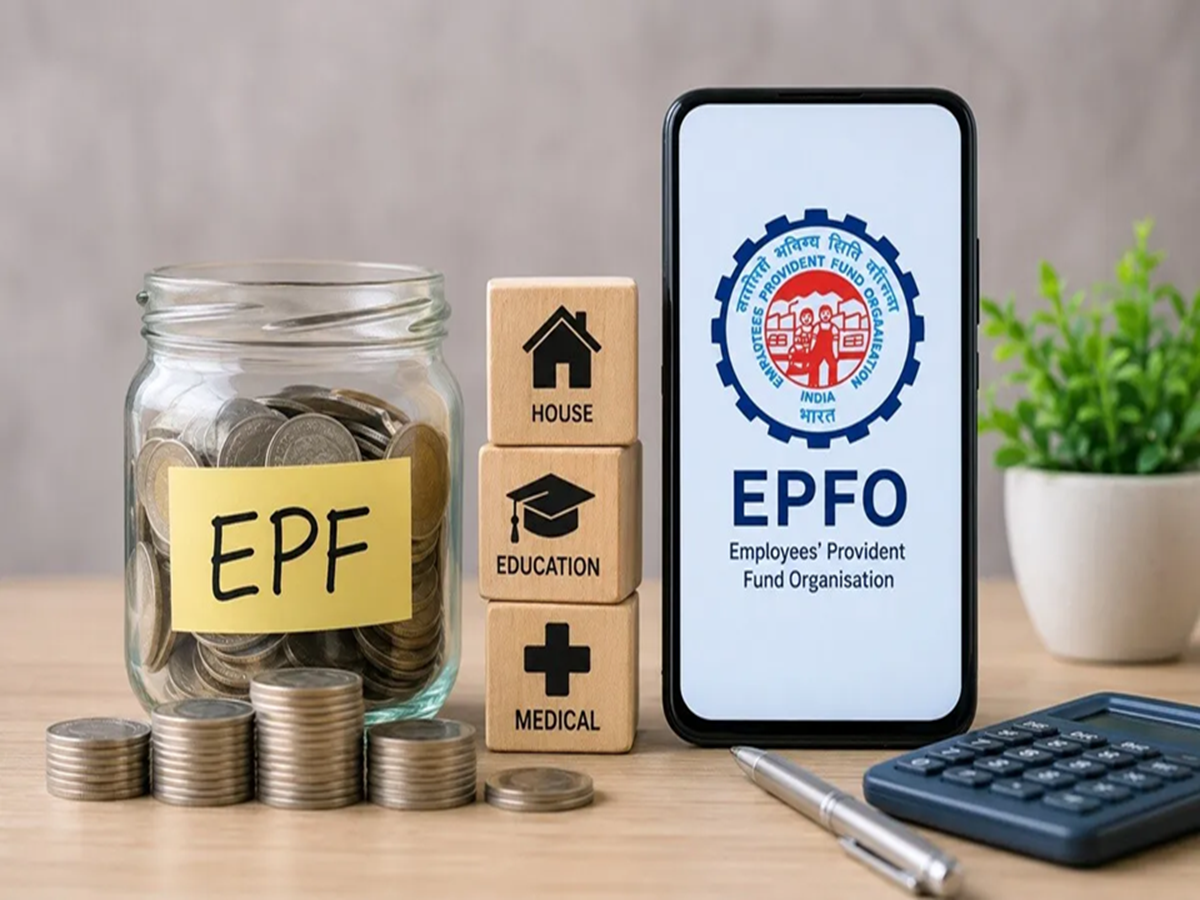
EPF Interest vs. Home Loan Interest: What is the math?
Parameter EPF Corpus Home Loan
Interest Rate (Annual) 8.25% (Guaranteed & Safe) 8.30% to 8.75%
Tax Status Completely tax-free (EEE) Tax deduction on interest and principal
Effective Cost Yields high returns Effective rate drops to 6.5% – 7% after tax benefits
When tax benefits are factored in, the effective cost of a home loan becomes lower than the tax-free interest earned on EPF. Therefore, withdrawing PF money to reduce the loan is not a wise decision from a mathematical standpoint either.
PC Social Media