Food & recipe
From Kadha Prasad to Kesari Rice: Bring Home the Authentic Taste of Punjab This Baisakhi—Prepare These 5 Dishes..
The festival of Baisakhi is celebrated with immense enthusiasm and jubilation across all of North India, including Punjab and Haryana. This festival symbolizes the joy of the Rabi harvest—the winter crop—and is celebrated with great pomp and grandeur. This year, the festival will be celebrated on April 14th.
On this joyous occasion, the festivities feel incomplete without the taste of traditional delicacies on one's plate. If you are planning a special feast at home this Baisakhi, these 5 traditional dishes will truly elevate your celebrations.
**Kada Prasad**
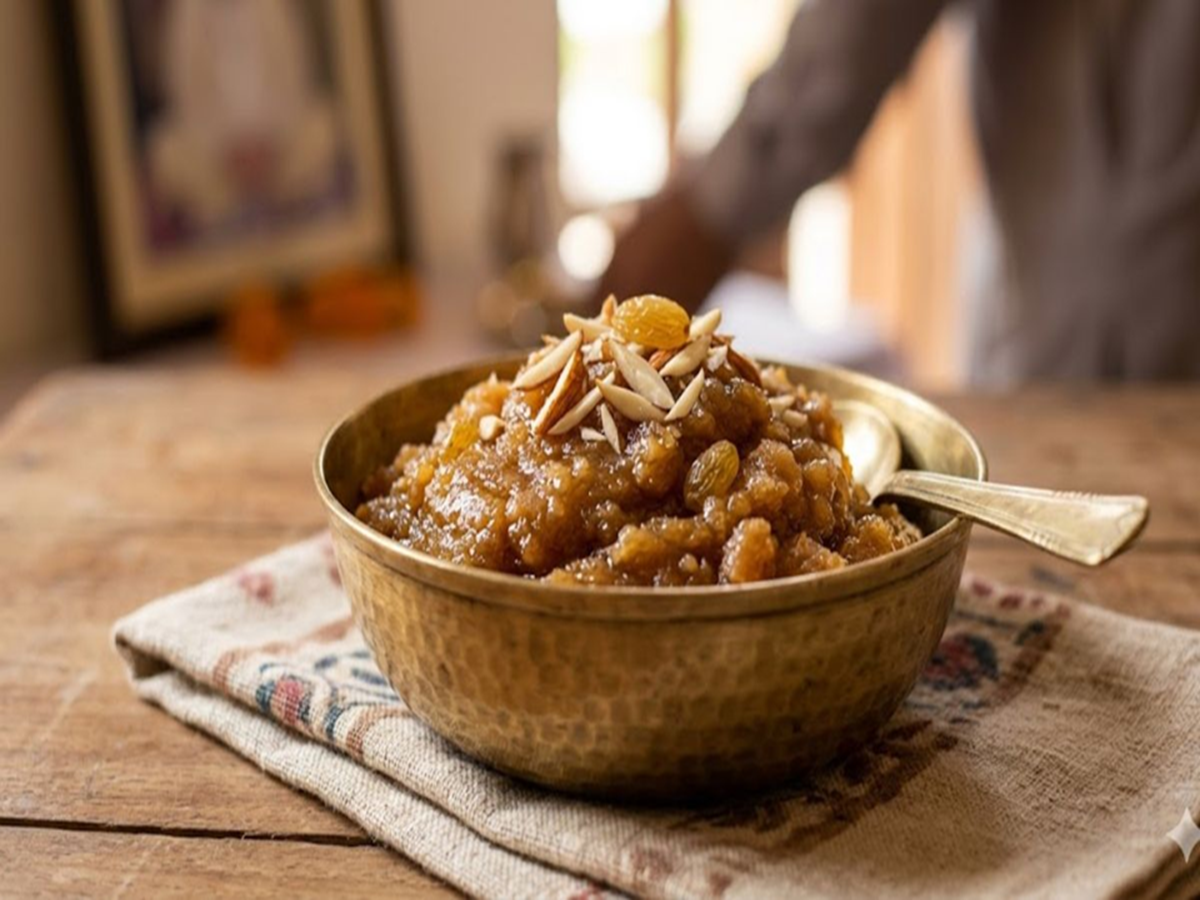
Kada Prasad is a symbol of devotion and reverence. Consequently, it is prepared as a sacred offering (*Bhog*) at Gurdwaras or in homes. It is made using equal proportions of wheat flour, *Desi Ghee* (clarified butter), and sugar. The flour is roasted over a low flame until it turns a golden-brown hue and begins to release the ghee. Its mere aroma is enough to soothe the soul.
**Kesari Chawal**
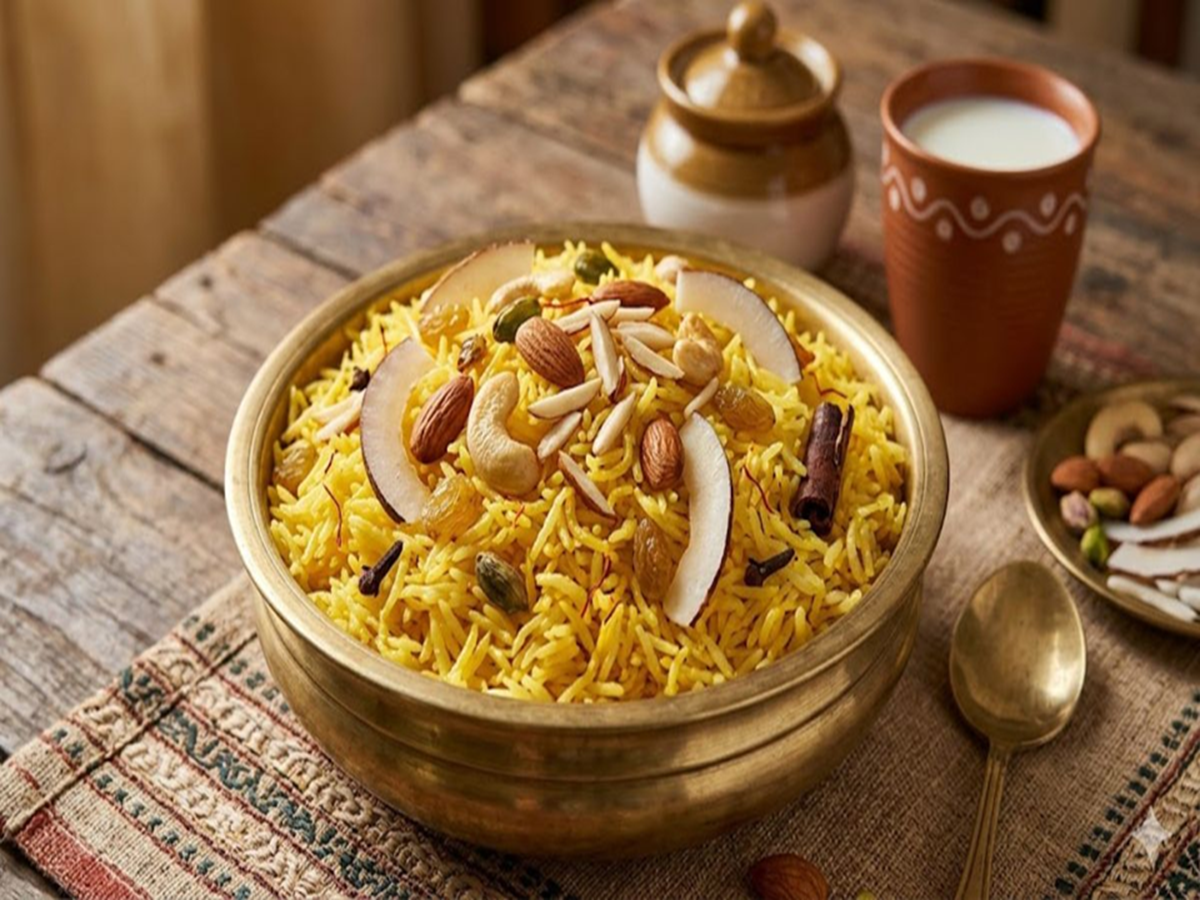
The color yellow symbolizes spring and prosperity; hence, there is a tradition of preparing sweet rice—or *Kesari Chawal*—on Baisakhi. Long-grain Basmati rice is cooked with saffron, cardamom, cloves, and cinnamon. It is generously garnished with an assortment of dry fruits—such as cashews, almonds, and raisins—which lend it a truly regal flavor.
**Punjabi Kadhi Pakora**
In North Indian households, preparing *Kadhi* holds special significance on any auspicious occasion. Punjabi Kadhi is renowned for its tangy flavor and thick consistency. When soft, fluffy fritters (*Pakoras*) made from gram flour are immersed in the yogurt-based Kadhi, they absorb all the rich flavors. Finally, a tempering (*Tadka*) of dried red chilies, *Kasuri Methi* (dried fenugreek leaves), and *Hing* (asafoetida) is added to double its deliciousness. It is best enjoyed served piping hot alongside steamed rice.
**Makki ki Roti and Sarson ka Saag**
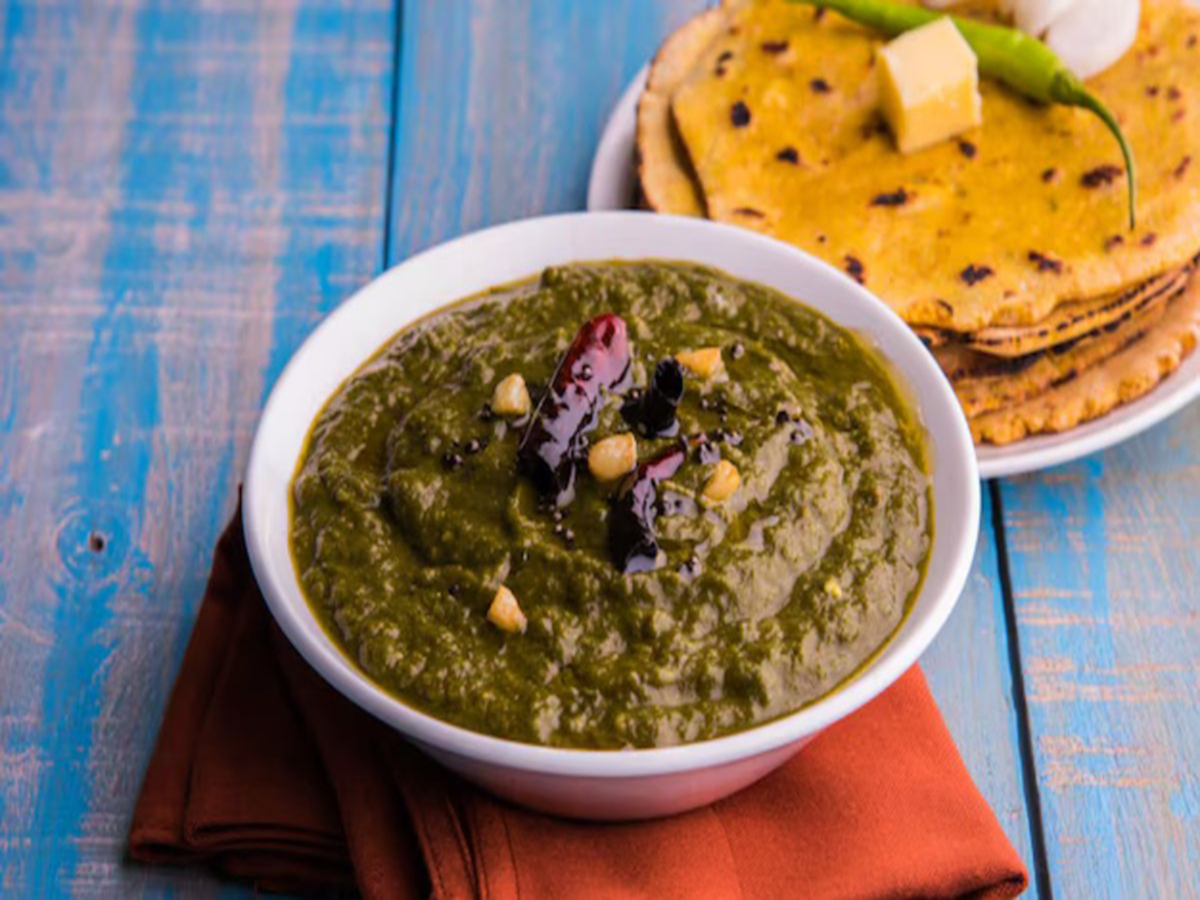
Although primarily a winter delicacy, preparing this dish on the occasion of Baisakhi serves to double the joy and festive spirit of the celebration. A *Saag* (greens preparation) made by blending mustard leaves with spinach and *Bathua* (lamb's quarters), generously tempered with garlic. A dollop of white butter atop a piping-hot *Roti* made from maize flour—accompanied by a piece of jaggery—makes this dish even more delectable.
**Phirni**
No festival feels quite complete without something sweet. For Baisakhi, *Phirni* makes for an excellent dessert choice. It differs slightly from *Kheer*, as it involves coarsely grinding the rice and cooking it with milk until the mixture thickens. Traditionally, it is set in earthen pots, which imparts a delightful, earthy aroma to the dish. Garnished with pistachios and silver leaf (*Chandi ka Vark*), it looks just as magnificent as it tastes.
PC Social Media