LIFESTYLE
Govardhan Puja: Why are cow footprints drawn at the main entrance of the house on the day of Govardhan Puja?
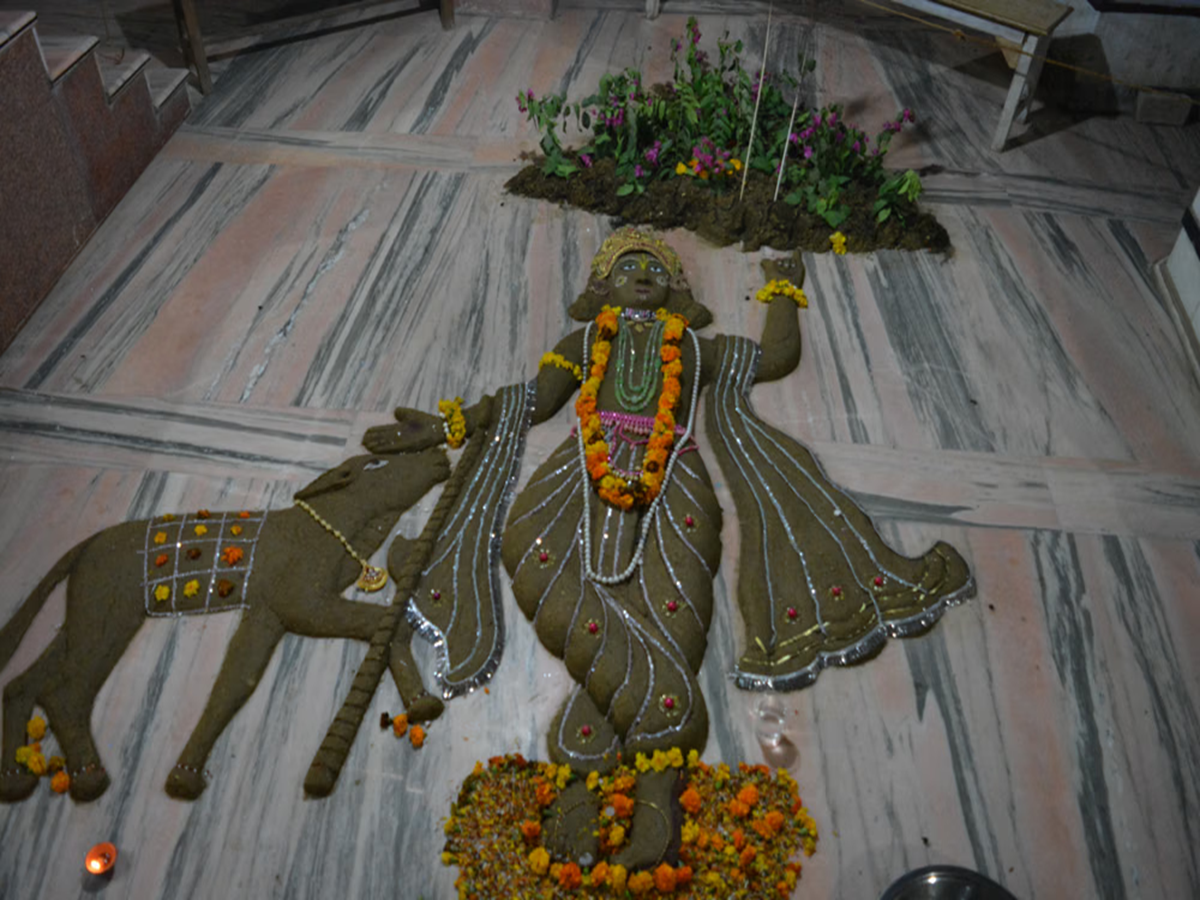
The festival of Govardhan Puja holds great significance in Hinduism. Celebrated the day after Diwali, this festival places special emphasis on the worship of Lord Krishna, Mount Govardhan, and the cow (Gau Mata). On this day, an effigy of Mount Govardhan is crafted from cow dung in the courtyard, and the footprints of a cow are marked at the entrance and the main doorway.
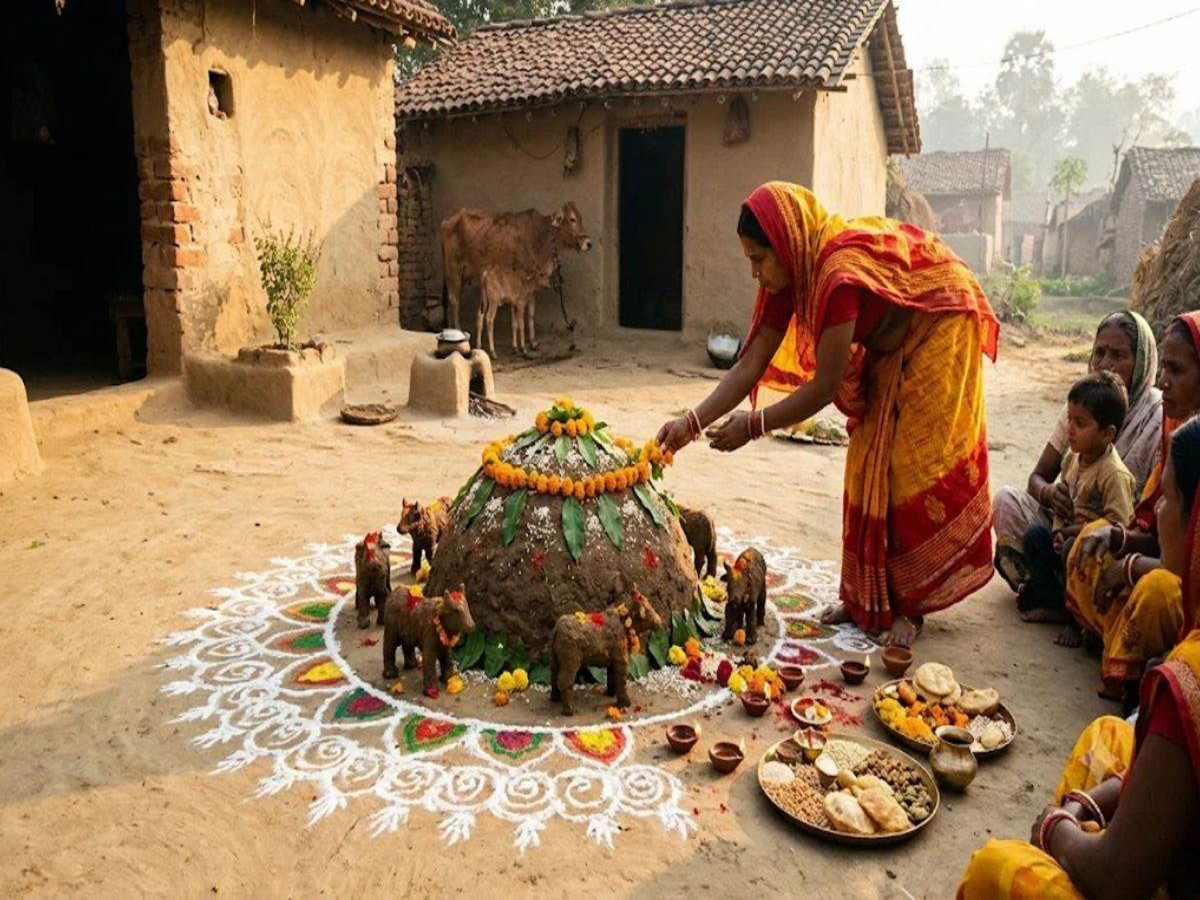
This tradition has been a part of our heritage for centuries. In many regions—particularly in parts of Uttar Pradesh—it is customary to create cow footprints at the main entrance. It is believed that this practice ensures happiness and prosperity within the home, bringing the blessings of both the cow and Goddess Lakshmi. Let us explore the significance of marking these cow footprints at the main entrance of a home.
**The Presence of Deities within the Cow**
In Hinduism, the cow is revered as a mother (Gau Mata). According to religious belief, 330 million (33 crore) deities reside within the cow. It is held that worshipping the cow invites the blessings of these deities. Creating cow footprints at the main entrance on the day of Govardhan Puja serves as a symbol of devotion and respect toward the cow.
**Inviting Goddess Lakshmi through Cow Footprints**
According to tradition, marking cow footprints at the main entrance is a symbol of auspiciousness and prosperity. It is believed that these marks signify the auspicious arrival of the cow into the home, bringing happiness and good fortune along with her. Since Goddess Lakshmi is considered the deity of wealth, opulence, and prosperity, this tradition is also associated with receiving her divine grace.
**The Significance of Using Cow Dung at the Main Entrance**
In Indian culture, cow dung is considered highly sacred. Since ancient times, there has been a tradition of plastering home courtyards and places of worship with cow dung, a practice believed to maintain purity within the household. For this reason, during Govardhan Puja, along with creating a representation of Mount Govardhan using cow dung, the footprints of a cow are also drawn.
Cows are dear to Lord Shri Krishna.
It is believed that Govardhan Puja primarily involves the worship of Shri Krishna and the things he holds dear. Therefore, one of the purposes behind drawing cow footprints on this day is to seek the blessings of Shri Krishna; since cows are extremely dear to Him, worshipping the cow also helps in attaining His grace.
Thus, drawing cow footprints at the main entrance during Govardhan Puja is not merely a decorative tradition; it is a symbol of respect for the cow, an expression of gratitude toward nature, and a gesture to invoke happiness and prosperity within the home.
PC Social Media