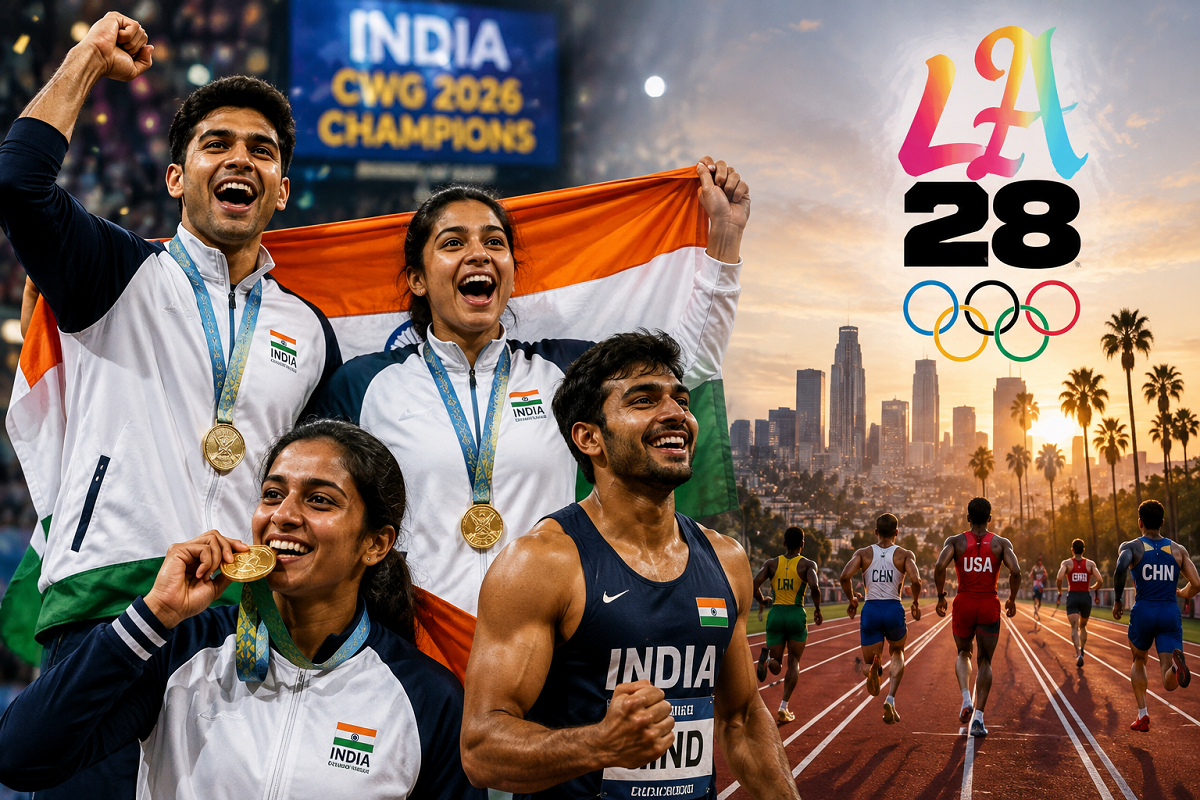
India delivered an impressive performance at the 2026 Commonwealth Games in Glasgow, finishing fourth in the medal standings with 39 medals, including 13 gold, 17 silver, and 9 bronze. The strong showing has boosted confidence ahead of future international events. However, sports experts believe that Commonwealth Games success should not be viewed as a direct indicator of Olympic performance.
While the medal tally is encouraging, the level of competition, participating nations, and sporting disciplines at the Olympics are significantly different. As India begins preparing for the Los Angeles 2028 Olympics, the real challenge lies in translating Commonwealth success into medals on the world's biggest sporting stage.
India Enjoys a Strong Commonwealth Campaign
India's athletes produced several standout performances in Glasgow, earning medals across boxing, athletics, weightlifting, judo, para sports, and other disciplines.
The final medal tally included:
- Gold: 13
- Silver: 17
- Bronze: 9
- Total Medals: 39
The result placed India fourth overall and highlighted the growing depth of the country's sporting talent.
However, history suggests that Commonwealth Games performances rarely mirror Olympic outcomes.
Commonwealth Success Has Not Always Led to Olympic Medals
Past results clearly illustrate the gap between Commonwealth Games achievements and Olympic success.
| Commonwealth Games | India's Medal Count | Following Olympics | Olympic Medals |
|---|---|---|---|
| Delhi 2010 | 101 | London 2012 | 6 |
| Glasgow 2014 | 64 | Rio 2016 | 2 |
| Gold Coast 2018 | 66 | Tokyo 2020 | 7 |
| Birmingham 2022 | 61 | Paris 2024 | 6 |
Despite consistently winning large medal hauls at the Commonwealth Games, India has found Olympic success much harder to achieve.
These numbers demonstrate that performing well in the Commonwealth Games does not automatically translate into Olympic podium finishes.
Why the Olympics Are a Completely Different Challenge
The biggest difference lies in the quality and depth of competition.
The Commonwealth Games feature athletes from around 74 Commonwealth nations and territories, whereas the Olympics include the world's strongest sporting countries.
At the Olympics, Indian athletes must compete against global powerhouses such as:
- United States
- China
- Japan
- Germany
- France
- Italy
- South Korea
- Iran
- Cuba
- Kazakhstan
- Uzbekistan
In athletics, long-distance specialists from Kenya, Ethiopia, and Uganda also dominate events that are absent from the Commonwealth Games.
As a result, athletes who win medals at the Commonwealth Games often face a significantly higher level of competition at the Olympics.
India's Traditional Olympic Strength Was Missing in Glasgow
Another major reason why Commonwealth results should be viewed carefully is that several sports responsible for India's Olympic success were not included in the reduced Glasgow 2026 programme.
India has won 41 Olympic medals in its history, with most coming from just four sports:
- Hockey – 13 medals
- Wrestling – 8 medals
- Shooting – 7 medals
- Badminton – 3 medals
Together, these sports account for 31 of India's 41 Olympic medals.
Since many of these disciplines were absent from the Glasgow schedule, India's strongest Olympic events were not fully represented, making it difficult to compare Commonwealth performance with Olympic prospects.
Boxing Delivered Gold, but the Olympic Test Is Much Harder
India enjoyed one of its best-ever Commonwealth boxing campaigns.
Gold medals were won by:
- Sakshi Chaudhary
- Preeti Pawar
- Jasmine Lamboria
- Priya Ghanghas
- Arundhati Chaudhary
- Sachin Siwach
- Ankush Panghal
Silver medals were added by:
- Jadumani Singh
- Lovlina Borgohain
- Narendra Berwal
Despite this remarkable performance, India's Olympic boxing record remains modest, with only three bronze medals in history, won by Vijender Singh, M.C. Mary Kom, and Lovlina Borgohain.
To become genuine Olympic medal contenders, Indian boxers will need to consistently perform against traditional boxing powers such as Uzbekistan, Kazakhstan, China, and Cuba at World Championships and the Asian Games.
Athletics Showed Promise but Also Highlighted the Gap
India collected 10 medals in athletics during the Commonwealth Games, although none were gold.
Gulveer Singh created history by winning silver in the 10,000 metres and bronze in the 5,000 metres. However, Olympic competition in these events includes world-class runners from Kenya, Ethiopia, and Uganda, making the challenge considerably tougher.
Neeraj Chopra claimed silver in the javelin throw, while Yashveer Singh secured bronze.
Even so, the performance gap remains evident. Neeraj's best throw in Glasgow measured 85.83 metres, while the bronze medal at the Paris 2024 Olympics required a throw of 88.54 metres.
This comparison highlights how much higher Olympic qualifying standards remain.
Historic Progress in Judo Needs Further Growth
India also celebrated a breakthrough in judo.
Asmita Dey and Harsh Singh became the country's first Commonwealth judo champions, while Yamini Maurya and Unnati Sharma added more medals.
Although the achievement marks a major milestone for Indian judo, the nation is still searching for its first Olympic medal in the sport. Success in Glasgow provides valuable momentum but cannot yet be considered proof of Olympic readiness.
Weightlifting Faces Similar Challenges
Weightlifting was another successful event for India.
Mirabai Chanu captured her third consecutive Commonwealth Games gold medal, reinforcing her dominance at the regional level.
However, India's Olympic history in weightlifting includes only two medals:
- Karnam Malleswari – Bronze (Sydney 2000)
- Mirabai Chanu – Silver (Tokyo 2020)
Olympic competition remains far more demanding, with athletes from China, North Korea, South Korea, and several European nations regularly lifting significantly heavier weights.
Why Glasgow Still Matters
Despite the differences between the Commonwealth Games and the Olympics, Glasgow remains an important milestone for Indian sport.
Major multi-sport events provide athletes with valuable experience in:
- Handling pressure on the international stage
- Competing across multiple rounds
- Living in the athletes' village
- Managing media attention
- Performing under high expectations
Several Indian athletes also demonstrated significant progress during the Games.
Yashveer Singh delivered a personal-best javelin performance under pressure, Gulveer Singh executed excellent race strategy, India's women boxers dominated multiple weight categories, judo created new history, and para athletes also contributed strong performances.
These achievements provide a solid foundation for future international competitions.
Asian Games Will Offer the Real Olympic Test
Sports analysts believe that the next major benchmark will not be another Commonwealth event but the Asian Games and various World Championships.
These competitions feature many of the same athletes who dominate the Olympic podium, including competitors from China, Japan, South Korea, Uzbekistan, Kazakhstan, and other elite sporting nations.
If Indian athletes can consistently win medals against those opponents, confidence in their chances at the Los Angeles 2028 Olympics will grow substantially.
For now, the Glasgow Commonwealth Games should be viewed as an encouraging step in India's sporting journey rather than a guarantee of Olympic success. The coming years will determine whether this promising generation can convert regional excellence into medals on the world's biggest stage.