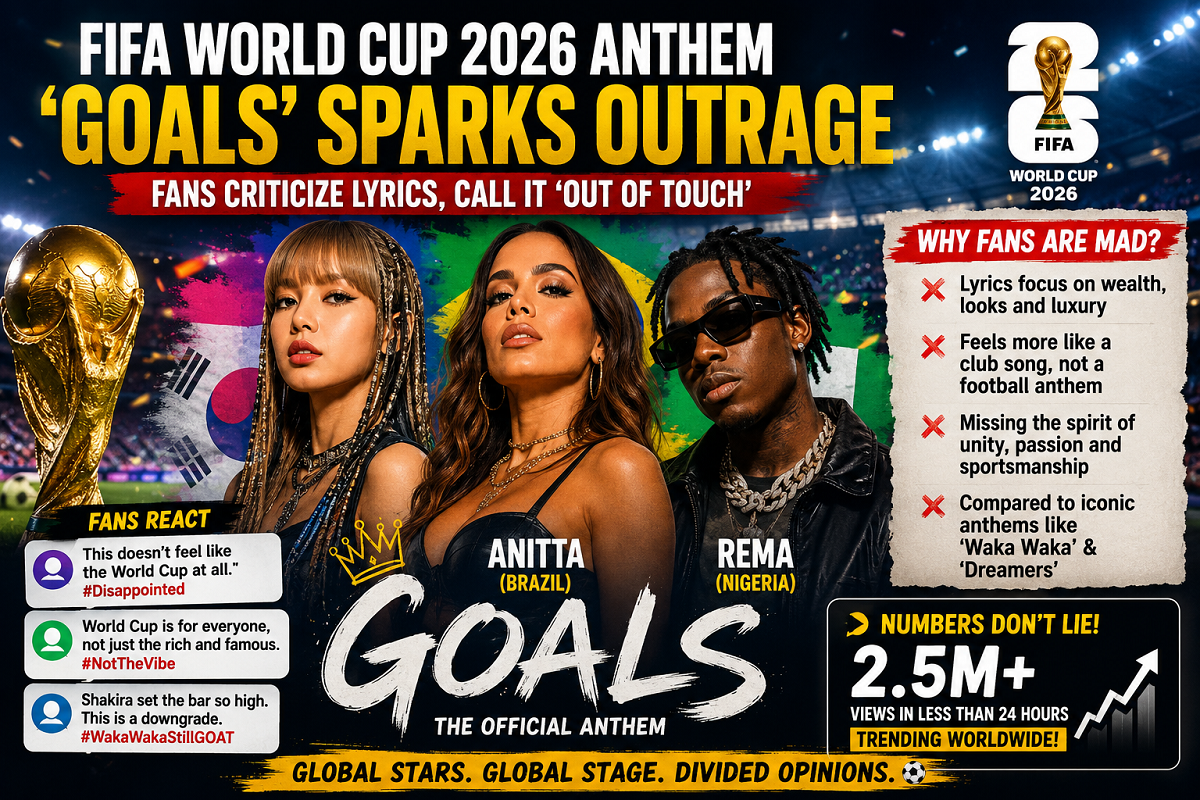
The official anthem for the FIFA World Cup 2026 has ignited intense debate across social media platforms just hours after its release. Titled “Goals,” the high-profile track features Lisa, Anitta, and Rema, bringing together K-pop, Latin pop, and Afrobeats influences for one of the biggest music collaborations tied to a sporting event this year.
However, while the anthem has generated millions of views and huge streaming numbers globally, many football fans and music listeners have expressed disappointment over the song’s lyrics and overall emotional connection to the spirit of the World Cup.
Fans Say the Song Feels More Like a Club Track Than a Football Anthem
A major portion of the criticism revolves around the belief that “Goals” sounds more like a luxury-pop party anthem than a song celebrating football, unity, and international sportsmanship.
Many listeners expected a powerful stadium-style track capable of capturing:
- Passion for football
- National pride
- Global unity
- Competitive energy
- Emotional intensity
Instead, critics argue the song focuses heavily on glamour, fashion, luxury lifestyles, and self-image.
Social media users particularly highlighted lyrics centered around:
- Expensive lifestyles
- Physical appearance
- Fame and luxury
- Club culture
Fans claim these themes feel disconnected from the emotional atmosphere traditionally associated with FIFA World Cup music.
Social Media Flooded With Reactions
Shortly after release, the song began trending across platforms including:
- X
- TikTok
- YouTube
Football fans compared the anthem with previous FIFA songs and argued that earlier World Cup tracks carried far stronger emotional identity.
Some users described “Goals” as:
- Overproduced
- Commercially driven
- Emotionally flat
- Lacking football energy
while others defended the song as a modern global pop anthem designed for younger audiences.
Comparisons With Legendary FIFA Anthems Intensify Debate
The backlash became even stronger because many listeners immediately compared “Goals” with iconic World Cup songs from previous tournaments.
Shakira’s ‘Waka Waka’ Still Considered the Gold Standard
A large number of fans referenced Shakira’s legendary 2010 World Cup anthem “Waka Waka (This Time for Africa)” as the benchmark for football music.
Fans praised “Waka Waka” for successfully blending:
- Stadium energy
- African musical identity
- Emotional storytelling
- Global participation themes
Many users argued that “Goals” lacks the same cultural warmth and emotional connection.
Jungkook’s ‘Dreamers’ Also Mentioned Frequently
Listeners also compared the new anthem with Jungkook’s 2022 FIFA World Cup song “Dreamers,” which many fans believe better reflected themes of ambition, hope, and unity.
According to social media discussions, “Dreamers” created a stronger stadium atmosphere and resonated more naturally with football audiences worldwide.
Some Fans Call It FIFA’s Most Divisive Anthem Yet
Several online critics even claimed “Goals” may become one of the most controversial FIFA anthems in recent years.
Some comparisons were made with the much-debated 2022 track “Tukoh Taka,” which also received mixed reactions during the Qatar World Cup.
However, many users believe the criticism surrounding “Goals” has become even more intense due to the enormous expectations created by the star-studded lineup.
Commercial Success Remains Huge Despite Criticism
Despite the backlash, the anthem is performing extremely well commercially.
Within less than 24 hours of release, the official music video reportedly crossed millions of views on YouTube, driven by the massive global fanbases of Lisa, Anitta, and Rema.
Streaming numbers across music platforms also surged rapidly after launch.
Industry analysts say the controversy itself may actually be helping the song gain more visibility online.
Why FIFA Anthems Matter So Much
World Cup songs hold a unique place in global pop culture because they are expected to represent more than just music.
Historically, FIFA anthems symbolize:
- International unity
- Cultural celebration
- Sporting passion
- National pride
- Emotional connection
Because billions of viewers engage with the World Cup globally, expectations around official tournament music remain extremely high.
That is why even small lyrical or thematic choices often trigger strong reactions from fans.
Music Industry Experts Divided on the Backlash
Some music analysts argue that criticism may partly come from nostalgia, as fans continue comparing every new FIFA anthem to iconic past releases.
Others believe the issue lies in balancing modern pop trends with the emotional spirit expected from football anthems.
Supporters of “Goals” argue that the track reflects today’s globally connected music culture by blending:
- K-pop
- Latin rhythms
- Afrobeats
- International pop production
They believe FIFA is trying to appeal to a younger streaming-focused audience rather than traditional stadium anthem expectations.
FIFA’s Music Direction Continues Evolving
Over the last decade, FIFA’s official music strategy has shifted significantly toward globally marketable collaborations involving major international artists.
This approach prioritizes:
- Streaming success
- Viral reach
- Social media engagement
- Cross-cultural appeal
However, the reaction to “Goals” shows that many football fans still expect World Cup music to focus heavily on emotional storytelling and sporting inspiration rather than luxury-pop aesthetics.
Debate Around ‘Goals’ Likely to Continue
Whether audiences eventually embrace the anthem or continue criticizing it, “Goals” has already become one of the most talked-about sports songs of 2026.
With the FIFA World Cup approaching, the track is expected to dominate playlists, social media trends, and tournament promotions globally — even as debate over its lyrical direction continues online.