Parenting
Parenting Tips: It’s not just the child's screen time—your own phone usage is also affecting their behavior..

In the digital age, whenever the conversation turns to children’s irritability, lack of focus, or disinterest in studies, the first thing blamed is their screen time. "He watches TV all day" or "He won't eat without his mobile"—these have become common scenarios in every household. But have you ever stopped to consider where *your* attention lies when you are sitting with your child?
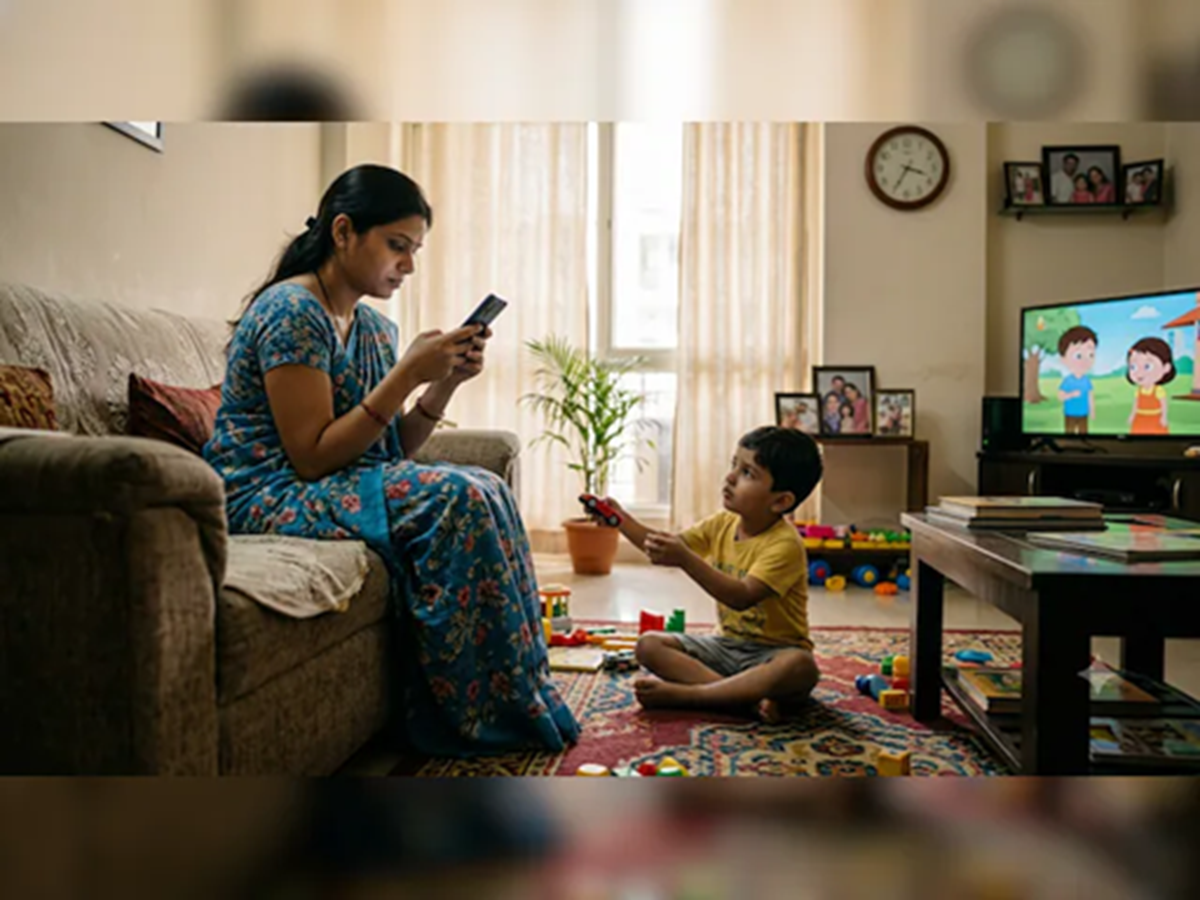
Recent research by psychologists and child development experts reveals a new and surprising truth: it is not just the child's screen time, but also the parents' own smartphone habits that significantly impact a child's behavior and mental development.
In the realm of child psychology, this is known as "Technoference"—referring to the interference caused by technology in the parent-child relationship.
How does a child feel when you are engrossed in your screen?
Young children rely more on facial expressions and eye contact than on words to express their emotions. When a parent repeatedly checks notifications or scrolls through a screen while listening to their child, the child subconsciously internalizes the message that they are less important than the phone. Experts believe that excessive phone use by parents has three main effects on children:
Adverse effects of excessive parental phone use on children:
Lack of emotional connection:
When parents fail to respond immediately to a child’s crying, laughter, or attempts to show something new, a sense of insecurity develops in the child. They begin to feel lonely and neglected.
Distraction and irritability:
Children learn how to seek attention by observing their parents. When they do not receive attention easily, they may become stubborn, shout, or throw things to get their way. Weak Social Skills: Children learn their initial social and communication skills from their parents. The habit of not making eye contact while talking can slow down a child's language and social development.
‘Reflection Theory’: Children do what they see.
It is often said that children listen less to what you say but observe you more closely. If you are checking notifications every five minutes, how can you advise your child to stay away from screens? When a child sees every adult in the house glued to their phone, the smartphone becomes their sole source of entertainment and a way to pass the time.
How to strike a digital balance? Follow these simple tips:
This certainly does not mean you should stop using your phone for work or personal matters. It is simply about creating a healthy balance between screen time and family time:
Create ‘No-Phone Zones’:
Keep certain areas of the house, such as the dining table and bedrooms, completely screen-free. Keep phones away during meals.
No screens during quality time:
When playing with your child, helping them with studies, or listening to stories about their day at school, put your phone on silent or leave it in another room.
Digital detox routine:
Set aside at least one to two hours a day when no family member uses their phone.
Explain the reason:
If using the phone is necessary for work, gently explain to your child that you are checking an important office message and will put the phone away to play with them in five minutes.

Children do not need expensive toys or just a set of rules; they need your undivided attention. If you want your child to avoid screen addiction and ensure their mental and emotional development moves in the right direction, you must start with yourself. The next time your child comes to tell you something, put down your phone and listen while looking into their eyes; this is the first step towards a better future for your child.
PC Social Media