
LIFESTYLE
Where does the melted fat actually go when you lose weight? Find out what happens inside the body..

To lose weight, people often turn to dieting, exercise, and walking. As weight begins to drop, the fat stored in the body also starts to decrease. But have you ever wondered where this fat actually goes? Does it leave the body through sweat, or is there another way it is expelled? The answer might surprise you.

In an article published in *The Conversation*, two researchers from the University of Birmingham explained that when weight is lost, most of the body's fat is exhaled as carbon dioxide. This means that the lungs play a crucial role in the process of fat loss. However, simply breathing faster will not lead to weight loss; the body must expend more energy than it consumes from food. Let’s explore how stored fat is broken down and where it goes when you lose weight.
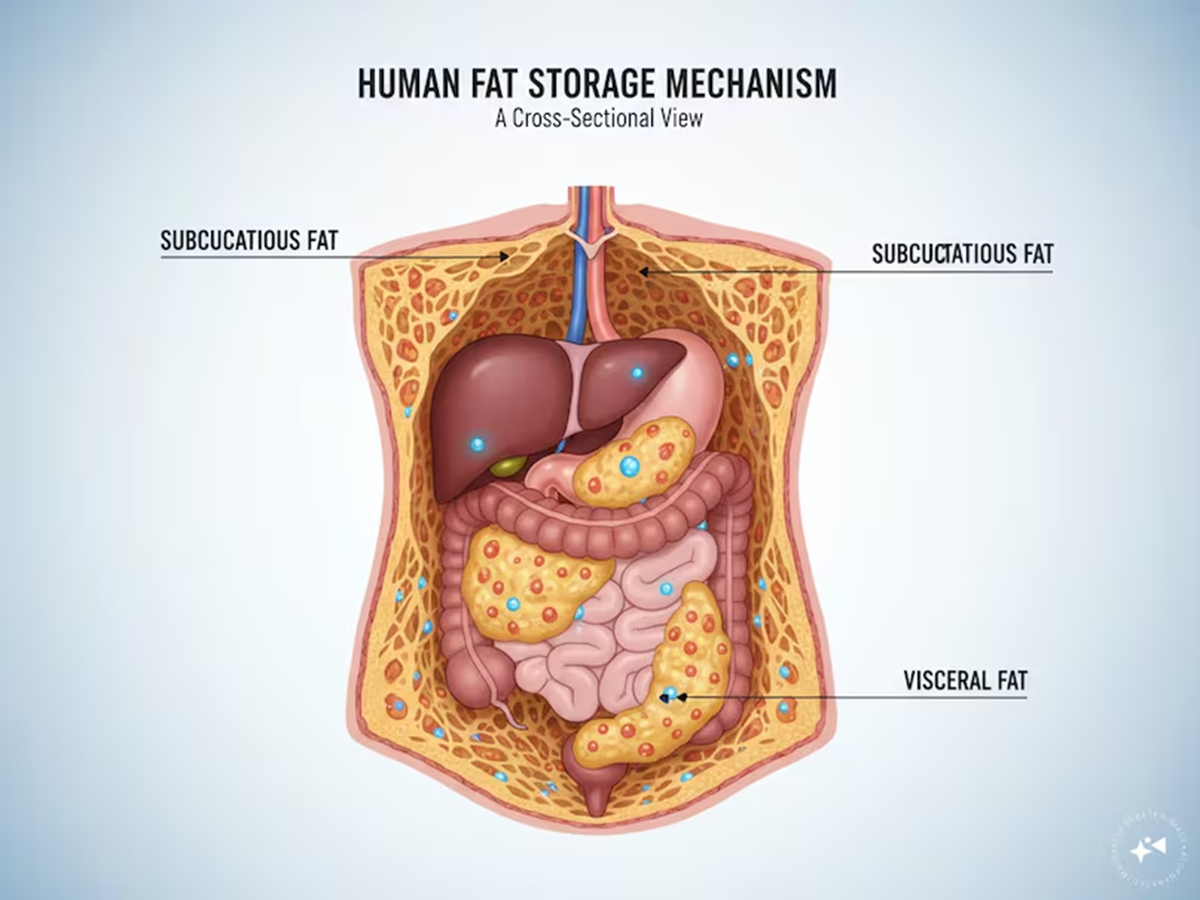
How is fat stored in the body? When we eat, our digestive system breaks down the fat in our food into fatty acids. The body uses these for essential functions, such as building cells, supporting hormonal activity, and protecting internal organs. If the body receives more energy than it needs, it stores the excess in fat cells in the form of triglycerides. Fat is primarily stored in two places: subcutaneous fat, located just beneath the skin, and visceral fat, which surrounds the internal organs.
How is fat reduced during weight loss? When the body requires more energy than it is receiving from food, it begins to utilize its stored fat. During this process, signals from hormones and the nervous system trigger the breakdown of the triglycerides stored within fat cells—a process known as lipolysis. Following this, fatty acids reach the mitochondria of the cells, where they are used to generate energy through a process called beta-oxidation. Carbon dioxide and water are also produced during this process.
How does fat leave the body? According to researchers, approximately 84 percent of the fat lost during weight reduction is converted into carbon dioxide and expelled through exhalation. The remaining 16 percent or so becomes water, which can be eliminated from the body through sweat, urine, and other bodily fluids. These figures are estimates. This means that fat is not eliminated solely through sweat; exhalation is a primary pathway for removing the byproducts of fat breakdown.
Does rapid breathing lead to weight loss? No, breathing rapidly does not, in itself, reduce fat. For weight loss to occur, the body must consume fewer calories than the energy it expends. A balanced diet and regular physical activity can help achieve this. Rather than attempting to breathe rapidly, it is far better to focus on healthy eating, exercise, and a consistent daily routine.
PC Social Media