LIFESTYLE
Radha Ashtami: Why is 'Solah Shringar' offered to Kishori Ji? Understand the religious significance of these marital adornments here..
The appearance day of our Shri Radha Rani is celebrated in the Braj region exactly fifteen days after Shri Krishna Janmashtami. Devotees observe the festival of Radha Ashtami with great enthusiasm on this day. This special festival of Radha Ashtami is being celebrated today, September 19.
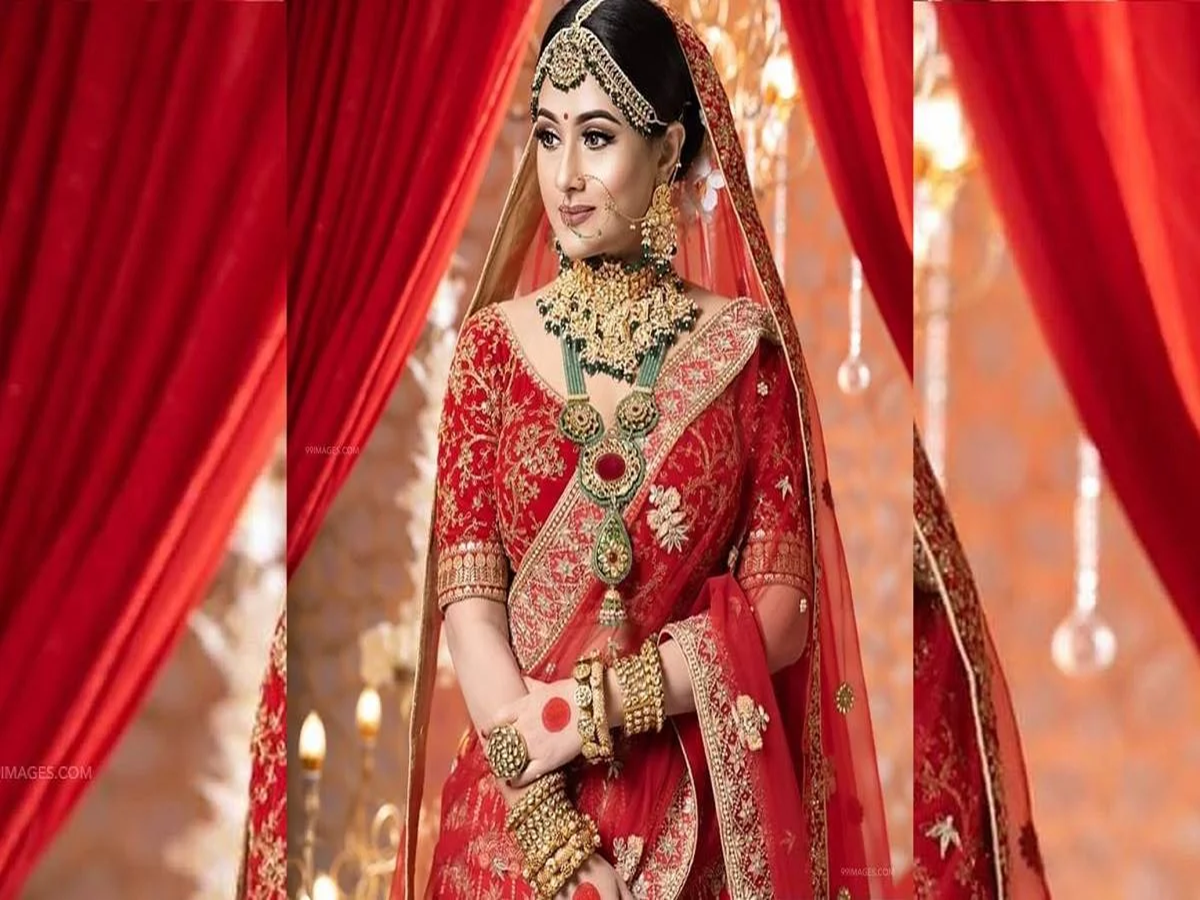
On the occasion of Radha Rani's birth, huge crowds of devotees throng the temples, and people also worship Her at home with traditional rituals. Offering the 'Solah Shringar' (the sixteen traditional adornments) is considered the most significant part of worshipping Radha Rani. Let us explore why the tradition of offering these sixteen adornments to Kishori Ji (Radha Rani) on Radha Ashtami is so prevalent and understand its significance.
Why is 'Solah Shringar' offered to Radha Rani?
Radha Rani was born on the day of Radha Ashtami, and the tradition of offering the sixteen adornments to Kishori Ji during worship on this day has existed for centuries.
The primary reason for this is that Shri Krishna Himself adorned Radha Rani with these sixteen elements during the Dwapara Yuga; therefore, devotees who offer these adornments today continue to receive the special grace and blessings of Radha-Krishna. Furthermore, if married women adorn Radha Rani with these sixteen elements, they are blessed with unbroken marital bliss and good fortune.
What constitutes the 'Solah Shringar' offered to Radha Rani?
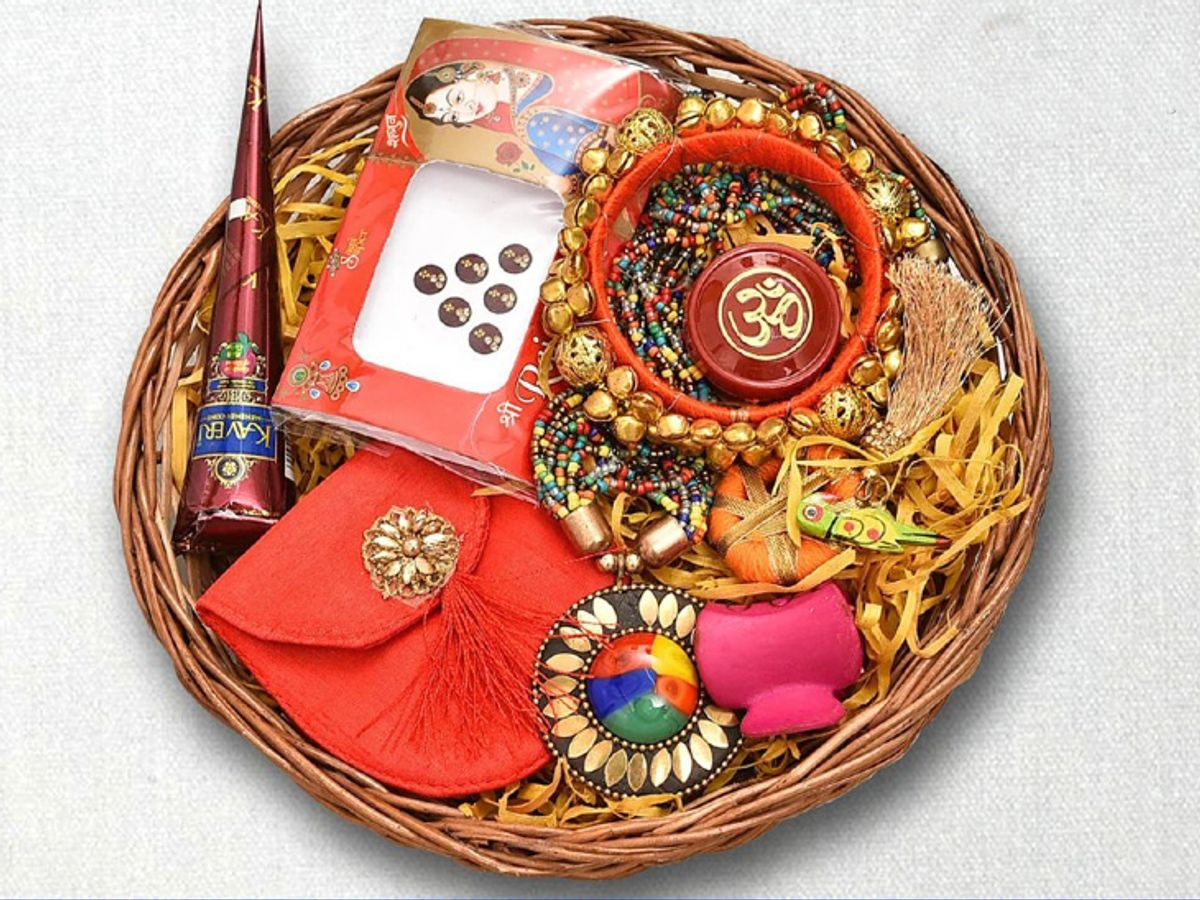
Each item offered as part of the sixteen adornments holds special significance and symbolizes something specific. Let us learn what these sixteen adornments are:
Bindi – A bindi is applied to Radha Rani's forehead for adornment. It marks the location of the 'third eye' and is considered a symbol of concentration.
Sindoor (Vermilion) – Applied in the center of the hair parting, sindoor symbolizes marital status and devotion.
Maang-Tika – Worn on the forehead, this ornament is considered a symbol of the union between husband and wife in married life. Kajal (Kohl)—Applied not only to enhance the beauty of the eyes but also as a small dot (*tika*) to ward off the evil eye.
Nath (Nose ring)—Enhances a married woman's beauty and is considered the ultimate symbol of womanhood.
Karn-phool (Ear ornaments)—Earrings are regarded as one of the key ornaments that enhance a woman's beauty.
Mangalsutra—Considered a symbol of love, devotion, and the husband's longevity.
Mehendi (Henna)—Regarded as a symbol of marital bliss (*suhag*) and applied to the hands and feet.
Bangles—Glass bangles are offered to Radha Rani, as they symbolize prosperity and good fortune.
Bajuband (Armlet)—Enhances a woman's beauty and symbolizes strength.
Ring—Considered a symbol of unity.
Kamarband (Waist belt)—Accentuates the beauty of a woman's waist.
Payal (Anklets)—The sound of anklets infuses the atmosphere with positivity.
Bichhiya (Toe rings)—Traditionally considered a symbol of marital status.
Alta—Regarded as an essential element of marital bliss; applying *alta* to Radha Rani's hands and feet is considered mandatory.
Sari or Lehenga—Ideally, a blue outfit should be offered to Radha Rani, as blue is Shri Krishna's favorite color.
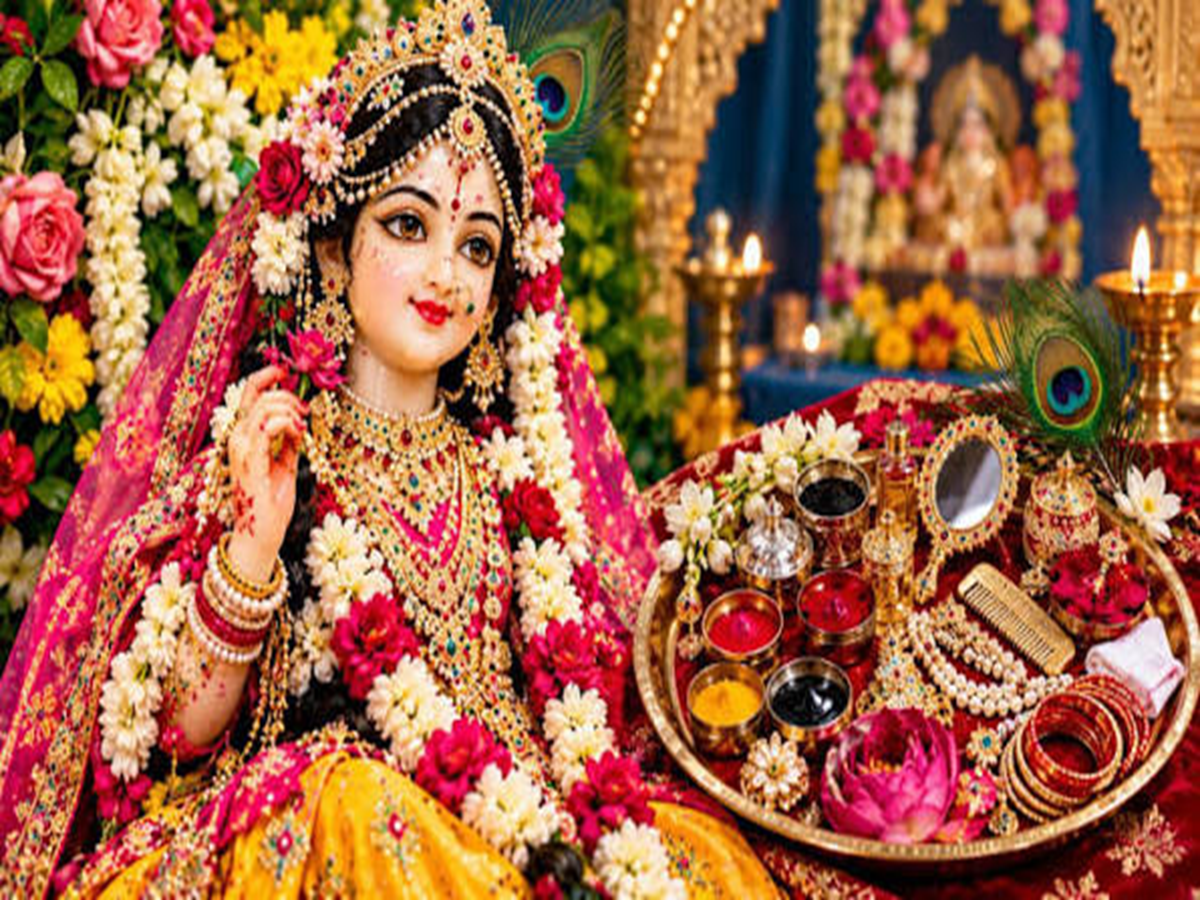
Thus, offering the *Solah Shringar* (the sixteen traditional adornments) during the worship of Radha Rani is considered the easiest way to attain Shri Krishna's grace. Any woman who offers these items to Kishori Ji (Radha Rani) while also adorning herself with the *Solah Shringar* during worship is blessed with unbroken marital bliss, and love endures forever in her married life. Furthermore, if unmarried girls offer these sixteen adornments, they are blessed with a good life partner.
PC Social Media