LIFESTYLE
Safety Pin: Why is there a small hole at the bottom of a safety pin? The real reason will surprise you..
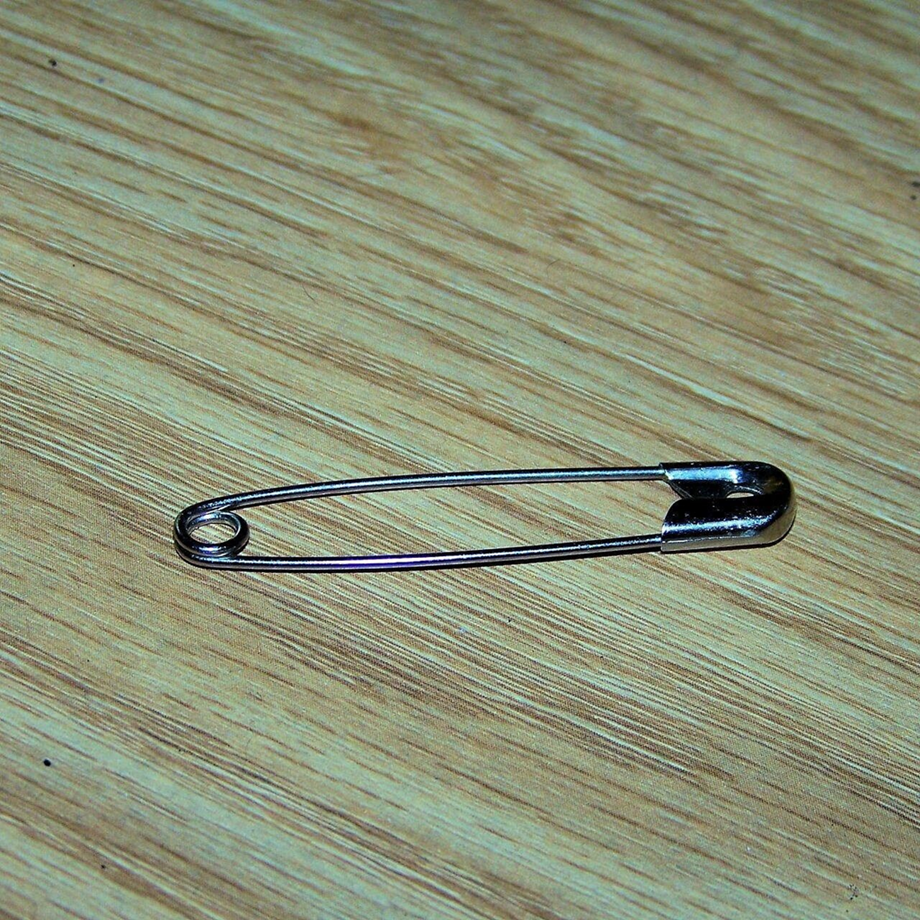
Whether it's holding the pleats of a sari in place, assisting with first aid, or turning a windmill for a school science project—this small piece of twisted wire is everywhere.
We use it so much in our everyday lives that we never stop to think about who first came up with this "magic pin." Let's take a look at the history of this small but useful invention and its unique design.
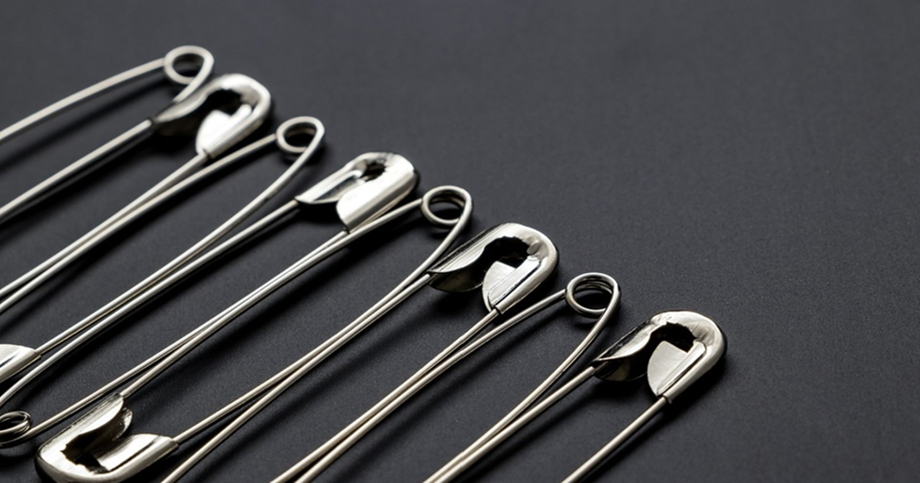
The Design of a Safety Pin
If you've ever looked closely, you'll find the safety pin's design and working method unique. We've all noticed the small hole at the back, but do you know why this hole was created? In fact, the safety pin's design is very scientific. It consists of two main parts, essential for its function:
The Spring: The wire at the bottom of the pin is bent to form a ring or coil. If you think it's just a design, let me tell you that it's not just a design, but rather, it functions as a spring. This spring creates tension in the pin, keeping the pointed end of the pin firmly lodged in the upper slot and holding it there until you apply enough force to loosen it. Without this tension, the pin would repeatedly open, potentially causing injury.
The Head/Guard: This is the part where the pointed end of the pin is protected. This part is essential because it keeps the pin closed and prevents you from being pricked.
The Story of the Safety Pin
You may not have considered when, how, and who invented the pin you use today. You might be surprised to learn that the safety pin we use today was invented by Walter Hunt in 1849. He created this spring-like system by bending a piece of wire.
Remarkably, Walter Hunt had no idea how valuable his discovery was. Perhaps that's why he sold the patent for just $400, while companies later made millions from it.
History of the Safety Pin
The history of the safety pin is quite ancient. In Latin, it was called "Fibulae," and it originated in Europe during the Bronze Age. At that time, two main methods were prevalent:
Northern European method (two-pin): The pin used in Northern Europe consisted of two separate parts. It did not have a spring (flexible bend). One pin had a hole, and the other pin passed through that hole and hooked onto a hook. It was a slightly more complex design.
Central European, Greece, and Italy method (single-pin): The pins made here were very similar to today's modern safety pins. The pin used here was made of a single wire. It had a spring in the middle, which gave it flexibility.
One end of the wire was pointed, and the other end was bent, so that the pointed end could be inserted into it. The biggest difference between old-time pins and today's pins is that modern pins have a 'cap' or guard on top for protection, which old-time pins did not have.
PC Social Media