LIFESTYLE
Should one observe the Ekadashi fast while suffering from an illness or taking medication? Find out what our scriptures say...
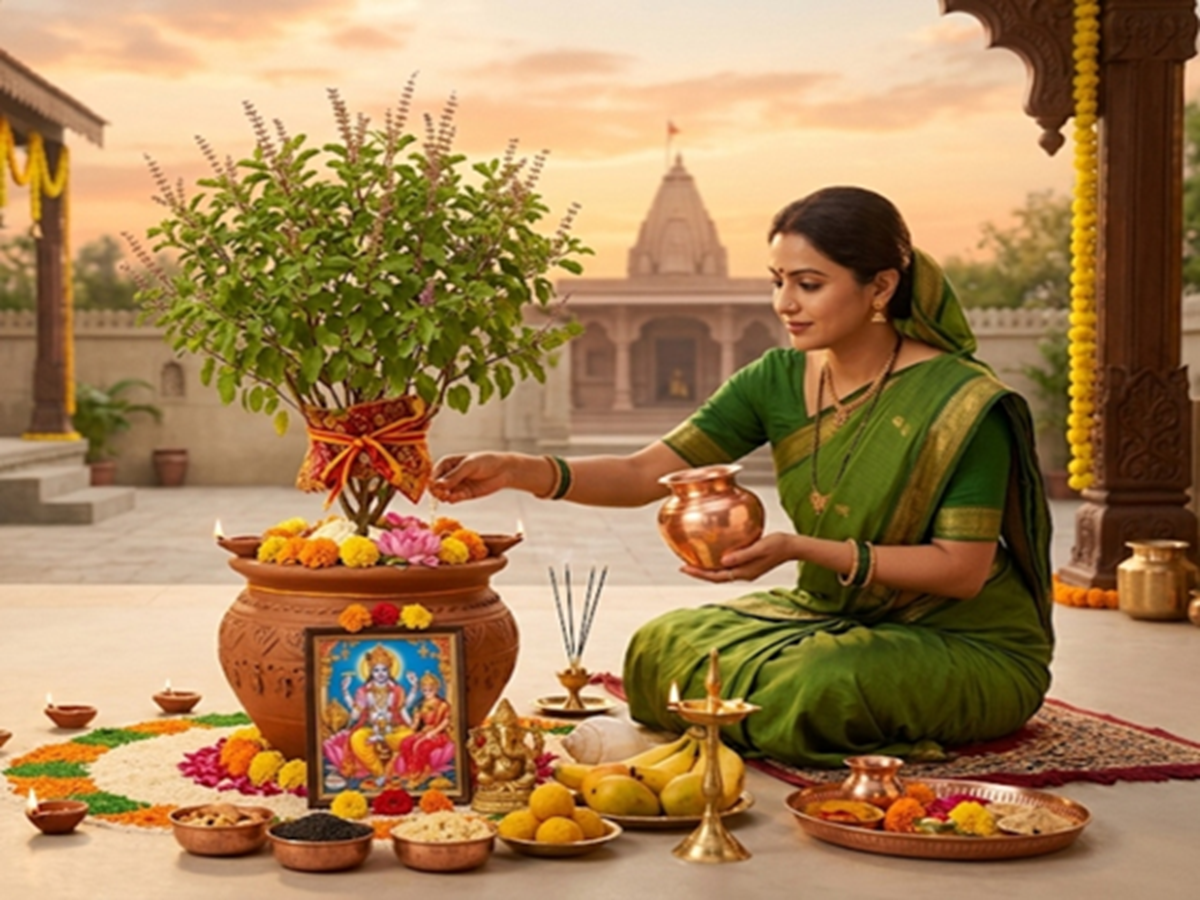
The *Mohini Ekadashi* fast is observed on the *Shukla Ekadashi* (the eleventh day of the waxing moon) during the month of *Vaishakh*; this year, it will be observed on April 27th. Many people find themselves in a dilemma regarding whether it is permissible to take medication while observing the *Ekadashi* fast—specifically, whether doing so would invalidate or break the fast. Let us explore what our scriptures have to say on this subject.

**Benefits of the Ekadashi Fast**
In Hindu scriptures, the *Ekadashi* fast is accorded special significance, as it exerts a positive influence on our physical body. Observing a fast on every *Ekadashi* *Tithi* (lunar day) is believed to wash away all of a devotee's sins and bestow upon them the immense grace of Lord Vishnu. Furthermore, observing this fast is said to foster a sense of mental peace. Moreover, the *Ekadashi* fast is considered highly beneficial for cultivating devotion and facilitating spiritual growth.
**Can One Take Medication?**
It is believed that if the mind—along with the body—is not fully immersed in devotion, merely abstaining from food yields limited spiritual merit. Neglecting one's health while observing a fast is not in accordance with scriptural principles. Maintaining a healthy body is essential for serving or worshipping the Divine; therefore, if deemed necessary, one may consume medication while observing the fast. If your medication requires to be taken with food, you may observe a *Phalahari* (fruit-based) fast—subsisting on fruits and milk—and consume something light after taking your medicine.
**What the Scriptures Say**
According to the scriptures, observing the *Ekadashi* fast while suffering from an illness or undergoing medication is considered optional, not mandatory. If an individual is unwell or is currently taking medication, they may choose to observe the fast by subsisting on fruits (*Phalahar*) rather than undertaking a *Nirjala* (waterless) fast. These same guidelines apply to children, pregnant women, and the elderly.
If a person's health condition deteriorates during the course of the fast, it is deemed appropriate—prioritizing health above all else—to either refrain from fasting or to break the fast. In such a situation, one may conclude the fast while offering an apology to Lord Vishnu; doing so incurs no spiritual transgression or fault.
**Rules for the Ekadashi Fast**
On *Ekadashi*, one should neither pluck leaves from the *Tulsi* (Holy Basil) plant nor offer water to it. Eating rice is also prohibited on the day of Ekadashi.
During the Ekadashi worship, be sure to include Tulsi leaves in the offering (*Bhog*) made to Lord Vishnu.
On the following day—commonly referred to as 'Paran'—take an early morning bath and worship Lord Vishnu. Break your fast after sunrise.
PC Social Media