Food & recipe
This zesty take on 'mix veg' is sure to win hearts; its 'achari' (pickled-style) flavor pairs perfectly with roti..
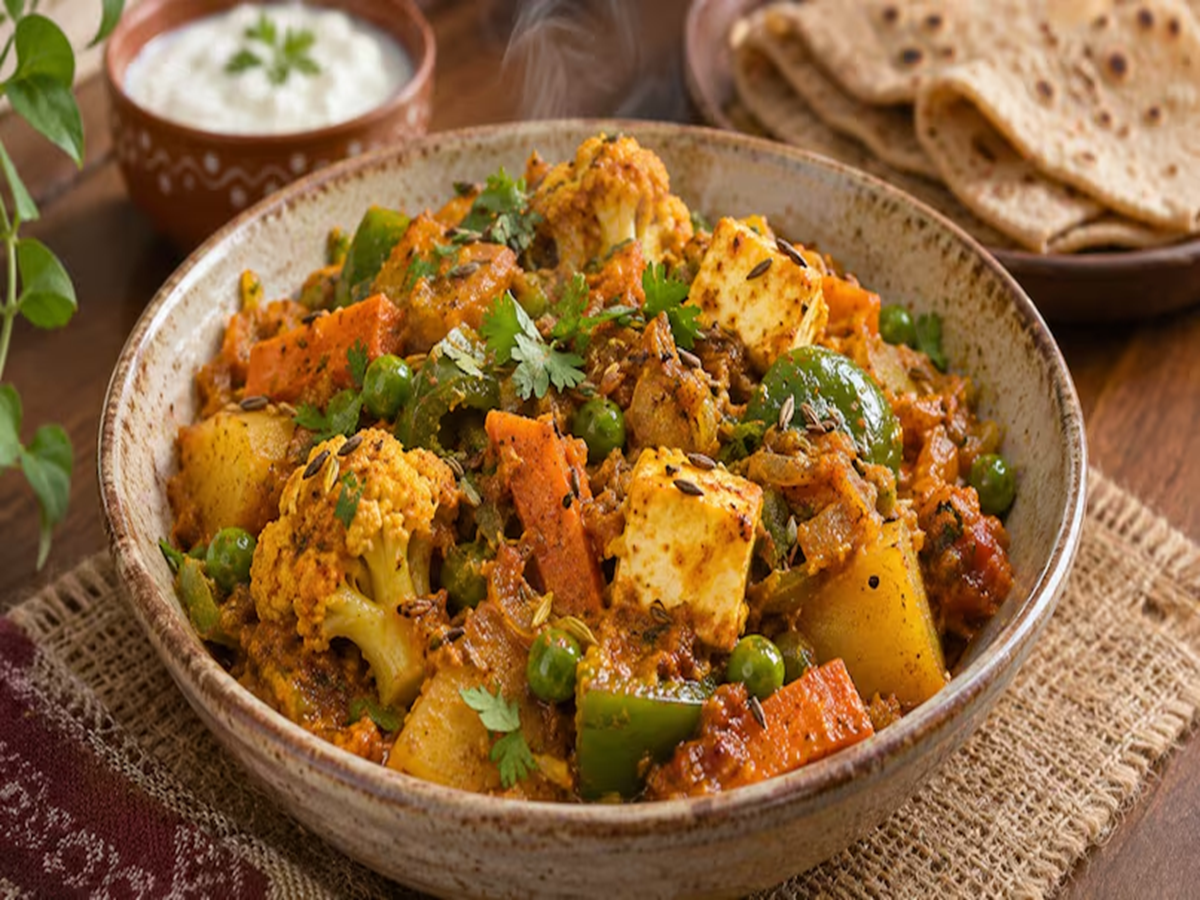
Achari Mix Veg Recipe: Deciding what to cook for lunch or dinner is a common dilemma in almost every household. Often, when you find a bit of cauliflower, some carrots, peas, and paneer (cottage cheese) in the fridge, you might wonder what dish to prepare with them. Making a 'mix veg' (mixed vegetable dish) is a simple solution—but this time, try giving it an 'achari' (pickled/spiced) twist. Vegetables cooked in an onion-tomato masala, combined with the subtle tang of yogurt and the aromatic spices of a pickle, make the dish truly special.
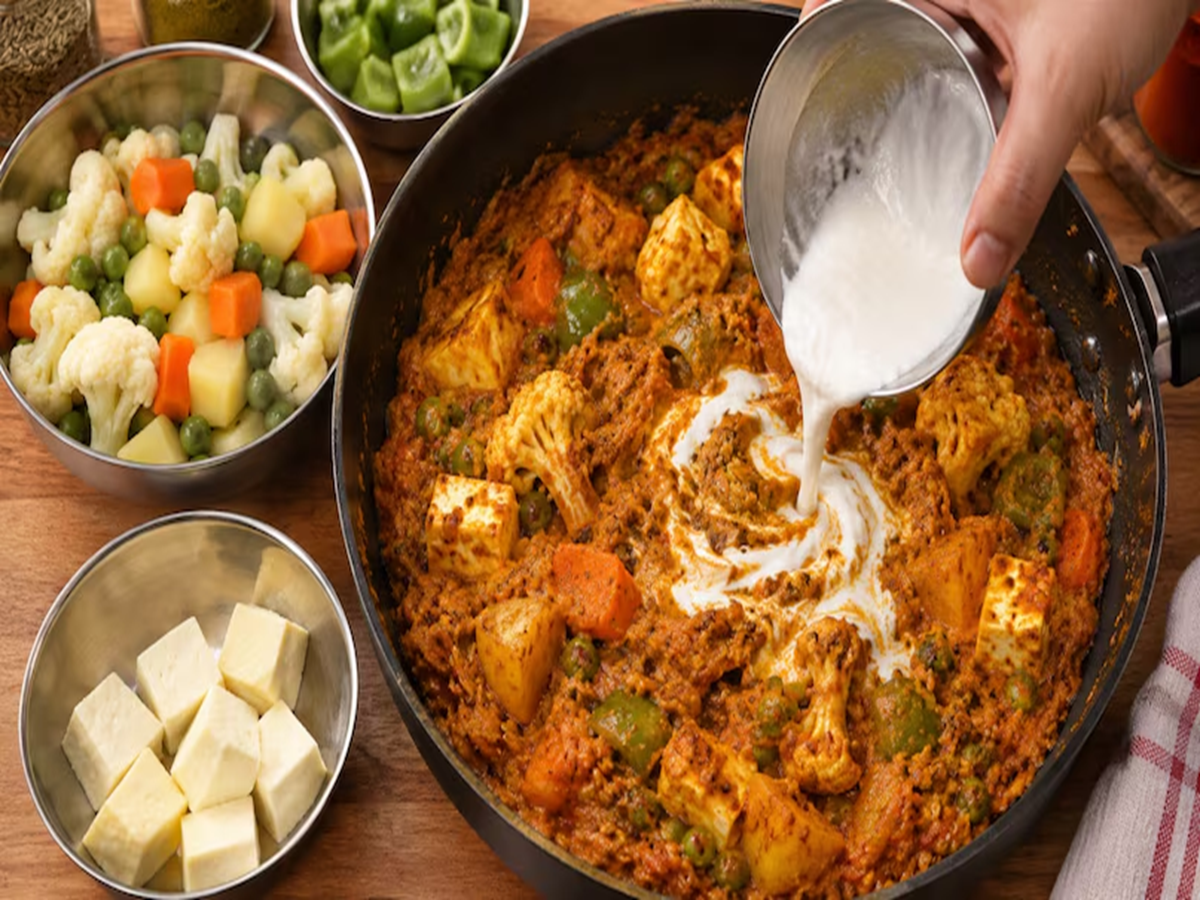
The gravy coats the vegetables perfectly, while the soft pieces of paneer balance the flavors. The best part is that you don’t need any elaborate or hard-to-find ingredients; it can be prepared using vegetables already in your kitchen and everyday spices. Whether for a regular family meal or to serve to guests, this dish is an excellent choice. Just be careful not to overcook the vegetables, and add the pickle spices gradually to ensure the flavors remain well-balanced.
Ingredients for Achari Mix Veg (serves about four): You will need 1/2 cup each of small cauliflower florets, boiled potato cubes, boiled peas, chopped carrots, and paneer cubes. You can also add 1/4 cup each of chopped bell pepper (capsicum) and green beans. For the masala base, prepare one large onion, one large tomato, one tablespoon of chopped garlic, and one tablespoon of chopped ginger. Additionally, you will need 1/2 cup of yogurt, 1/2 teaspoon each of cumin seeds and fennel seeds, one bay leaf, a pinch of asafoetida (hing), one teaspoon of coriander powder, and red chili powder to taste. To start, keep one teaspoon of 'achari masala' (pickle spice mix) on hand. Keep salt, dried fenugreek leaves (kasuri methi), chopped fresh coriander, and three to four tablespoons of oil ready.
Wash and parboil the vegetables: Thoroughly wash the cauliflower, carrots, and beans, and cut them into roughly equal-sized pieces. This ensures even cooking and an appealing final presentation. Bring water to a boil in a pot, add the cauliflower, carrots, and beans, and cook briefly. They should be cooked only until the raw edge is removed while retaining a slight crunch. Drain the water. Also, pre-boil the potatoes and peas. Keep the bell peppers (capsicum) separate, as they can be cooked directly in the pan. Avoid overcooking the vegetables at this stage, as they might break apart when mixed with the spices later.
Sauté the onions, ginger, and garlic: Heat one tablespoon of oil in a pan. Add the finely chopped onions and sauté over medium heat until they turn light golden. Next, add the ginger and garlic and stir. Once their raw aroma has faded, add the chopped tomatoes. Cook the tomatoes until they soften, stirring occasionally. If the mixture begins to stick to the pan, add a tablespoon or two of water. It is essential to cook the onions and tomatoes thoroughly, as they will form the base for the dish's spice mixture (masala).
Prepare the 'achari' (pickled-style) flavored paste: Allow the cooked onion and tomato mixture to cool slightly. Do not blend a very hot mixture in a sealed blender jar. Once cooled, add fennel seeds (saunf), coriander powder, red chili powder, and one teaspoon of 'achari masala' (pickling spice mix). Add a little water and blend into a smooth paste. Be mindful of the quantity when adding the achari masala; it may already contain salt, chili, and acidic/tangy elements. Therefore, start with a small amount and add more if needed. Add a fragrant tempering with cumin and asafoetida (hing): Heat the remaining oil in a pan. Add cumin seeds, asafoetida, and a bay leaf. Once the cumin begins to crackle, add the chopped bell peppers and sauté lightly—there is no need to cook them until they are completely soft. Next, add the prepared paste to the pan and cook over medium heat, stirring constantly. Ensure the masala does not stick to the bottom of the pan; add a little water if necessary. After sautéing for a while, the raw aroma of the spices will fade, and you may notice a little oil appearing along the edges. At this point, reduce the heat to low.
Don’t rush when adding yogurt: Whisk the yogurt thoroughly in a bowl beforehand to ensure there are no lumps. Over low heat, add the yogurt to the masala, a little at a time, while stirring continuously. Allow the mixture to cook slowly. Avoid using very sour yogurt, as the pickling spices (achar masala) may already provide some tanginess; an excess of sourness could overpower the flavor of the vegetables. After adding the yogurt, cook over low heat rather than bringing it to a boil over high heat; this makes it easier to incorporate the yogurt into the masala.
Add the vegetables and paneer: Once the yogurt is well-incorporated into the masala, add the potatoes, cauliflower, carrots, peas, and beans. Gently fold the ingredients together so that every piece is coated with the masala. If the mixture appears too thick, add a few spoonfuls of water. Cover the pan and cook over low heat until the vegetables reach your desired level of tenderness. Then, add the paneer pieces and cook for a short while longer. Be careful not to stir too vigorously after adding the paneer, as the pieces may break. Finally, taste the dish and add salt as needed.
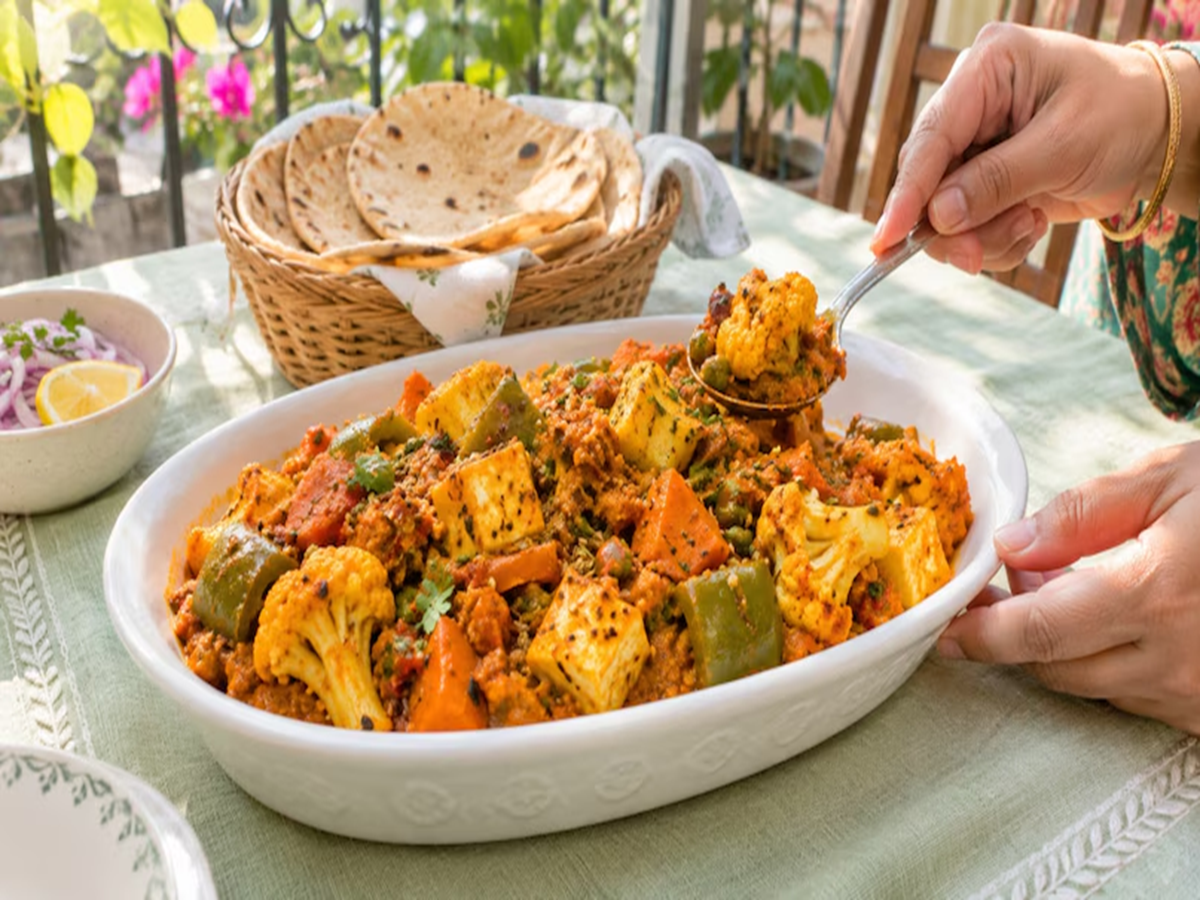
Complete the flavor with kasuri methi (dried fenugreek leaves): Lightly crush the kasuri methi between your palms and add it to the dish. Start by adding one to two teaspoons, then adjust the quantity to suit your preference. This will impart a pleasant aroma to the dish. If you prefer a creamier texture, you can also add one or two tablespoons of cream; however, this is optional, as the yogurt and spices are sufficient to create a rich gravy. Finally, add some chopped fresh coriander, stir lightly, and turn off the heat.
PC Social Media