Business
UPI MDR Rules: Who truly benefits from the 0.4% charge on payments, and why did the system need this fee?
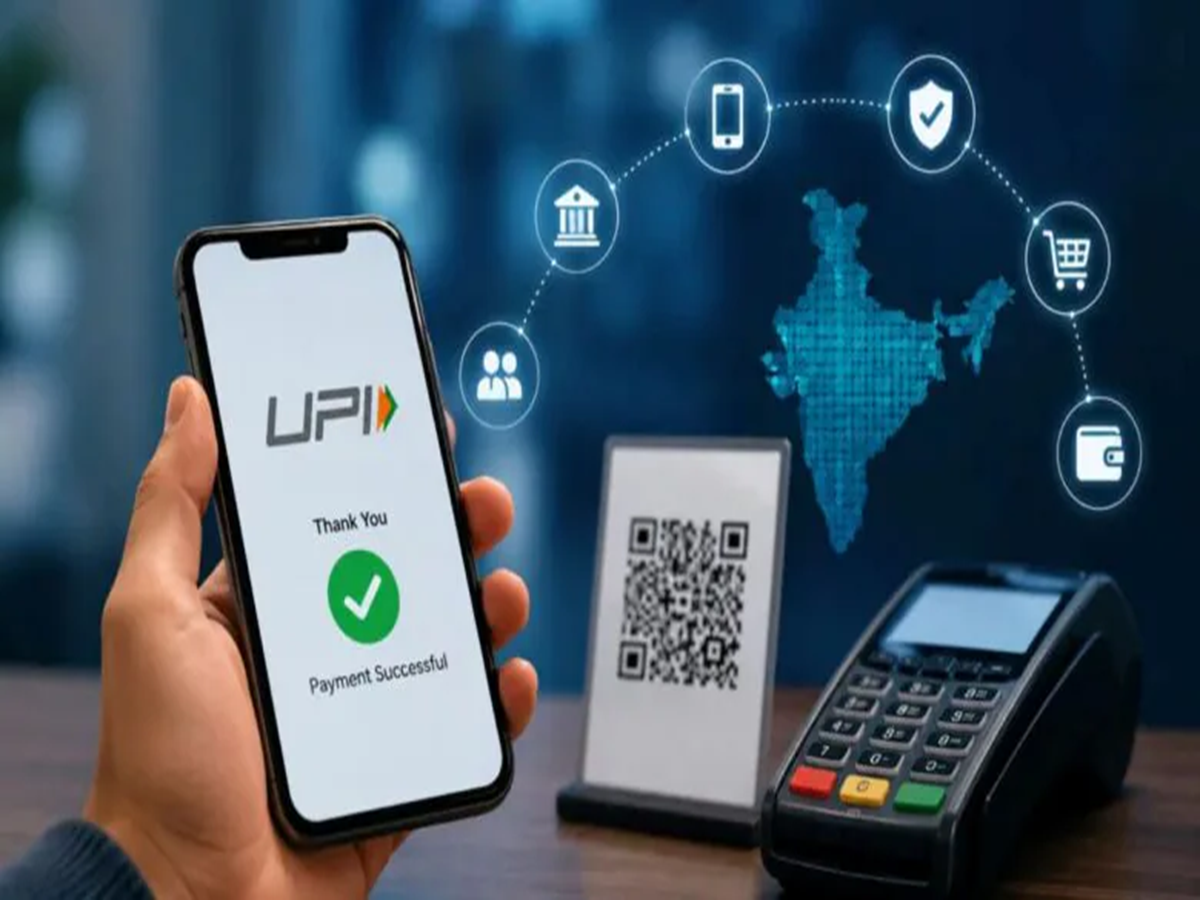
UPI MDR Rules: India's digital payment system, UPI, is making waves globally with its success. In August 2026 alone, the platform recorded over 2,451 crore transactions, amounting to a total value of approximately ₹29.9 lakh crore. To ensure the smooth operation of this vast network, a new Merchant Discount Rate (MDR) framework has been announced. Starting October 15, 2026, a charge of 0.4 percent will apply to merchant payments exceeding ₹2,000.
Upon hearing this news, many assumed that banks or fintech companies were set to make massive profits. However, the reality is quite different. Experts suggest that this new MDR is not a source of windfall earnings but rather a necessary fee to sustain the entire ecosystem. Crucially, this change ensures that small shopkeepers, street vendors, and ordinary customers remain completely insulated from the impact. Let us understand the real story behind this new framework.
Annual Cost of ₹20,000 Crore
While UPI appears simple to use, the underlying technical infrastructure is incredibly complex. Vishwas Patel, Chairman of the Payments Council of India (PCI), states that UPI urgently requires a sustainable economic model to maintain its massive scale. According to industry estimates, the annual cost of operating the UPI system has reached approximately ₹20,000 crore. This includes expenses for server maintenance, cybersecurity, fraud prevention measures, and banking technology support.
The government subsidies provided in the early stages to promote digital payments were merely a "bridge fund." A payment system of this magnitude cannot rely indefinitely on government funding. Therefore, the primary objective behind implementing this new 0.4 percent MDR is not profit generation. The objective is simply to cover the costs associated with operating and upgrading the ecosystem, as well as introducing new technologies.
When the MDR (Merchant Discount Rate) is deducted from a large payment, the proceeds will not go into the coffers of a single company. The steering committee of the National Payments Corporation of India (NPCI) has largely finalized a formula for distributing these funds. The issuing bank will receive 40 percent of the charge, while the UPI app (such as Paytm or PhonePe) will get 30 percent. The remaining 30 percent will go to the bank whose QR code is displayed at the merchant's outlet. This implies that payment apps will receive only a small fraction of the charge. They must cover expenses ranging from technology, fraud control, and customer support to merchant servicing using this limited amount.
A Safety Net for Small Merchants
A key feature of this new framework is its strong emphasis on financial inclusion. While the system requires funding, the burden will not fall on small shopkeepers. Small merchants falling under the P2PM (Person-to-Person-Merchant) category have been completely exempted from the new MDR.
If a small shopkeeper accepts payments of up to ₹1 lakh per month via their UPI QR code, they will not have to pay a single rupee in MDR. Notably, even if a customer makes a lump-sum payment exceeding ₹2,000, the small shopkeeper will not incur any charges. However, if a merchant consistently earns more than ₹1 lakh per month via UPI for three consecutive months, they will be shifted to the commercial P2M category; only then will the applicable charges come into effect. Small shopkeepers do not require GST registration to avail themselves of this exemption.
The NPCI Chairman has clearly stated that financial inclusion cannot be compromised for the sake of making the system sustainable. Providing the protection of zero MDR to small shopkeepers is crucial; this ensures they continue to adopt digital payments without apprehension. Additionally, a special fund of ₹700 crore is being established to expand the reach of UPI across Tier-3 to Tier-6 cities, the Northeastern states, and regions ranging from Jammu & Kashmir to Ladakh. This fund will provide financial assistance to companies that onboard small merchants.
**Large payments to drive the system**
In the 2025-26 financial year, UPI payments made to shopkeepers totaled ₹198 lakh crore. While transactions exceeding ₹2,000 accounted for only 4% of the total volume, they represented a value of ₹131 lakh crore—constituting 66% of the total payment value. This disparity prompted the decision to levy fees on payments.
The math behind the new system is straightforward: merchants handling large transactions—specifically those falling under commercial categories—will bear the cost burden of the network. An MDR of 0.4% will apply to P2M (Person-to-Merchant) transactions exceeding ₹2,000. However, a cap has been introduced to prevent exorbitant charges; the maximum MDR for transactions of ₹75,000 or higher will be limited to ₹300.
Consequently, revenue generated from large payments will help finance UPI's mass-market infrastructure. Regulations have been further simplified for specific sectors such as insurance premiums, fuel purchases at petrol pumps, railway tickets, telecom services, and utility bill payments.
PC Social Media