LIFESTYLE
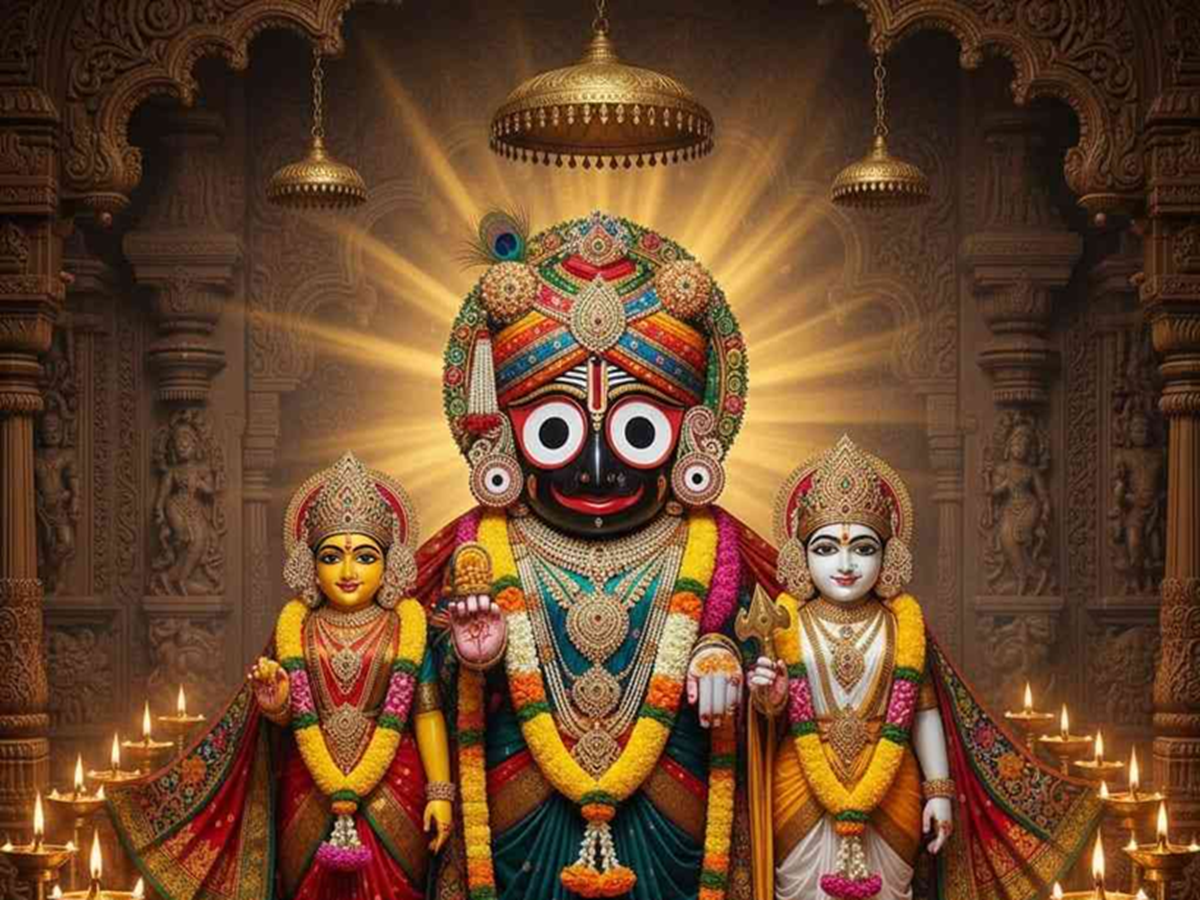
What is Lord Jagannath's divine kitchen like—the place where even the hearths take a 12-day rest?
It is well known that the Vedas mention the chariots of the Goddess Usha and the God Agni. The Vedas also provide information regarding the construction of various types of chariots. There are many temples in India designed in the shape of a chariot; for instance, a small chariot-shaped temple stands to the left of both the Konark Temple and the Simhachalam Temple. Both these temples were built by Langula Narasimha Deva. These can aptly be described as ‘stone chariots.’ The tradition of the chariot also exists in South India; the Tyagaraja Temple in Thiruvananthapuram, the Suchindram Temple, the Meenakshi Temple, the Srirangam Temple, and the Narasimha Temple in Simhachalam all observe the tradition of the *Ratha Yatra* (chariot procession). The chariot at the Simhachalam Temple remains on display for devotees throughout the year. In Odisha, the chariot traditions associated with Sri Lingaraj and Goddess Biraja of Jajpur are also ancient; one belongs to the Shaiva tradition, while the other belongs to the Shakta tradition.
**Account in the Skanda Purana**
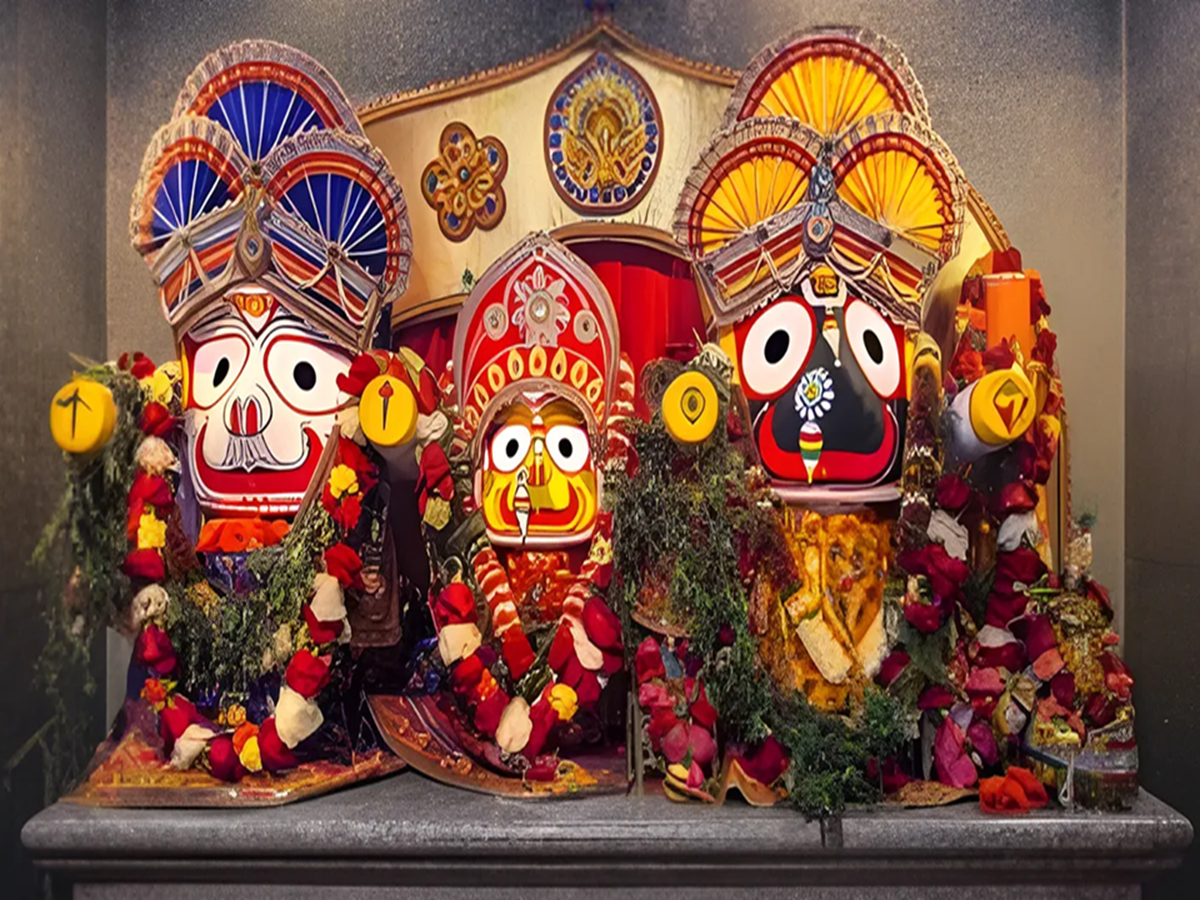
Among all such events in India, Odisha’s Jagannath Ratha Yatra is unique and world-renowned. Although the chariot festival of Sri Jagannath has been celebrated in the Sri Purushottama Kshetra since ancient times, the exact year of its inception has not yet been determined. According to scriptures, it is believed to have begun in the first century BCE, as King Indradyumna was the first to bring the *Chaturdha Vigraha* (the four deities) in a chariot from *Adampandam* towards the *Simhadwara* (Lion's Gate). This event is described in the Skanda Purana. Recent research by German scholars suggests that this Purana predates the first century BCE. However, the Sanatani belief holds that the tradition of the Ratha Yatra has existed since the very advent of the Lord.
**The Good Fortune of Yayati**
Historical records offer various opinions regarding the origin of this tradition. Pandit Sadashiv Rathsharma determined the timeline of the festival after studying the manuscript titled ‘Rathachakra.’ The fact that this manuscript was preserved in the Bada-Odia Matha of Puri is mentioned in the work titled *Darubrahma ki Sanskriti aur Yug-Yug ki Ghosh-Yatra: Shri Gundicha*. It was edited by Shri Paramananda Adhikari and published in 1981 by New Student Store, Cuttack. The author of this manuscript is Bhikhari Pattnaik. It records that the Rath Yatra (Chariot Festival) of the Lord took place during the reign of Maharaja Yayati—that is, in the 9th century. It has also been established that Pandit Murari Mishra’s play *Anargharaghava* dates back to the 9th century; in that text, scholars have interpreted the term ‘Yatra’ (associated with Purushottama) as a figurative reference to the Rath Yatra. If we accept both these points, it implies that the Lord’s Rath Yatra was indeed being conducted during the 9th century under the reign of Maharaja Yayati.
**The Tradition of Seven Chariots**
According to the description in the manuscript, the height of the Shrimandir was 48 *haths* (cubits). However, the *Madala Panji* uses the term ‘Patol’ instead of ‘Shrimandir’ and records the height as 38 *haths*. Since the temple was smaller, the deities were correspondingly smaller, and the chariot height is recorded as 18 *haths*. At that time, seven chariots were constructed. The deities would travel from the Singhadwara (Lion’s Gate) to Balgandi on three chariots. A smaller chariot would move ahead of these three; this chariot was drawn by horses rather than devotees, and devotees would play various musical instruments on it. All four chariots would first halt at the banks of the Balgandi-Malini River; after crossing the river, the deities would proceed to the Shri Gundicha Temple on the three chariots. The three chariots used on the far bank were constructed at Indradyumna-Patana. This location must have existed somewhere as ‘Indradyumna Tirtha,’ though it has not yet been identified.
**At the Indradyumna Workshop**
Historical records indicate that a river flowed to the northwest of Indradyumna Tirtha. At that time, the river served as the primary means of transport. Settlements or villages situated along the riverbanks were known as ‘Patna’. Even today, villages bearing the name ‘Patna’ exist along riverbanks in several regions. Four-wheeled chariots used to be constructed at Indradyumna Patna. In his *History of Odisha*, Dr. Harekrushna Mahtab notes that during the reign of Maharaja Bhanudeva I (1264–1278), the number of chariots for the deities was reduced from six to three. The exact time when the construction of horse-drawn chariots ceased remains unknown.
Mahaprabhu’s Grand Kitchen
The kitchen of Mahaprabhu Shri Jagannath holds the distinction of being the largest and most sacred kitchen in Sanatan culture, where *Mahaprasad* (known as *Abhada*) is prepared daily for thousands of devotees. Located in the south-eastern courtyard of the Jagannath Temple, this grand kitchen houses approximately two hundred and forty hearths that remain constantly active, with hundreds of Brahmin cooks and their assistants offering their services with utmost purity.
Within this complex, all food is cooked exclusively in fresh earthen pots. The traditional cooking method employed here astonishes even modern thermal science. Seven earthen pots are stacked vertically—one atop the other—over the sacred fire of the hearth. Contrary to standard physical laws, the food in the topmost pot—farthest from the heat—cooks first, while the food in the bottom-most pot—closest to the fire—is the last to be fully cooked.
PC Social Media