LIFESTYLE
Why does a solar eclipse end in just a few minutes, whereas a lunar eclipse lasts for hours? Discover the surprising reason behind this..
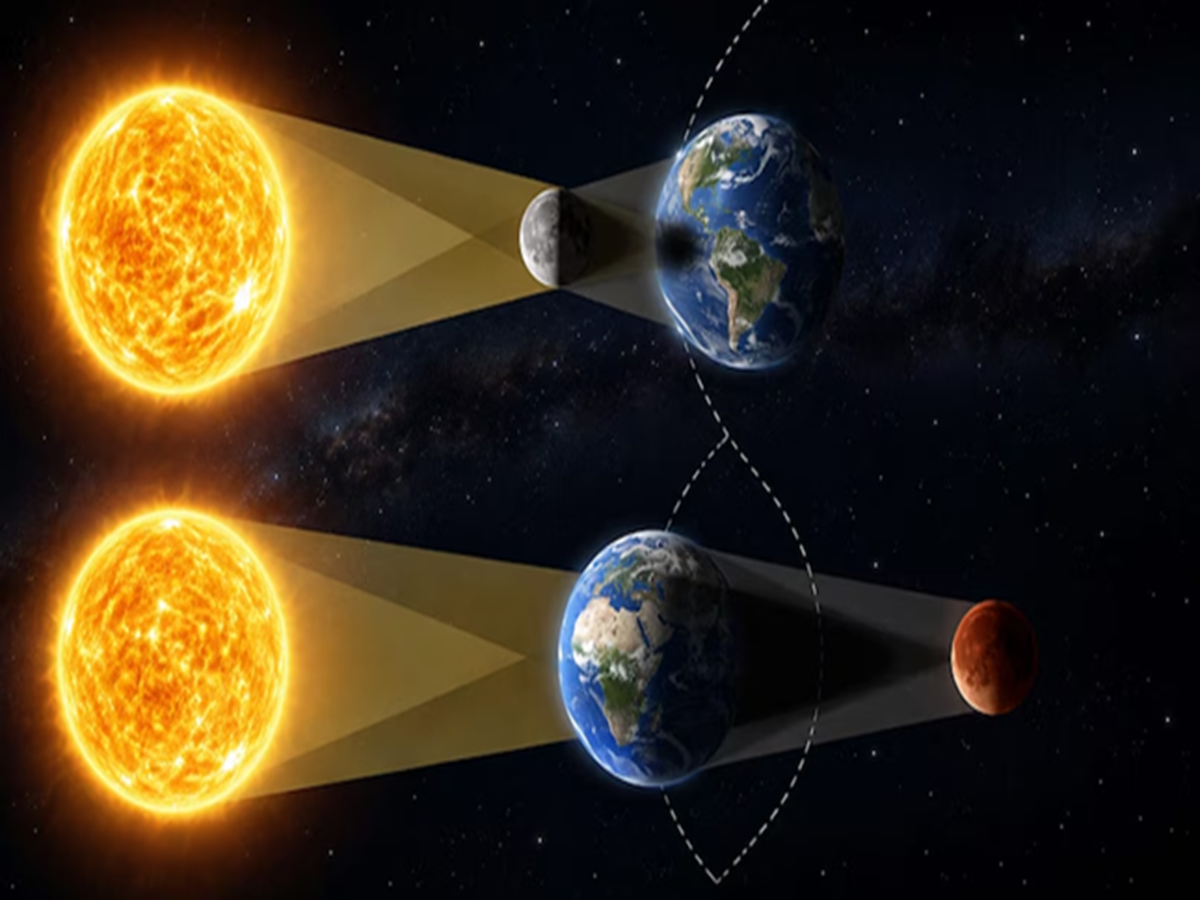
Why is a solar eclipse shorter than a lunar eclipse? Both solar and lunar eclipses are fascinating astronomical events, but a significant difference becomes apparent when observing their duration. A total solar eclipse is usually visible from a specific location for only a few minutes, whereas the entire sequence of a lunar eclipse can last for several hours. This raises the question: since both eclipses result from the relative positions of the Sun, Earth, and Moon, why is there such a vast difference in their duration? The answer lies in how they form and the size of the shadows involved. During a solar eclipse, the Moon passes between the Sun and the Earth, casting a small, dark shadow onto the Earth's surface.
Due to the motion of the Earth and the Moon, this shadow moves rapidly across the Earth's surface. Consequently, a total solar eclipse is visible from any single location for only a very brief period. In contrast, during a lunar eclipse, the Earth moves between the Sun and the Moon. Since the Earth is much larger than the Moon, its dark shadow in space is also significantly wider than the Moon itself. It takes the Moon a longer time to pass through this large shadow. This is the primary reason why the totality phase of a solar eclipse is short, while the process of a lunar eclipse is quite lengthy.
How does a solar eclipse occur? A solar eclipse happens when, around the time of the new moon, the Moon positions itself between the Sun and the Earth, temporarily blocking sunlight from reaching the Earth. The Moon's shadow falls upon the Earth's surface. The darkest part of this shadow is called the *umbra*. A total solar eclipse can be observed from locations where this dark shadow passes. Surrounding it is a larger, lighter shadow region known as the *penumbra*; from here, only a portion of the Sun appears obscured, resulting in a partial solar eclipse. (Image: AI)
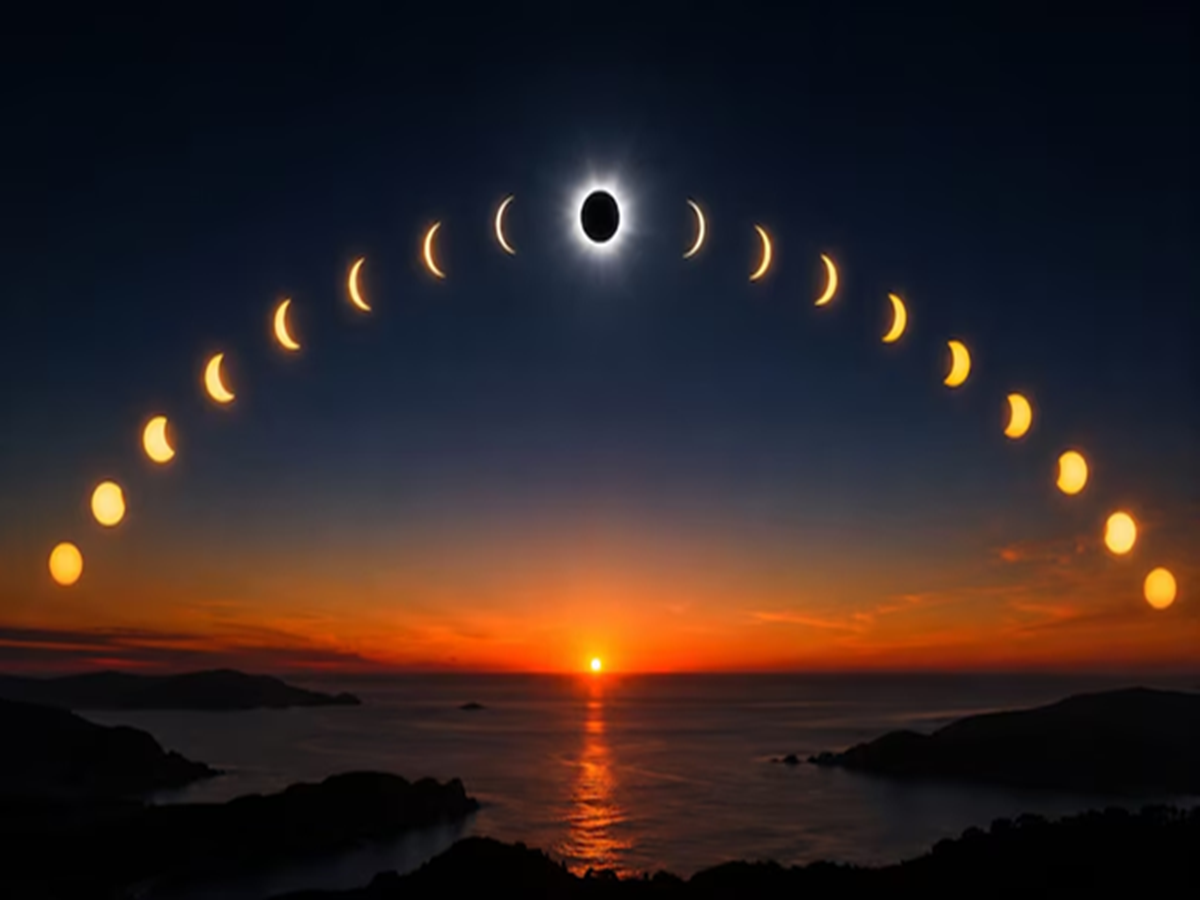
Why is the totality phase of a solar eclipse so brief? The main reason is the size of the Moon's shadow. The Moon is much smaller than the Earth, and its dark shadow covers only a limited area on the Earth's surface. This narrow shadow zone moves continuously across the Earth's surface. The Earth rotates on its axis, and the Moon orbits the Earth. The combined effect of these movements makes the Moon's shadow appear to race across the Earth's surface. Consequently, the Moon's dark shadow moves past the location where a total eclipse begins within just a few minutes. This is why, while the entire solar eclipse event—including the partial phases—may be visible from a single location for an extended period, the total solar eclipse phase (when the Sun is completely hidden behind the Moon) lasts for a very short time.
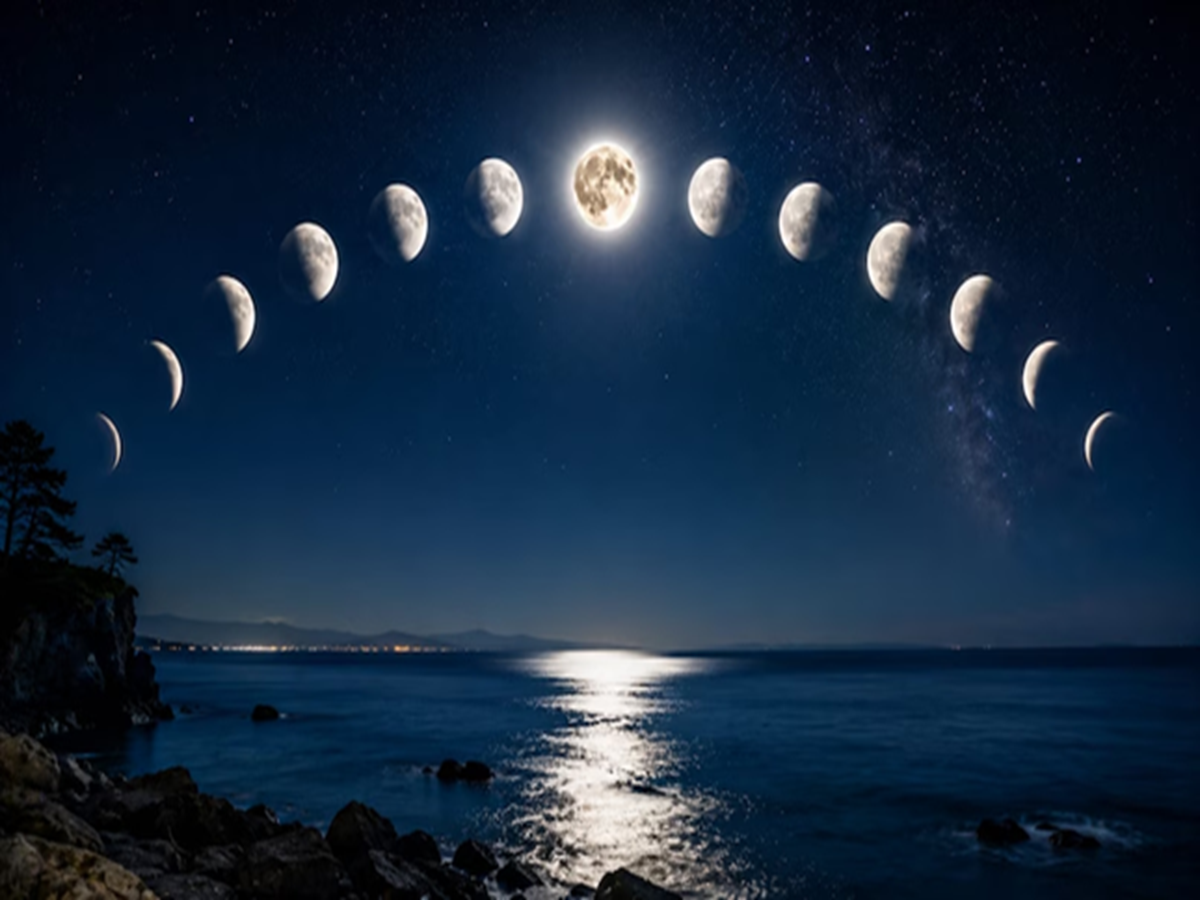
How does a lunar eclipse occur? The alignment for a lunar eclipse is the reverse of that for a solar eclipse; here, the Earth positions itself between the Sun and the Moon. This typically happens around the time of a full moon. Sunlight is blocked by the Earth, causing the Earth's shadow to fall upon the Moon. The Moon gradually enters the Earth's lighter shadow (penumbra) before reaching the darker shadow (umbra). During a total lunar eclipse, the entire Moon may become immersed in the Earth's dark shadow. Afterward, it slowly emerges from the other side. This entire process takes a considerable amount of time.
Earth's large shadow extends the duration: The easiest way to understand the difference in duration between solar and lunar eclipses is to compare their shadows. In a solar eclipse, the Moon's shadow falls on the Earth, whereas in a lunar eclipse, the Earth's shadow falls on the Moon. The Earth's diameter is approximately four times that of the Moon. Although the actual size of the shadow formed in space varies based on the distance from the Sun, at the distance of the Moon's orbit, the Earth's dark shadow is significantly wider than the Moon itself. Therefore, it takes a long time for the Moon to enter, traverse, and exit this shadow.
Understanding the difference with a simple example: Imagine you are walking along a road. You encounter a small tree casting a very narrow shadow; it would take you only a few seconds to cross that small shadow. Conversely, if there is a wide shadow cast by a large building further ahead, it would take much longer to cross it. The difference between a solar eclipse and a lunar eclipse is quite similar. During a solar eclipse, the Moon's dark shadow falling on Earth is relatively narrow, whereas during a lunar eclipse, the Moon must pass through Earth's much wider shadow.
Does a solar eclipse always last only a few minutes? It is important to understand a distinction here. When it is said that a solar eclipse is short, the reference is usually to the phase of totality as viewed from a specific location. The entire global event, from start to finish, can last several hours. However, the maximum theoretical duration of totality at any single location is approximately 7 minutes and 32 seconds. In most total solar eclipses, the duration is shorter than this. In contrast, the phase of totality during a total lunar eclipse can last more than an hour, and the entire eclipse—including all stages involving the lighter and darker shadows—can be visible for several hours.
A lunar eclipse is also visible from a much larger area: another major difference between the two eclipses lies in the region from which they can be viewed. To witness a total solar eclipse, one must be positioned within the path of the Moon's narrow, dark shadow on Earth. Consequently, a total solar eclipse is visible from only a small area of the planet. This is not the case with a lunar eclipse.
PC Social Media