LIFESTYLE
Deepfake Video Call Scam 2026: How to Spot AI-Generated Faces and Protect Yourself From Fraud
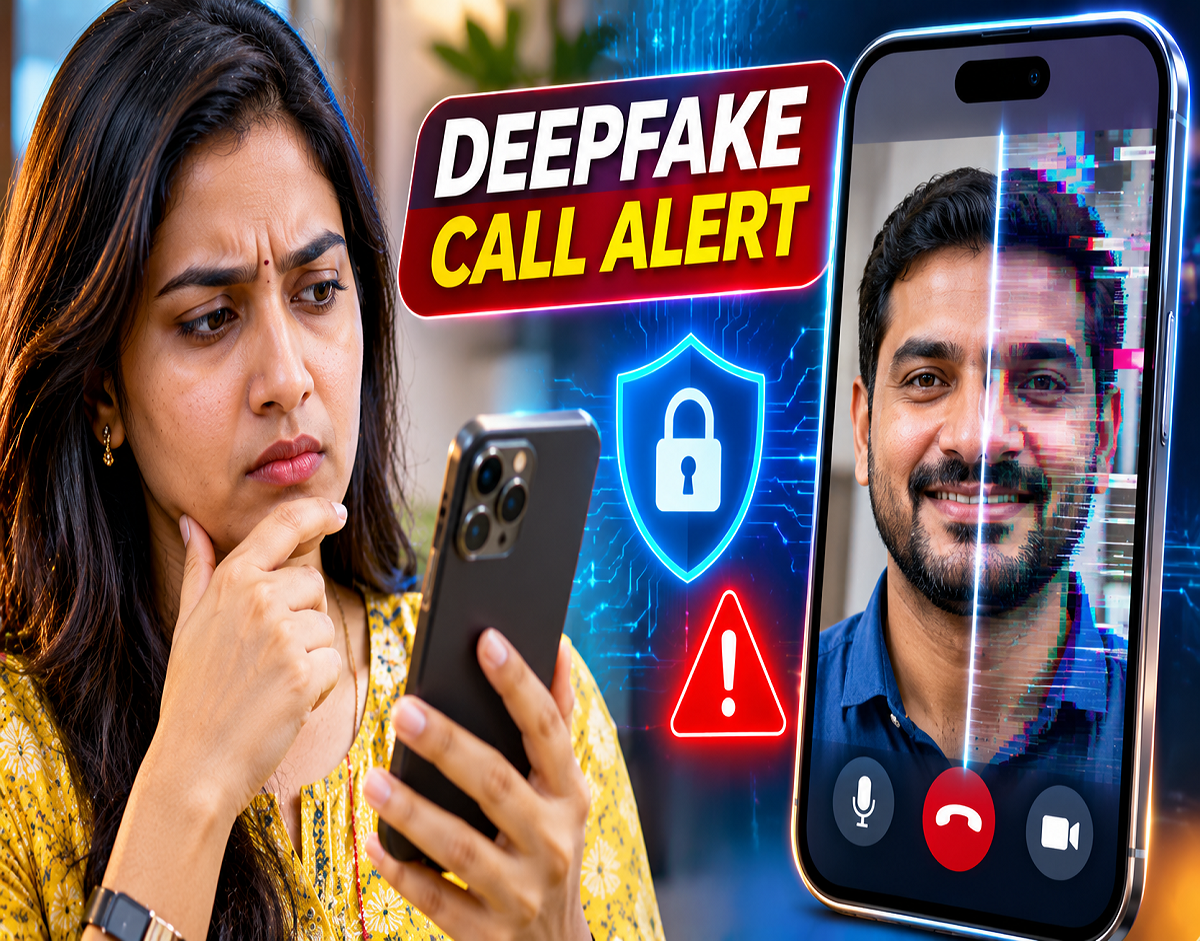
Deepfake Video Call Scam 2026: Artificial intelligence is changing the way cybercriminals deceive people. Fraudsters can now use AI-generated faces and cloned voices to impersonate family members, friends, company executives or other trusted individuals during video calls.
Unlike traditional phone scams, these calls may appear convincing because the person on the screen looks and sounds familiar. Criminals exploit this trust to demand urgent payments, obtain confidential information or authorize fraudulent transactions.
However, a realistic face or familiar voice on a video call is no longer reliable proof of someone's identity.
Although some deepfake videos contain visual or audio irregularities, modern AI-generated content can be difficult to distinguish from genuine footage. Independent identity verification is therefore more dependable than relying on appearance alone.
What Is a Deepfake Video Call Scam?
A deepfake video call scam involves the use of artificial intelligence to imitate a real person's appearance, voice or both.
Fraudsters may create a convincing impersonation using photographs, videos or audio recordings obtained from publicly available sources or other means.
For example, someone may receive a video call that appears to show a relative asking for money following an accident.
In another situation, an employee may receive a video meeting invitation from someone appearing to be a senior executive requesting an urgent transfer.
The fraud usually depends on three factors: familiarity, urgency and pressure to act without verification.
Hong Kong Deepfake Fraud: A Major Warning
A widely reported case involving engineering company Arup demonstrated how sophisticated AI impersonation can facilitate financial fraud.
According to the Gadgets Now report, an employee in Hong Kong participated in a video meeting in which several participants appeared to be company executives and colleagues.
The participants were reportedly impersonated using deepfake technology.
Believing the instructions were genuine, the employee transferred approximately HK$200 million, equivalent to around US$25.6 million, through 15 transactions.
The case illustrates why even a video conference involving several familiar-looking participants should not replace established payment approval procedures.
Five Possible Warning Signs of a Deepfake Video Call
Some manipulated videos may contain unusual visual or audio characteristics. However, these signs are not conclusive evidence of fraud.
1. Unusual Eye Movements
A person may appear to blink unnaturally, maintain an unusually fixed gaze or show inconsistent eye movements.
However, genuine video calls can also display unusual movements because of camera quality, lighting or connectivity problems.
2. Lip Movements That Do Not Match Speech
A mismatch between spoken words and lip movements can raise suspicion.
But audio delays are common during ordinary video calls, especially when the internet connection is unstable.
This sign should never be used alone to determine whether a video is fake.
3. Unnatural Facial Expressions
Some AI-generated faces may show inconsistent expressions or unusually smooth skin.
Nevertheless, modern video filters, compression and lighting can produce similar effects in authentic calls.
4. Distortion Around the Face
Blurred edges around the hair, ears, jawline or glasses may indicate video manipulation.
Such distortions can sometimes become more noticeable when a person moves.
However, ordinary video-processing problems can create comparable visual artifacts.
5. Inconsistent Lighting or Background
Unexpected changes in facial lighting, shadows or background movement may be worth examining.
These irregularities are only possible warning signs, not reliable confirmation of a deepfake.
Important: A fraudulent video call may show none of these abnormalities. The absence of visible errors does not establish authenticity.
How to Verify a Suspicious Video Call
If a caller requests money, confidential information or an unusual action, verification is more important than trying to identify technical imperfections.
Ask an unexpected question: A question based on a recent private conversation may help expose an impersonator. However, criminals may already possess personal information, so the answer should not be treated as definitive proof.
Request a change in movement: Asking the caller to turn their head or move a hand across their face may reveal visual inconsistencies in some manipulated videos. More advanced deepfakes may handle these movements convincingly.
Check the context: An unexpected request for an urgent transfer, secrecy or a change in payment details should raise concern, regardless of how realistic the caller appears.
End the call and contact the person independently: This is the most important precaution. Use a phone number or communication channel that you already know is genuine, rather than contact information supplied during the suspicious call.
Do not authorize a payment until the request has been independently verified.
Can AI Clone Someone's Voice?
Yes. AI-based voice-cloning tools can imitate speech patterns, tone and pronunciation.
Some cloned voices may sound robotic or contain unusual pauses, but sophisticated systems can produce highly realistic speech.
Therefore, recognizing someone's voice is not sufficient evidence that the caller is genuine.
If a familiar person unexpectedly requests money or confidential information, confirm the request through a separate trusted channel.
Why Urgent Money Requests Are a Major Warning Sign
Deepfake scams frequently rely on emotional pressure.
A caller may claim that a family member has been hospitalized, that a business payment must be completed immediately or that a confidential transaction requires urgent approval.
Fraudsters may also discourage victims from contacting anyone else.
These tactics are designed to prevent careful verification.
A genuine emergency can also involve urgency, so the request itself does not prove fraud. Nevertheless, the need for immediate action makes independent confirmation particularly important.
Can a Family Codeword Help Prevent Deepfake Fraud?
Families can consider establishing a private codeword for unexpected emergency requests.
If someone claims to be a relative and asks for urgent financial assistance, the codeword may provide an additional verification step.
However, codewords can be disclosed, guessed or obtained through compromised communications.
They should therefore be treated as a supplementary safeguard rather than a replacement for calling the person through a trusted number.
What Should You Do If You Have Already Sent Money?
If you suspect that a deepfake video call has resulted in financial fraud, act quickly.
- Contact your bank immediately. Use its official customer support number and report the suspicious transaction.
- Call the national cybercrime helpline at 1930. Provide the relevant payment details.
- Submit a complaint through the official portal: https://cybercrime.gov.in.
- Preserve evidence. Keep transaction IDs, payment receipts, phone numbers, messages and available screenshots.
- Secure affected accounts. If passwords, OTPs or other sensitive information were disclosed, follow the relevant bank or service provider's security instructions.
Prompt reporting may improve the chances of tracing or restricting fraudulent transfers, although recovery of the money is not guaranteed.
How Can Businesses Prevent Deepfake Payment Fraud?
Companies are also vulnerable to impersonation attacks involving senior executives and finance teams.
Organizations can reduce this risk by requiring independent confirmation of unusual payment instructions.
For example, a large transfer requested during a video meeting should still follow the company's established approval process.
Additional safeguards may include dual authorization, verification through previously registered contact details and employee training on AI impersonation.
A convincing video meeting should never be treated as a substitute for financial controls.
Simple Precautions Against AI Video Call Scams
- Avoid trusting unexpected financial requests solely because the caller looks familiar.
- Never disclose OTPs, passwords, UPI PINs or banking credentials during suspicious calls.
- Verify unusual requests through a previously established contact channel.
- Be cautious about sharing personal videos and voice recordings publicly.
- Keep your phone and communication applications updated.
- Help family members understand how AI impersonation scams work.
These measures cannot eliminate every cyber threat, but they can reduce the likelihood of falling for impersonation-based fraud.
Can Every Deepfake Video Be Identified by Looking Closely?
No. AI-generated video and audio are becoming increasingly sophisticated.
Visual clues such as unnatural blinking, mismatched lips or distorted facial edges may sometimes indicate manipulation, but they are not dependable detection methods.
Similarly, an authentic video call may display temporary glitches because of poor connectivity or camera processing.
The safest approach is to verify the caller's identity independently before transferring money, sharing sensitive information or approving an unusual request.
Conclusion
Deepfake video call scams demonstrate how artificial intelligence can be misused to impersonate trusted individuals and manipulate financial decisions.
While unusual facial movements, audio delays and inconsistent lighting may raise suspicion, these signs cannot reliably distinguish genuine calls from AI-generated impersonations.
The most effective precaution is to stop and verify unexpected requests through a trusted communication channel.
If financial fraud occurs, contact the bank immediately and report the incident through India's cybercrime helpline 1930 or the official portal cybercrime.gov.in.
Editorial Note: The fraud examples and reported warnings are based on the supplied article. Visual and audio characteristics described here are possible indicators only; they should not be treated as definitive tests for identifying AI-generated video calls.