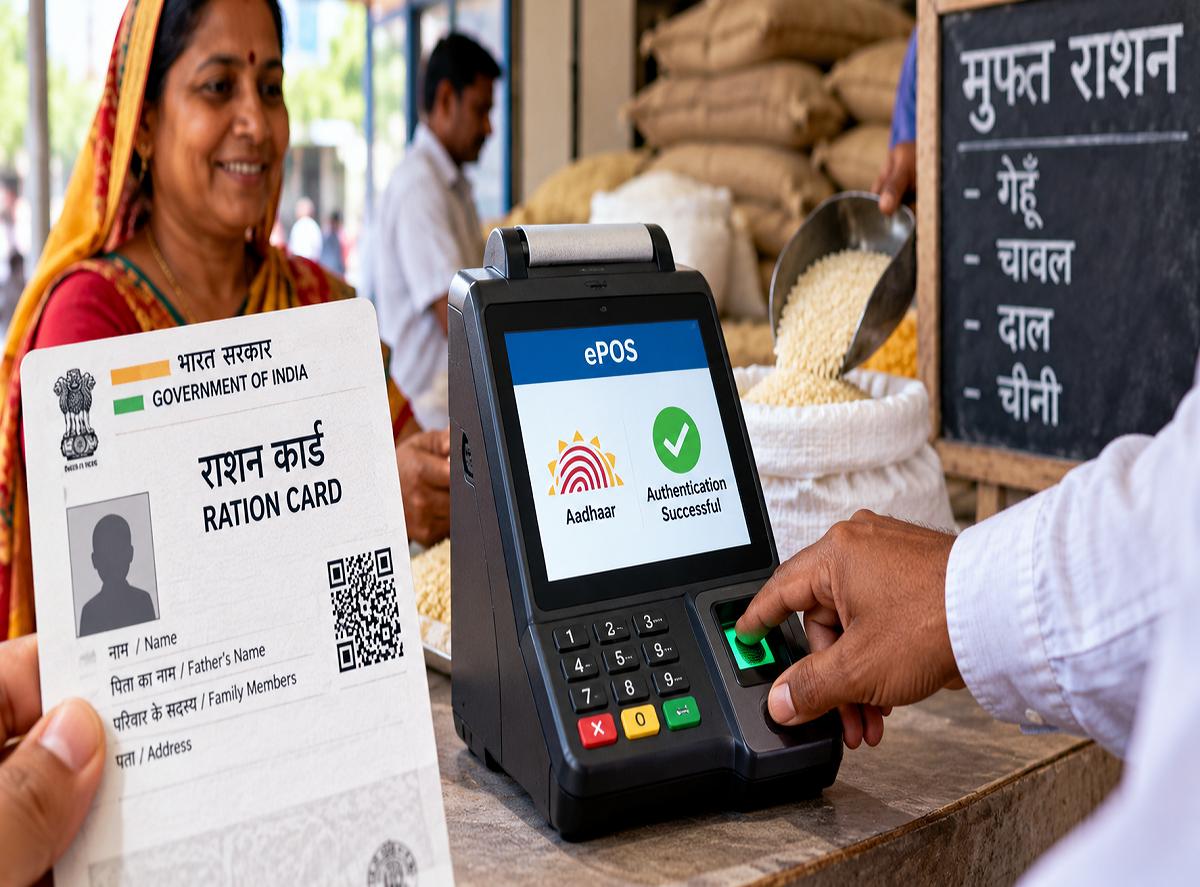
Ration Card ePOS Machine 2026: Millions of eligible families in India receive foodgrains through the government's Public Distribution System (PDS). To improve transparency and reduce irregularities in ration distribution, electronic Point of Sale (ePOS) machines are used at authorised Fair Price Shops.
These devices help ration dealers verify beneficiaries, record foodgrain distribution and maintain digital transaction details.
For ration card holders, the system can make it easier to track the quantity of foodgrains received and identify possible discrepancies.
The ePOS system also supports the One Nation, One Ration Card initiative, which allows eligible beneficiaries to collect their entitled foodgrains from participating ration shops outside their home state.
However, beneficiaries should know what to do if fingerprint authentication fails or a ration dealer refuses to provide their entitlement.
Here is a complete explanation of how ePOS machines work and how ration card holders can benefit from them.
What Is an ePOS Machine at a Ration Shop?
An ePOS machine is an electronic device used by authorised ration dealers to record the distribution of foodgrains under the Public Distribution System.
The full form of ePOS is Electronic Point of Sale.
These devices are connected to the relevant ration distribution system and can support beneficiary verification, transaction recording and entitlement checks.
Depending on the state and technical setup, an ePOS machine may use Aadhaar-based biometric authentication or another permitted verification method.
When an eligible beneficiary collects foodgrains, the dealer records the transaction electronically.
This helps maintain information about the quantity distributed and the beneficiary account against which the ration was issued.
How Does an ePOS Machine Work?
The process is designed to make ration distribution more transparent.
A typical transaction involves the following steps:
Step 1: The beneficiary visits an authorised Fair Price Shop.
Step 2: The ration dealer retrieves the beneficiary's details using the available identification information.
Step 3: The beneficiary completes the required verification, which may include biometric authentication.
Step 4: The system displays the available foodgrain entitlement.
Step 5: The dealer provides the applicable quantity of foodgrains.
Step 6: The transaction is recorded digitally.
Step 7: A receipt or transaction confirmation may be generated, depending on the system.
The exact procedure can differ between states because PDS administration and technical arrangements are managed through the relevant government authorities.
What Are the Benefits of ePOS Machines?
The electronic system offers several practical advantages.
1. Better transparency in ration distribution
Digital transaction records help authorities monitor the distribution of foodgrains.
This can make it easier to identify discrepancies between the quantity recorded as distributed and the quantity actually received by beneficiaries.
2. Beneficiary verification
The system supports identity verification to help ensure that subsidised foodgrains reach eligible ration card holders.
It also helps reduce the risk of duplicate or unauthorised transactions.
3. Digital records of foodgrain distribution
When a ration transaction is completed, the system maintains an electronic record.
These records can be useful when a beneficiary wants to check previous transactions or raise a complaint.
4. Support for migrant workers
The system supports ration portability under the One Nation, One Ration Card programme.
This is particularly helpful for workers and families who temporarily move to another state for employment.
5. Easier monitoring by government departments
Digital records can help food departments monitor Fair Price Shop transactions and identify possible irregularities.
How Much Free Ration Can Beneficiaries Receive?
The quantity of foodgrains depends on the ration card category and the applicable scheme.
Under the National Food Security Act (NFSA), the main entitlement categories include Priority Households (PHH) and Antyodaya Anna Yojana (AAY).
| Ration Card Category | NFSA Foodgrain Entitlement |
|---|---|
| Priority Household (PHH) | 5 kg per eligible person per month |
| Antyodaya Anna Yojana (AAY) | 35 kg per eligible household per month |
Foodgrains under these NFSA entitlements are being provided free of cost under the government's applicable free-foodgrain arrangements.
Additional state-specific benefits may vary.
For example, a five-member PHH family with all five members included as eligible beneficiaries would generally have an entitlement of 25 kg of foodgrains per month.
An AAY household, on the other hand, receives the prescribed household entitlement of 35 kg per month.
Beneficiaries should check their official ration card details to confirm their category and quantity.
What Is One Nation, One Ration Card?
The One Nation, One Ration Card (ONORC) initiative allows eligible NFSA beneficiaries to obtain their entitled foodgrains from participating Fair Price Shops outside their home state.
This is useful for migrant workers who travel to another city or state for employment.
For example, an eligible ration card holder registered in Bihar may be able to collect foodgrains from a participating ration shop in Delhi or Rajasthan, subject to the applicable portability rules.
The ePOS system helps support the identification and transaction recording needed for this arrangement.
Portability does not mean that beneficiaries receive additional foodgrains beyond their entitlement.
It allows them to access the applicable entitlement at a different participating location.
What Happens if Fingerprint Authentication Fails?
Sometimes beneficiaries face problems during biometric verification.
This may happen because of worn fingerprints, poor scanner quality, technical faults or network connectivity problems.
Elderly beneficiaries and people engaged in manual labour may experience fingerprint-matching difficulties.
If authentication fails, the beneficiary should immediately inform the ration dealer.
The dealer should follow the alternative verification or exception-handling procedure permitted by the relevant state government.
Where available, this may involve another authorised authentication method or assistance from the Food and Civil Supplies Department.
An eligible beneficiary should not automatically be denied their foodgrain entitlement solely because biometric authentication fails.
The applicable alternative procedure should be followed to establish eligibility and complete the distribution.
What Should You Do if the Ration Dealer Refuses to Provide Foodgrains?
If a ration dealer refuses to provide the entitled quantity, records an incorrect transaction or demands an unauthorised payment, the beneficiary can raise a complaint.
First, ask the dealer to explain the problem.
If the issue remains unresolved, contact the district Food and Civil Supplies Department or the designated grievance authority.
The NFSA grievance helpline 1967 is an important assistance channel, subject to the relevant state's arrangements.
Beneficiaries may also use the official state food department's complaint portal.
When submitting a complaint, provide the ration shop details, transaction date, nature of the problem and any available receipt or digital transaction information.
Do not share Aadhaar OTPs or sensitive personal details with unauthorised individuals.
How to Link Aadhaar With a Ration Card
Aadhaar seeding is an important process used for beneficiary identification under the PDS.
If Aadhaar details are not correctly linked to the ration card, beneficiaries may need to update their information through an authorised channel.
The general process is as follows:
- Visit the official Food and Civil Supplies Department website for your state or an authorised ration service centre.
- Check whether Aadhaar seeding or e-KYC services are available.
- Provide the required ration card and Aadhaar details through the official procedure.
- Complete the prescribed verification.
- Check the updated status after processing.
Some states may allow Aadhaar-related verification through Fair Price Shops or designated service centres.
The exact procedure and document requirements can vary by state.
Can You Check Ration Card Details on Your Mobile?
Eligible beneficiaries can use official digital services to access information about their ration card and foodgrain entitlements.
The Mera Ration 2.0 application is one such service associated with the national ration distribution system.
Depending on the features available, users may be able to check beneficiary details, entitlement information and nearby Fair Price Shops.
The application can be particularly useful for migrant beneficiaries using the ONORC facility.
Customers should download government applications only from trusted sources and verify the publisher before entering personal information.
Why Is the ePOS System Important?
The Public Distribution System is intended to provide food security support to eligible households.
Digital transaction records can strengthen accountability by making distribution information easier to monitor.
They can also help beneficiaries identify possible differences between their recorded entitlement and the foodgrains actually received.
However, technology alone cannot eliminate every problem.
Network failures, biometric mismatches and incorrect records can still affect the experience of ration card holders.
That is why effective grievance redressal and alternative authentication arrangements remain important.
Final Update
The ePOS machine is an important part of India's digital ration distribution system.
It helps authorised Fair Price Shops verify eligible beneficiaries, record foodgrain transactions and support ration portability under One Nation, One Ration Card.
Under NFSA, eligible PHH beneficiaries generally receive 5 kg of foodgrains per person per month, while AAY households receive 35 kg per household per month.
If biometric verification fails or a ration dealer refuses to provide the entitled quantity, beneficiaries should contact the relevant Food and Civil Supplies Department and use the official grievance mechanism.
For more information, visit the Department of Food and Public Distribution website at https://dfpd.gov.in/ or the NFSA portal at https://nfsa.gov.in/.