LIFESTYLE
Why does your voice echo when you speak in an empty room? This scientific principle will surely surprise you..

Imagine stepping into a brand-new, empty house and saying something. Suddenly, your own voice echoes back to you, as if the room itself were talking to you. Have you ever wondered why this happens in rooms without furniture?
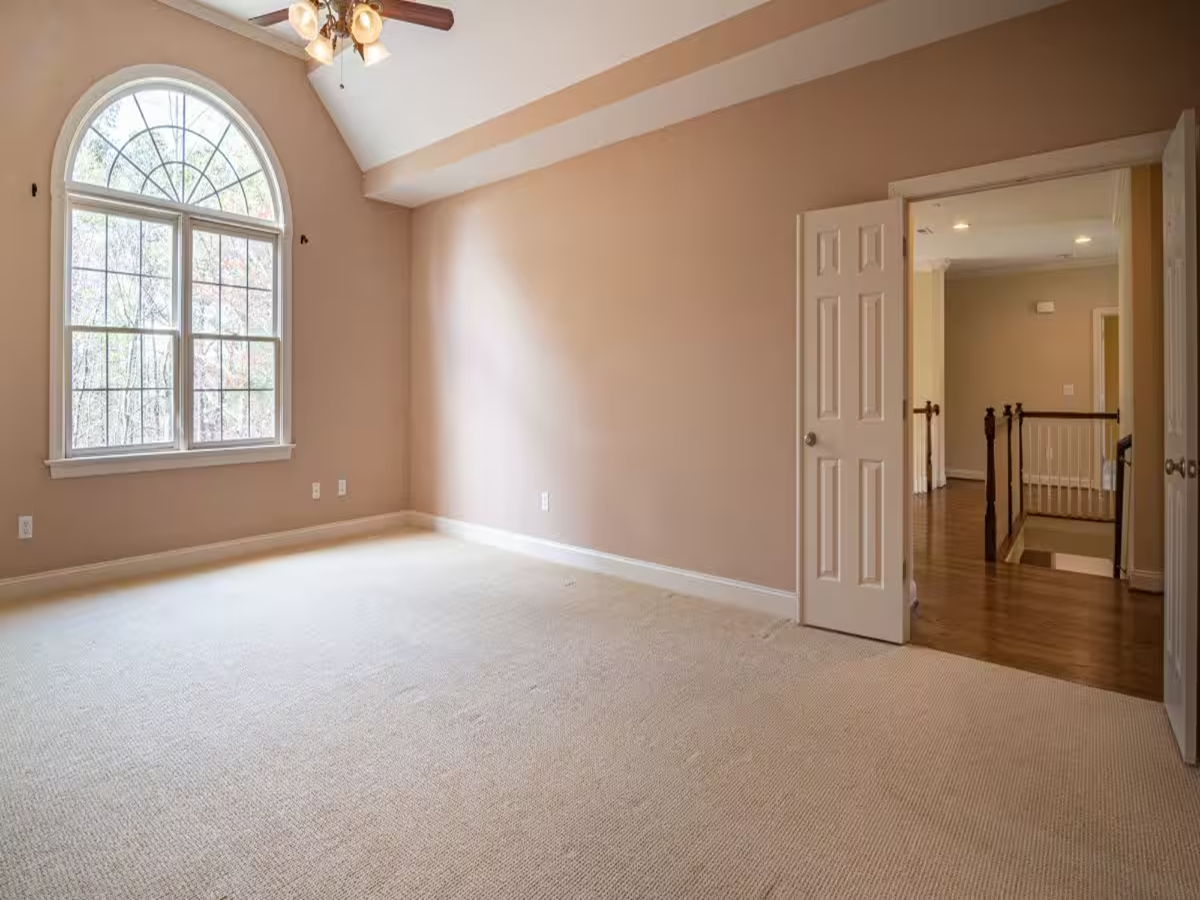
There is no mystery here; rather, it is a fascinating principle of physics and acoustics at work. Let’s explore what happens to our voice in an empty room.
Sound travels much like light.
According to NASA, sound behaves in a way that is quite similar to light. Just as a mirror reflects light, hard surfaces—such as concrete, glass, or tile—act as "sonic mirrors" for sound. In a furnished home, soft items like sofas, carpets, and curtains absorb sound energy; however, in an empty room, such objects are absent, allowing sound to bounce off the walls without any obstruction.
Sound bounces like a ping-pong ball.
According to the Whole Building Design Guide (WBDG), every material has a unique capacity for sound absorption. Hard materials, such as brick or concrete, reflect 95 to 99 percent of the sound that strikes them. Consequently, in a space, your voice bounces between the walls—much like a ping-pong ball—until its energy is gradually depleted.
The sound in the room is not an "echo"
We often assume that what we hear is an "echo," but in scientific terms, for a distinct echo to occur, a reflecting surface must be at least 17.2 meters away. In small, empty rooms, sound waves bounce back in less than 0.1 seconds. This process, in which sound waves collide with one another in rapid succession, is called 'reverberation.' Since sound travels more slowly than light, our ears can easily perceive this sound as it returns after bouncing off distant surfaces.
Why does sound seem louder and 'heavier'?
According to the National Institute for Occupational Safety and Health (NIOSH), in a space, the original sound produced by your voice combines with the sound that has bounced off the walls. This phenomenon is known as 'constructive interference.' The continuous bouncing of sound between opposing walls creates a distinct 'ringing' effect or a 'heavy', resonant noise. This is why sound appears significantly louder in an empty room. As soon as items like sofas or chairs are placed in the room, this path of sound reflection is disrupted, and the noise dissipates.
PC Social Media