LIFESTYLE
Delhi-Lucknow Train: From Delhi to Lucknow in just 2 hours! Bullet train to transform travel in North India..
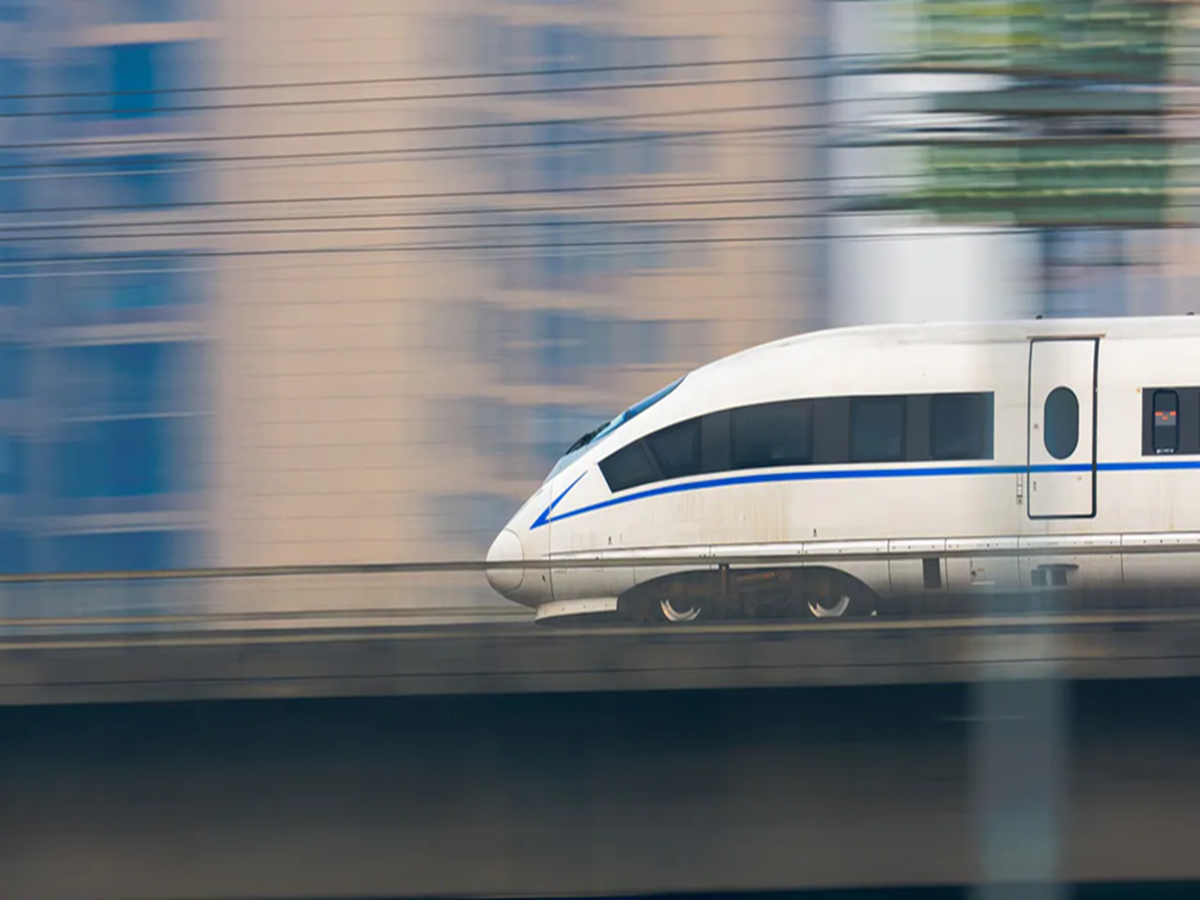
Delhi-Lucknow Distance: The travel experience for the lakhs of passengers commuting between Delhi and Lucknow is set to undergo a complete transformation in the coming years. As part of the expansion of the country's new high-speed rail network, the central government has accelerated work on the Delhi-Varanasi bullet train corridor. Upon completion, the project aims to reduce the travel time between Delhi and Lucknow to approximately two hours—a journey that currently takes significantly longer by train, road, or air.
Currently, trains such as the Vande Bharat, Rajdhani, Shatabdi, Tejas, and other superfast services operate between Delhi and Lucknow, with travel times generally ranging from 5.5 to 9 hours. By road, the journey takes about 6 to 8 hours, depending on traffic conditions. While flight time is roughly 1 to 1.5 hours, the total travel time increases due to the commute to the airport and procedures like check-in.
If the proposed bullet train corridor is completed on schedule, it could prove to be a game-changer for travel, tourism, trade, and investment in North India. Let us look at the current travel times, the proposed route, and how much easier this journey will become in the future.
Lucknow
How long does it currently take to travel from Delhi to Lucknow?
At present, travelers commuting between Delhi and Lucknow have three main options:
Trains, which complete the journey in approximately 6 to 9 hours; the exact duration varies depending on the specific train.
Flights, where the actual flying time is 1 to 1.5 hours, though the total time is higher when accounting for airport procedures.
Road travel, which can take 6 to 9 hours, depending on traffic conditions.
This is precisely why the high-speed rail project is being hailed as a game-changer.
What is the bullet train corridor?
The Delhi-Varanasi High-Speed Rail Corridor is one of the most ambitious rail projects in North India. The plan aims to connect major cities—such as Delhi, Noida/Jewar, Agra, Kanpur, Lucknow, Prayagraj, and Varanasi—via a high-speed rail service. The final stations and route will be determined based on the project's design and necessary approvals.
Which cities will benefit the most?
Several major cities are expected to benefit from this high-speed rail network, including:
Delhi
Noida/Jewar
Agra
Kanpur
Lucknow
Prayagraj
Varanasi
This could make travel for business, tourism, education, medical purposes, and employment faster and more convenient.
What will change for passengers?
If the project is completed according to the plan:
The journey from Delhi to Lucknow could be completed in approximately two hours.
Business travel and weekend trips could become easier.
Pressure on road and traditional rail networks could be reduced.
Tourism and the local economy are expected to receive a boost.
PC Social Media