
Food & recipe
Did you accidentally bring home chemically ripened mangoes? Use these 4 methods to detect adulteration in just 2 minutes..
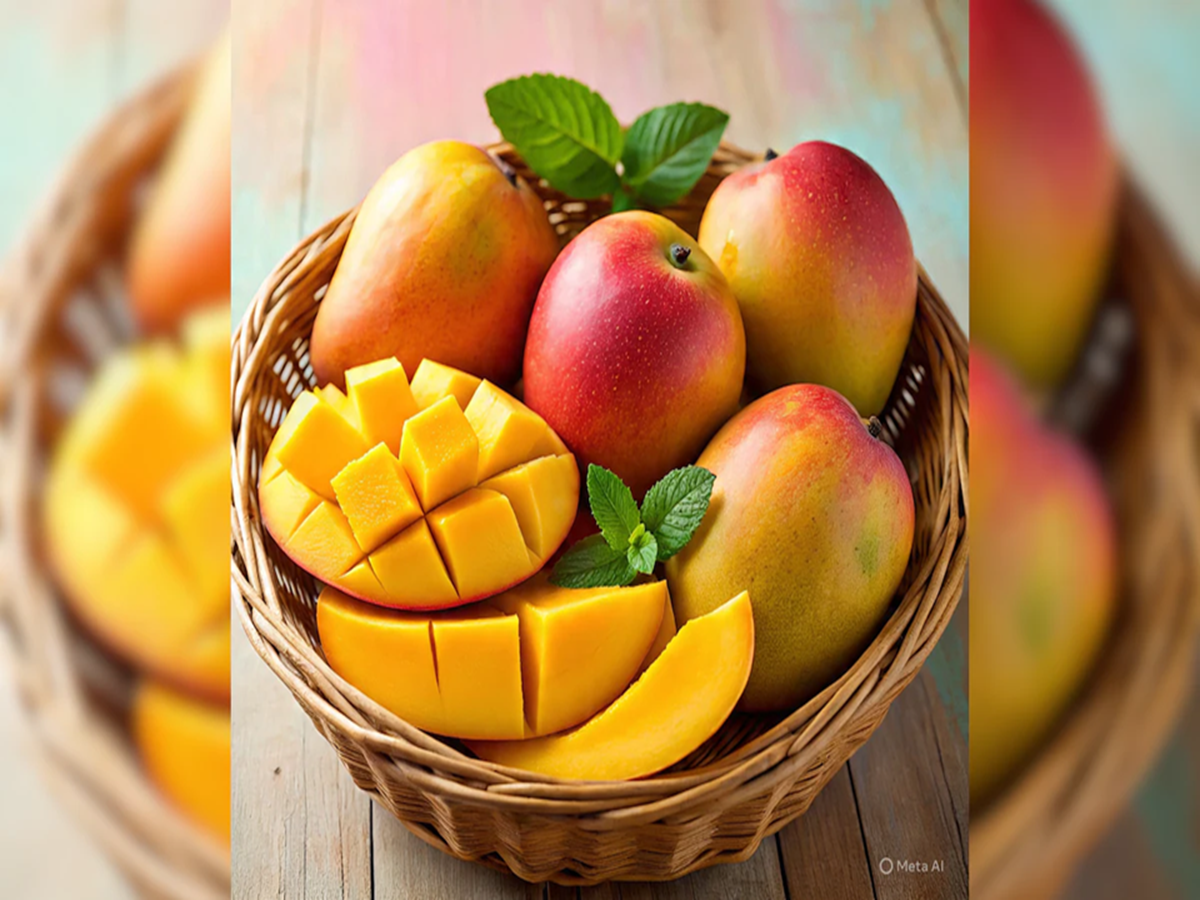
As the summer season arrives, markets become adorned with juicy mangoes. From Totapuri to Langra and Dasheri, every variety of mango found in India possesses its own distinct and exquisite flavor. However, capitalizing on this public craze for mangoes, some vendors—driven by the greed for profit—begin selling chemically ripened mangoes.

Harmful chemicals, such as calcium carbide, are often used to ripen fruits prematurely. Although the FSSAI has imposed a strict ban on its usage, it continues to be employed rampantly and illegally.
In light of this, identifying chemically ripened mangoes is crucial for safeguarding your own health and that of your family. The good news is that you can distinguish between authentic and adulterated mangoes using a few simple methods. Let's find out how.
**Color and External Appearance**
Chemically ripened mangoes often appear visually appealing and possess a glossy yellow sheen. Their most telling characteristic is their completely uniform coloration. In contrast, naturally ripened mangoes exhibit color inconsistencies; they may feature patches of deep yellow mixed with lighter shades of green or red. If you observe white or black spots scattered across the mango's skin, these could be telltale signs of chemical treatment.
**Identification by Aroma**
A mango is best identified by its subtle, sweet fragrance. A naturally ripened mango emits a distinct aroma the moment you hold it in your hand. However, if a mango has been ripened using calcium carbide, it will emit a strange, pungent, or chemical-like odor. In many instances, such mangoes possess no fragrance whatsoever.
**The Water Immersion Test**
This is the most reliable and simple home-based method. Fill a bucket with water and place the mangoes inside.
**Authentic Mango:** If the mango is heavy and sinks to the bottom of the water, it has ripened naturally.
**Chemically Treated Mango:** If the mango begins to float on the water's surface, you can be certain that it has been ripened using chemicals. Due to the use of chemicals, the pulp and sugar within the mango fail to develop properly, resulting in the fruit remaining light in weight.

**The Interior Upon Cutting**
When you cut open a chemically ripened mango, it may feel soft on the outside, but the interior often turns out to be hard, pale yellow, or white. A chemically ripened mango lacks juiciness, and its pulp may have a rubbery texture. A naturally ripened mango, on the other hand, is thoroughly juicy and uniformly ripe right down to the stone.
PC Social Media