Business
Kisan Credit Card: How Farmers Can Get Low-Interest Loans, Check Eligibility, Limit and Application Process
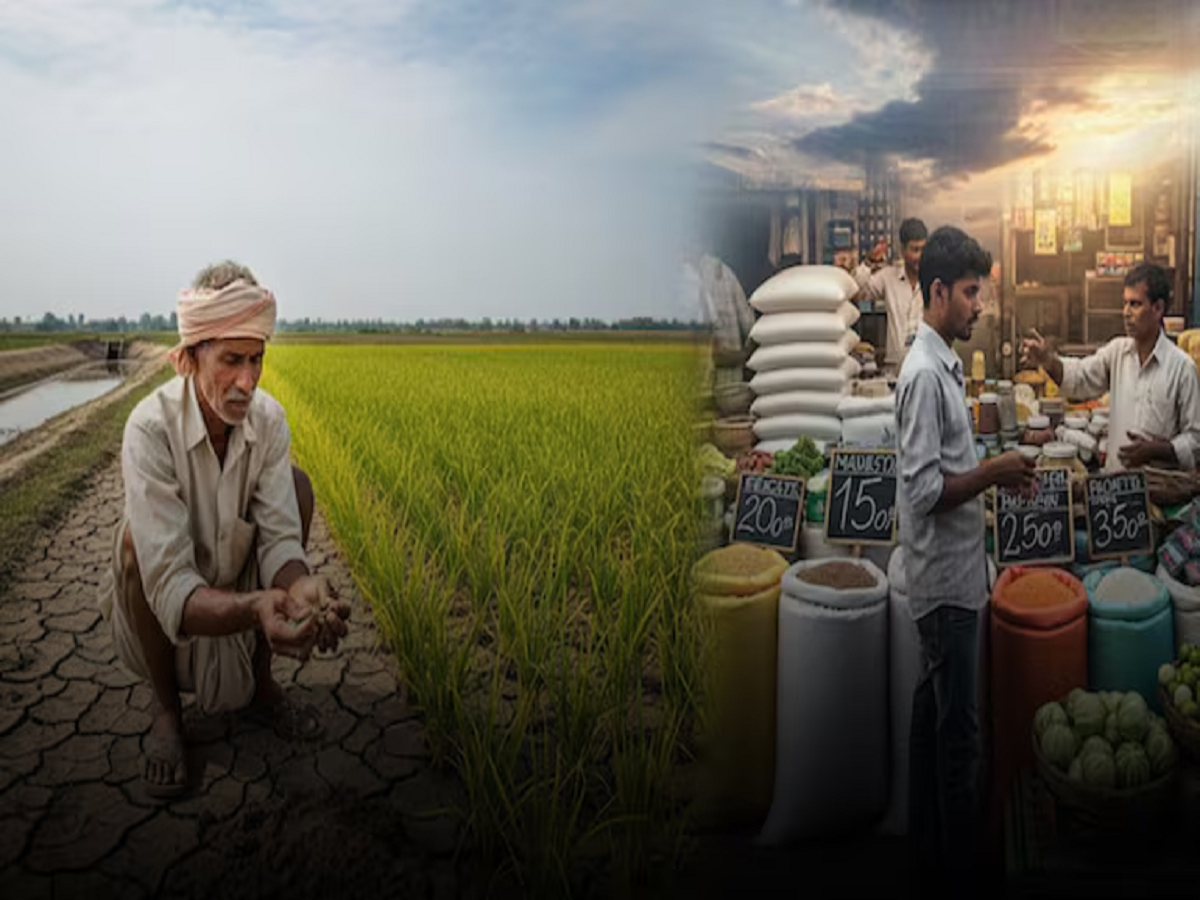
The Kisan Credit Card (KCC) remains one of the most important credit facilities designed to help farmers meet their agricultural and allied financial needs at affordable interest rates. The scheme provides eligible farmers with timely access to institutional credit for crop production, post-harvest expenses and a range of allied activities such as dairy farming, fisheries, poultry and animal husbandry.
Introduced in August 1998 through public sector banks, the KCC scheme was initially focused on providing short-term finance for seasonal crop requirements. Over the years, however, its scope has expanded significantly. Farmers engaged in dairy, poultry, fisheries, beekeeping, sericulture, mushroom cultivation and several other agriculture-related activities can now also benefit from the facility.
One of the major attractions of the Kisan Credit Card is the possibility of obtaining loans at a relatively low effective interest rate, particularly for borrowers who repay on time.
How Does the KCC Offer Low-Interest Loans?
Under the government's Modified Interest Subvention Scheme, banks are supported in providing KCC loans of up to ₹3 lakh at an annual interest rate of 7%.
Farmers who repay their eligible loan on schedule can receive an additional 3% prompt repayment incentive from the central government.
As a result, the effective interest rate for an eligible borrower who makes timely repayment can come down to around 4% per annum.
The benefit is generally calculated from the date the loan is disbursed or withdrawn until the date of actual repayment or the due date fixed by the bank, whichever comes earlier, subject to the applicable maximum period.
This repayment incentive is one of the reasons KCC is considered an affordable source of formal credit for farmers compared with many informal borrowing options.
Who Can Apply for a Kisan Credit Card?
The KCC scheme is available to a broad range of people associated with agriculture and allied sectors.
Farmers cultivating their own land can apply either individually or jointly. Tenant farmers, oral lessees, sharecroppers and other cultivators who do not necessarily own the agricultural land may also be covered subject to eligibility requirements.
Self-Help Groups (SHGs) and Joint Liability Groups (JLGs) consisting of farmers, tenants or sharecroppers can also apply.
The scheme additionally covers eligible individuals involved in allied activities such as:
- Dairy farming and animal husbandry
- Fisheries
- Beekeeping
- Sericulture
- Mushroom cultivation
- Poultry and other permitted farm-related activities
For availing benefits under the applicable interest subvention framework, Aadhaar linkage with the relevant bank account is required under the prescribed rules.
How Much Loan Can a Farmer Get Under KCC?
The credit limit under the Kisan Credit Card is not the same for every borrower. Banks calculate the amount based on factors such as the size of landholding, type of crop, scale of cultivation and the nature of allied agricultural activities.
For crop cultivation and certain post-harvest requirements, the eligible credit limit can go up to ₹3 lakh under the interest subvention framework.
For working capital requirements associated with animal husbandry, dairy, fisheries, sericulture, beekeeping and similar activities, the limit can be up to ₹2 lakh, subject to applicable conditions.
Small and marginal farmers with landholdings of up to one hectare may also be offered a flexible KCC facility.
According to the scheme structure described, such farmers may receive a flexi KCC limit ranging between ₹10,000 and ₹50,000 depending on eligibility and agricultural requirements.
The facility may cover cultivation expenses, household requirements linked to farm operations and the purchase or maintenance of small agricultural equipment.
How Is the KCC Credit Limit Calculated?
The Kisan Credit Card generally operates as a revolving credit facility, with the limit assessed for a period of up to five years.
For the first year, the calculation can take into account the scale of finance fixed for the crop by the District Level Technical Committee and the area under cultivation.
Additional amounts may then be included for post-harvest and household requirements as well as the repair and maintenance of agricultural assets.
A simplified calculation can include:
First-year limit = Scale of finance for the crop × cultivated area + 10% for post-harvest/household needs + 20% for farm asset maintenance + applicable insurance premium.
For subsequent years, the limit may be increased to account for higher cultivation costs.
According to the framework described, a 10% increase toward cost escalation may be factored in for each of the second, third, fourth and fifth years.
Term Loan Facility Can Also Be Included
The KCC is not limited only to seasonal crop expenses.
A term loan component may also be added for agricultural investment requirements such as land development, irrigation infrastructure, farm machinery and equipment.
The maximum permissible limit on the card can therefore include both the short-term crop credit requirement and the approved term-loan component.
This structure allows farmers to use one credit facility for a variety of short-term and medium-term agricultural requirements.
What Can KCC Funds Be Used For?
Farmers can use KCC credit for several permitted purposes.
The facility can be used to finance seasonal crops, vegetables, fruits, flowers, plantations, spices and medicinal plants.
It may also be used for eligible post-harvest expenditure and for borrowing against electronic Negotiable Warehouse Receipts, or e-NWRs.
This can be particularly useful for farmers who do not want to sell their produce immediately after harvest when market prices are weak.
Under applicable provisions, interest support may also be available for a specified period against produce stored in warehouses registered with the relevant warehousing authority.
In cases where farmers are affected by natural calamities, restructuring of eligible crop loans may also receive interest-related relief according to the prescribed rules.
Which Banks and Institutions Issue Kisan Credit Cards?
Farmers can obtain a KCC from several types of recognised financial institutions.
These include public sector banks, eligible private scheduled commercial banks, Regional Rural Banks, rural cooperative banks, Small Finance Banks and computerised Primary Agricultural Credit Societies.
Since lending policies and documentation requirements may vary slightly between institutions, farmers should check the exact terms with the bank where they plan to apply.
How to Apply for a Kisan Credit Card
Farmers can apply for a KCC either offline through a nearby bank branch or, where available, online through the official website or digital portal of the concerned bank.
The applicant generally needs to fill out the prescribed application form and submit supporting documents.
Commonly required documents include identity proof, address proof, Aadhaar card and documents establishing ownership, cultivation rights or tenancy over the agricultural land, as applicable.
Additional documents may be required depending on whether the loan is being sought for crop cultivation, dairy, fisheries, animal husbandry or another eligible activity.
After receiving the application, the bank checks the applicant's eligibility, land or activity details, documents and proposed credit requirement.
Once the verification and credit assessment are completed successfully, the bank can sanction the Kisan Credit Card and assign the applicable borrowing limit.
For farmers looking for an organised and comparatively affordable source of agricultural credit, the KCC can therefore provide a flexible way to manage recurring crop expenses, working capital and selected long-term farm investments.