
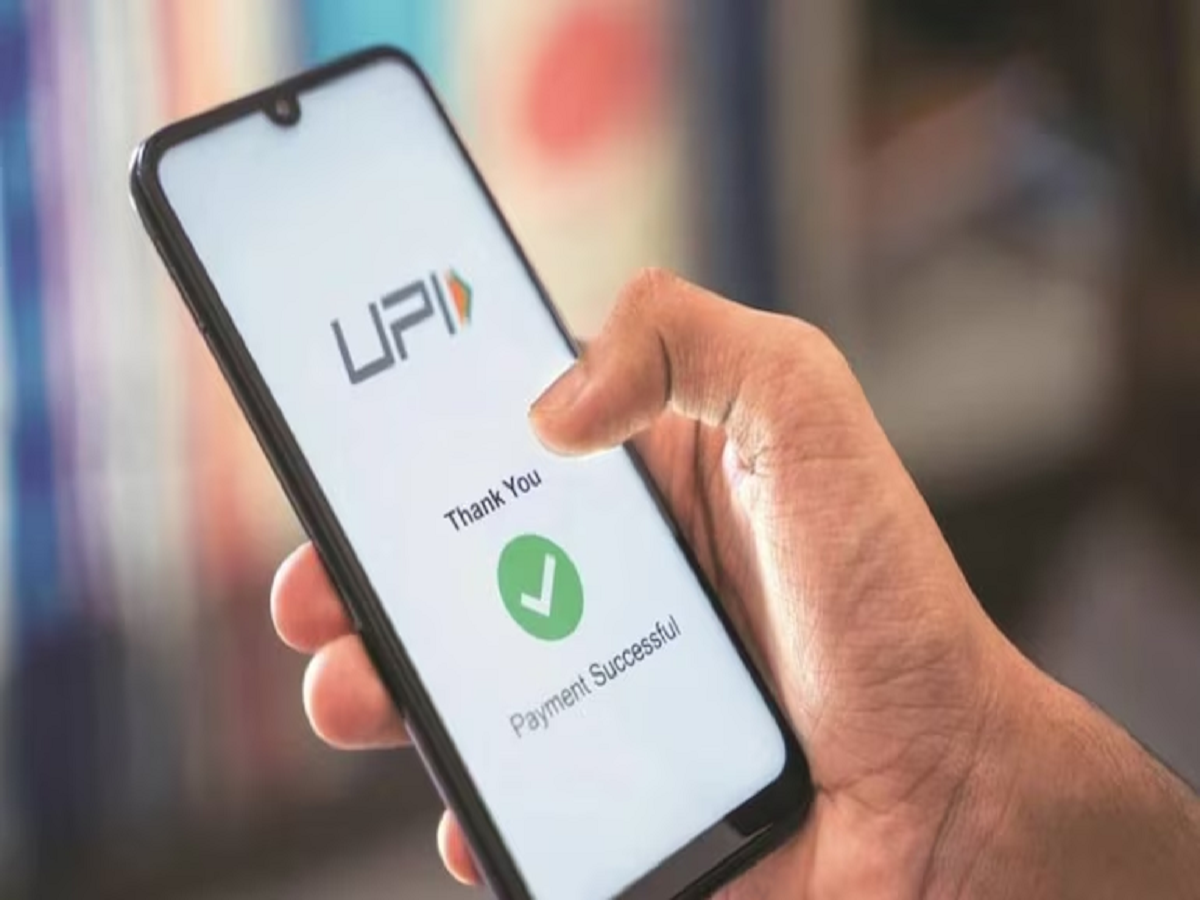
Will UPI payments become chargeable in India? This question has gained attention among millions of digital payment users following discussions around Merchant Discount Rate (MDR) and the cost of running India's rapidly expanding payment infrastructure. The Payments Council of India (PCI) has now issued a detailed clarification explaining what the debate actually means for ordinary consumers.
According to the clarification cited in the report, there is currently no change for regular UPI users. Consumers can continue making UPI payments without paying a transaction fee under the existing framework.
The wider discussion is primarily about how India's enormous digital payments infrastructure should be funded sustainably as transaction volumes continue to grow—not about immediately charging individuals every time they scan a QR code or transfer money.
Will Customers Have to Pay for UPI Transactions?
For ordinary users, the key takeaway is straightforward: there is currently no new charge for making regular UPI payments.
Since its introduction in 2016, the Unified Payments Interface has enabled users to transfer money instantly between bank accounts without a conventional transaction fee for standard UPI payments.
This zero-cost model has been one of the biggest reasons behind UPI's rapid adoption across India. Today, people routinely use it for everything from paying grocery bills and utility expenses to transferring money to friends and family.
PCI has stressed the importance of distinguishing between a consumer using UPI to make a payment and the commercial arrangements involved when a business accepts and processes digital payments.
Small Merchants Continue to Benefit From the Existing System
The zero-cost structure has also helped small businesses embrace digital payments.
Millions of neighbourhood grocery stores, street vendors and other small merchants now accept UPI through QR codes. Under the current arrangement described in the report, these small businesses do not face an MDR simply for accepting standard UPI payments.
Keeping the platform accessible to smaller businesses has played a major role in expanding digital payments beyond large retailers and organised businesses.
However, while UPI may appear free to consumers, the technology behind each transaction carries substantial operating costs.
If UPI Is Free, Who Pays for the Infrastructure?
This is at the heart of the current debate.
Running UPI requires large and continuous investments in technology, servers, cybersecurity, fraud detection, regulatory compliance, customer support, system capacity and innovation.
Banks, fintech companies, payment service providers, the National Payments Corporation of India (NPCI) and other participants have invested heavily in building and maintaining this ecosystem.
As the number and value of UPI transactions grow, infrastructure must also be upgraded to handle increasing traffic while maintaining security and reliability.
PCI's clarification indicates that discussions about funding are centred on finding a sustainable way to support this infrastructure rather than imposing a direct fee on consumers for their everyday transactions.
What Is a Merchant Service Charge?
Another important issue is the distinction between consumer transaction fees and charges associated with merchant payment services.
Where applicable, merchant-related service charges are commercial arrangements involving businesses and their payment service providers.
Such a charge should not automatically be interpreted as a fee that will be deducted from a customer's bank account when they make a UPI payment.
This distinction is particularly important because reports around MDR have led some consumers to believe they may soon have to pay extra whenever they use UPI.
What Exactly Is MDR?
MDR stands for Merchant Discount Rate. It is generally a fee associated with processing a digital payment and is typically borne by the merchant accepting the transaction rather than the customer making the payment.
Depending on the payment system, such fees may be distributed among different participants involved in processing the transaction, including acquiring banks, issuing banks, payment networks and payment service providers.
Therefore, an MDR and a direct consumer transaction fee are not the same thing.
This is why discussions about potentially revisiting the MDR framework should not automatically be interpreted as meaning that every UPI user will be charged for sending or paying money.
What Has Finance Minister Nirmala Sitharaman Clarified?
Finance Minister Nirmala Sitharaman has also addressed concerns surrounding potential MDR charges on UPI.
According to the report, the Finance Minister clarified that even if an MDR mechanism is introduced in the future, it would apply to merchants rather than customers.
The clarification followed concerns linked to the Taxation and Other Laws (Amendment) Bill, 2026.
Importantly, the legislation itself has not introduced an MDR or a fresh transaction charge on UPI payments.
Instead, the proposed legal framework could provide scope for the government to modify the existing zero-MDR arrangement through future notifications if such a decision is eventually taken.
That means a legal provision allowing a future change should not be confused with an actual charge being imposed today.
Could the UPI MDR Framework Change Later?
The issue may still be reviewed in the future as banks and payment companies raise concerns about the rising cost of maintaining digital payment infrastructure.
Cybersecurity, fraud prevention and technology upgrades have become particularly important as UPI has grown into a critical part of India's financial system.
According to the information cited in the report, the UPI and Services Steering Committee headed by NPCI is expected to examine the issue after the relevant legislation completes the parliamentary process.
Any future decision would therefore depend on subsequent reviews and official notifications.
What Should UPI Users Know Right Now?
For millions of consumers who use UPI every day, the most important point is that no new transaction charge has currently been imposed on regular UPI payments.
Users can continue to make eligible UPI transactions under the existing zero-cost framework.
The ongoing debate is primarily about the long-term economics of India's digital payments infrastructure and how banks, fintech companies and other ecosystem participants can continue investing in secure and reliable payment services.
Unless the government or relevant authorities officially announce a change in the future, consumers should not assume that money will automatically be deducted as an additional charge whenever they make a UPI payment.