
LIFESTYLE
Sarcopenic Obesity: Could that growing belly fat turn out to be life-threatening? Are you too a victim of Sarcopenic Obesity?

Health experts regard belly fat—that is, the accumulation of fat around the abdomen—as a breeding ground for numerous diseases. It not only detracts from your physical appearance but also renders you susceptible to various life-threatening illnesses. If you, too, have started accumulating fat around your midsection, take heed; this could potentially land you in serious trouble.
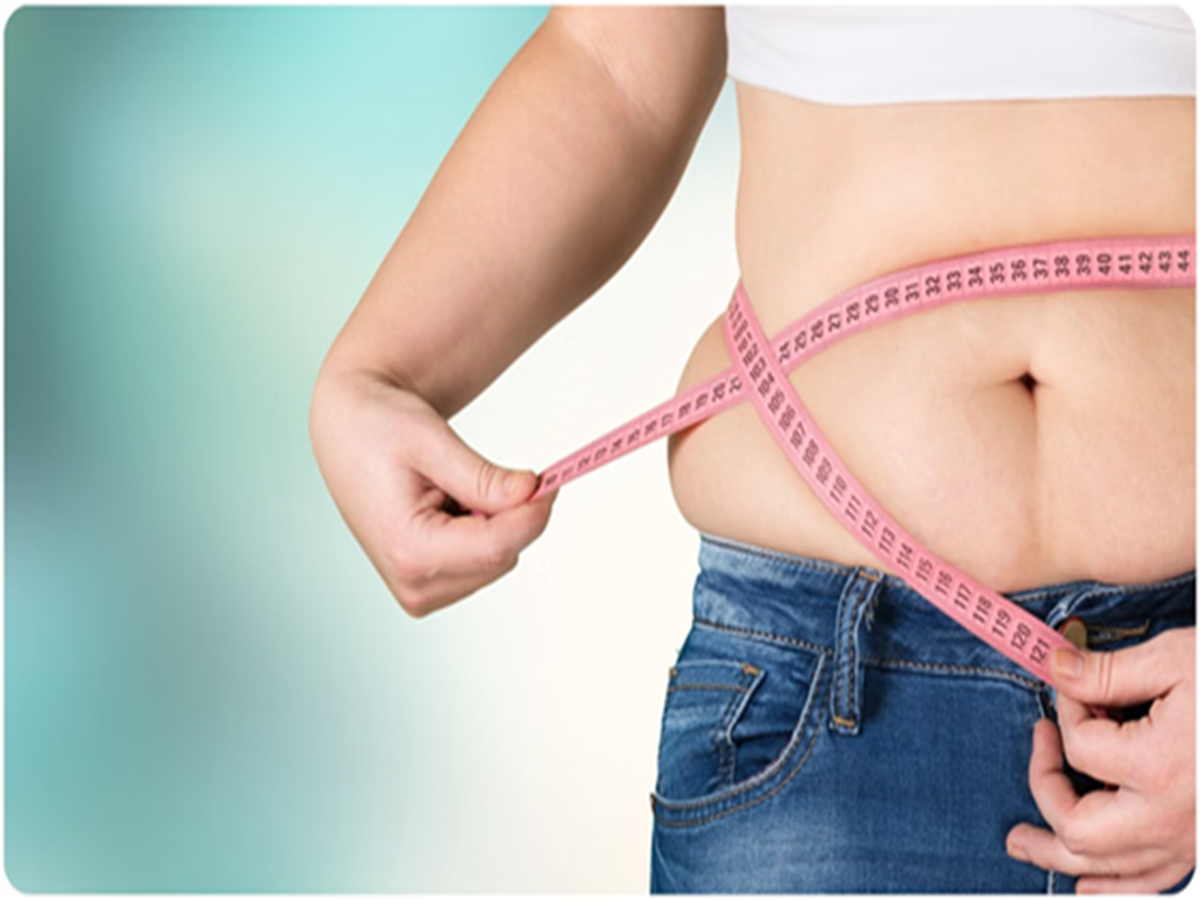
The health risk becomes even more pronounced when abdominal fat increases while the rest of the body remains frail or experiences a decline in muscle mass. The dangerous combination of excess fat accumulated around the abdomen and a deficiency in body muscle (known as sarcopenic obesity) can elevate the risk of mortality by up to 83%.
A study conducted by researchers at the Federal University of São Carlos (UFSCar) in Brazil and University College London (UCL) in the UK has revealed that the impact of sarcopenic obesity is far more severe than that of obesity or muscle deficiency alone. This condition can, in fact, prove fatal.
**Sarcopenic Obesity: A Potentially Dangerous Condition**
Health experts describe sarcopenic obesity as a serious health issue characterized by an excess of body fat (obesity) accompanied by a simultaneous decline in muscle mass. This condition is predominantly observed among the elderly, increasing their susceptibility to physical frailty, heart disease, metabolic disorders, and mortality. Individuals who lead sedentary lifestyles and maintain poor nutritional habits are at a significantly higher risk of developing sarcopenic obesity.
The study further revealed that this dangerous condition can be identified through simple measurements, without the need for expensive medical diagnostic tests.
This implies that the risk associated with this condition can be detected in individuals during its early stages.
If identified and treated promptly, the life-threatening risks associated with this condition can be significantly mitigated.
According to Professor Tiago da Silva Alexandre of the Department of Gerontology at UFSCar, the lack of a standardized criterion for diagnosing this condition has historically made it difficult to identify and treat it in a timely fashion. However, the study demonstrated that early detection of this condition is possible even through simple methods. By promoting proper nutrition and exercise among the elderly, the associated complications can be mitigated.
**Easily Identifiable**
Typically, diagnosing sarcopenic obesity requires expensive tests—such as MRI, CT scans, bioimpedance analysis, or densitometry—which are not accessible to everyone.
In this study, researchers discovered that the condition can be identified using simple measures, such as waist circumference measurement and the estimation of lean body mass.
Muscle mass can be estimated using equations formulated by taking into account clinical parameters such as age, gender, weight, and height.
This approach facilitates easier early-stage screening.

**Why Sarcopenic Obesity Is Considered Dangerous**
According to the study's author, Valdete Regina Guadagnini, when excess body fat and a reduction in muscle mass coexist within the body, they create a dangerous cycle.
Excess body fat exacerbates systemic inflammation, which, in turn, triggers metabolic changes and accelerates the process of muscle breakdown.
Furthermore, fat begins to infiltrate the muscles and displace muscle tissue, thereby compromising both muscle structure and functionality.
This inflammation also impairs the metabolic, endocrine, immunological, and functional capabilities of the muscles.
PC Social Media