FASHION
Temple jewellery is a wonderful combination of faith, art and craftsmanship, and even after centuries, it remains the fashion icon..

India is known as the land of temples, where every temple is not only a home to God but also a living testimony to art, science, history, and culture. These magnificent temples inspired the birth of temple jewelry, a tradition of adornment that is still worn with great reverence for its divinity and classical beauty.
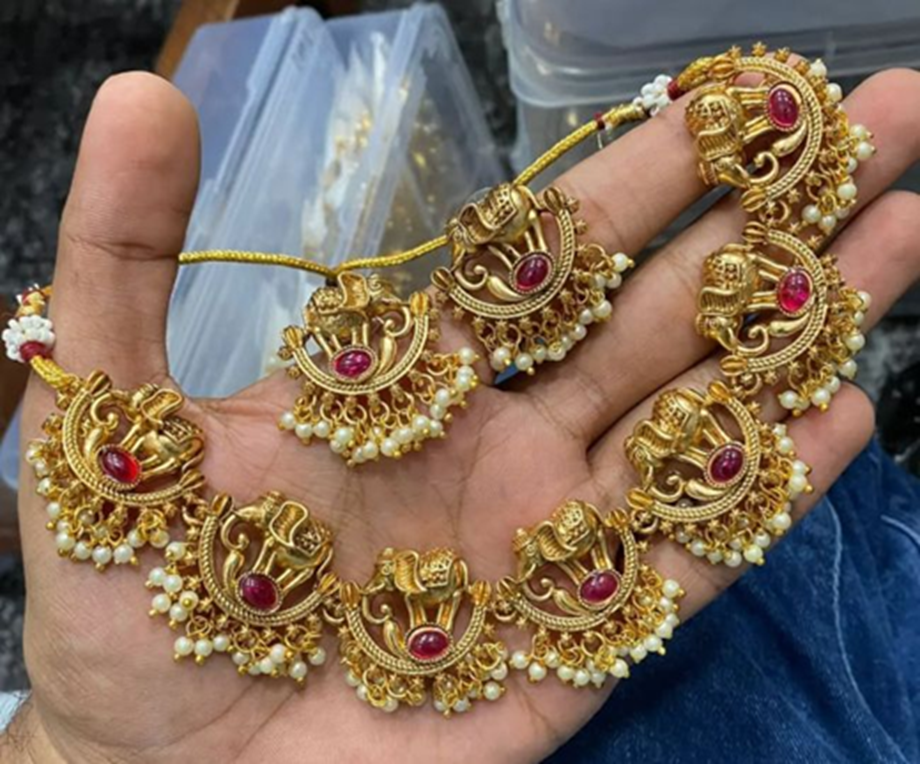
Temple jewelry is a fusion of faith, craftsmanship, and tradition. Peacocks, lotuses, figures of gods and goddesses, intricate carvings—each design holds a story within itself. Traditionally made of gold, this jewelry is now available in many modern styles adorned with rubies, emeralds, diamonds, and pearls. Heavy necklaces, chunky bangles, dangling earrings, waistbands, anklets, and maang tikkas—all are part of its wide variety. Let's explore them in detail in the "Story of Jewelry" series.
The Origin of Temple Jewelry
The history of temple jewelry is very ancient. It originated when jewelry was created to adorn deities. This is why it was initially called "Ornament of the Gods."
The earliest clear evidence of this art is found during the reign of Rajaraja Chola I (985–1014 AD). The magnificent Brihadeeswarar Temple in Thanjavur, built by him, was considered the tallest and most magnificent temple in India at the time. The idols here were adorned with heavy, precious gold jewelry, further enhancing the temple's divine and majestic image.
Over time, kings, queens, nobles, and wealthy devotees continued the tradition of adorning deities with jewelry. Skilled artisans in Tamil Nadu and Kerala have carried forward this tradition from generation to generation. Today, these same craftsmen create temple jewelry for deities, dancers, and common people. Haram, Nakshi jewelry, and Vanki armlets remain extremely popular.
A wonderful combination of patience, skill, and fine craftsmanship
The creation of temple jewelry is a long, meticulous, and highly skilled process.
1) Designing
Originally, traditional sketches were made, but now CAD drawings are used. The designs incorporate temple architecture, mythology, and traditional motifs.
2) Master Model Creation
A prototype is created in 3D printed resin or metal. This base model serves as the standard for all subsequent copies.
3) Rubber Molds and Casting
Rubber molds are created from the master model. These molds are filled with molten gold or silver and cast. When cooled, the molds break apart, revealing the raw form of the jewelry.
4) Grinding and Soldering
The excess metal is cut away, then the individual parts are joined to form the jewelry.
5) Cleaning and Stone Setting
Nubs are removed, then the stones are set in prongs, bezels, channels, or pavé settings.
6) Polishing and Plating
Polishing adds shine. Silver is often gold-plated to enhance its attractiveness and scratch resistance.
7) Special Traditional Elements
Special designs like the Srichakra motif and Vandiyanam (waist ornament) are still hallmarks of temple jewelry.
8) Final Quality Check
Jewelry is released to the market only after being inspected for loose stones, scratches, or discoloration.
Today, machines are making this process faster and more economical, but its essence remains the same as the ancient craftsmanship.
Faith and Cultural Significance
Wearing temple jewelry holds deep religious and cultural significance in South India. It is believed to bring good fortune, prosperity, and divine blessings. Designs like Manga Malai, Kasulaperu, and Vanki embody the social, religious, and artistic heritage of South India. They are in demand for festivals, dance performances, weddings, and pujas—every occasion.
Journey from Tradition to Modernity
This centuries-old art has evolved, but its essence remains as vibrant today.
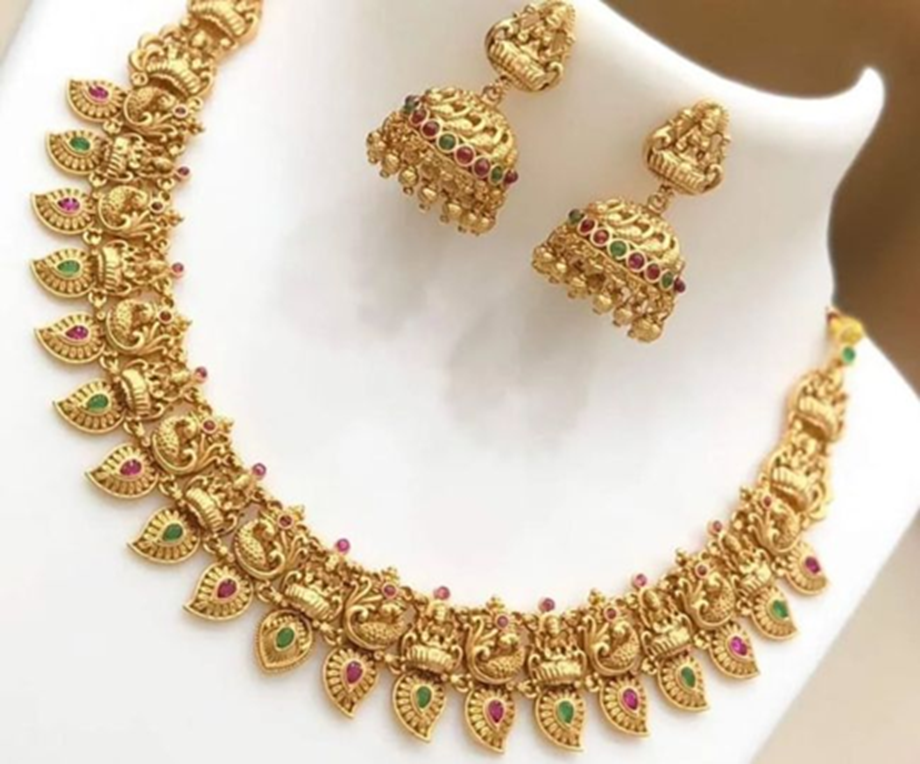
Originally, it was created only for deities and Bharatanatyam and Kuchipudi dancers. Today, it has become a favorite among South Indian brides. Film stars, fashion influencers, and designers are also adopting it in a modern way. From heavy gold jewelry to gold-plated fashion accessories, the allure of temple jewelry continues to captivate every generation.
Temple jewelry is not just a piece of jewelry, but a cultural memory of India—an art that brings together the grandeur of temples, the divinity of deities, and the unparalleled skill of artisans. Despite changing times, this tradition not only survives but also continues to spread its magic among new generations. This perfect blend of tradition and modernity has made temple jewelry relevant again and again, making it truly precious.
PC Social Media