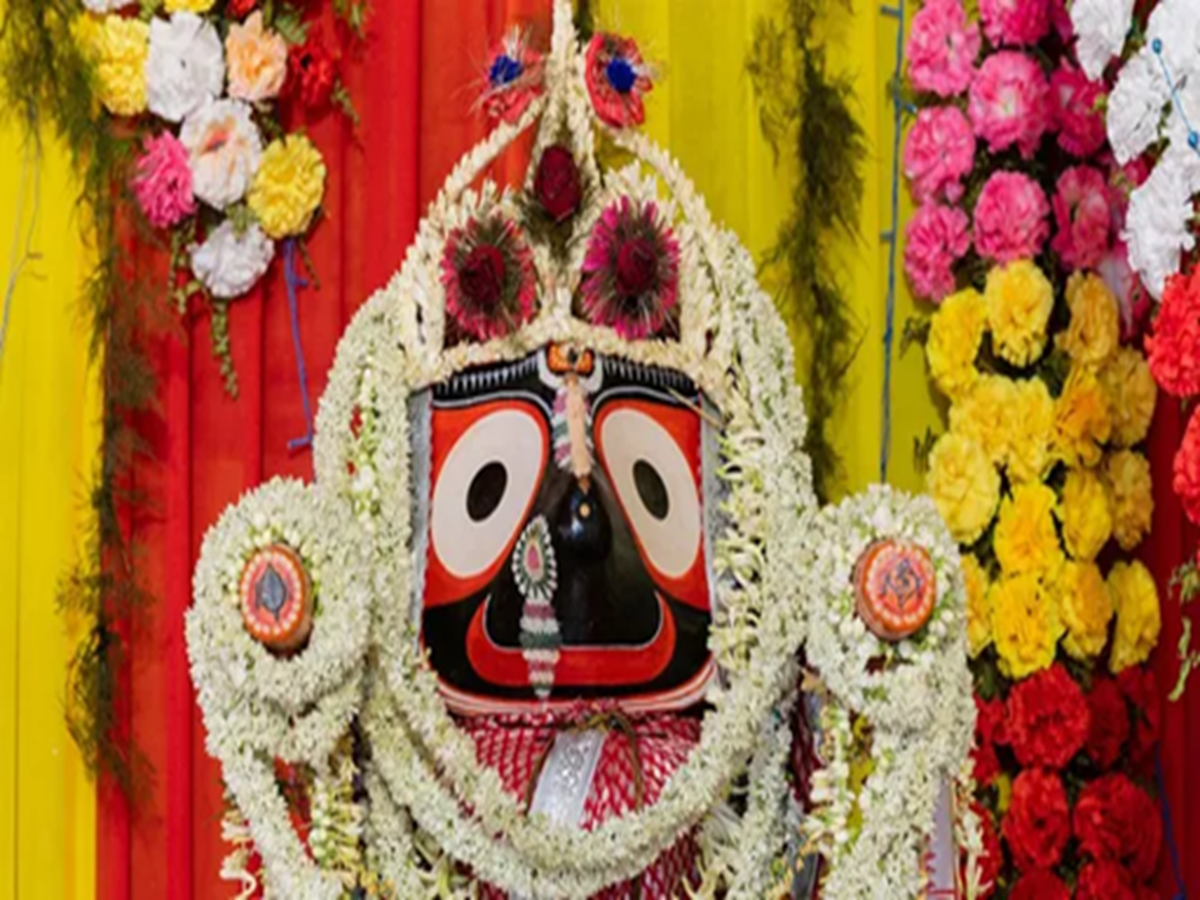
Beyond the mysteries surrounding the Jagannath Rath Yatra, there are also secrets associated with the deity's idol that the world is eager to understand. One such mystery lies in the large eyes of Lord Jagannath. For devotees, these large eyes symbolize His omniscience and omnipresence—signifying that He sees all and is present everywhere.
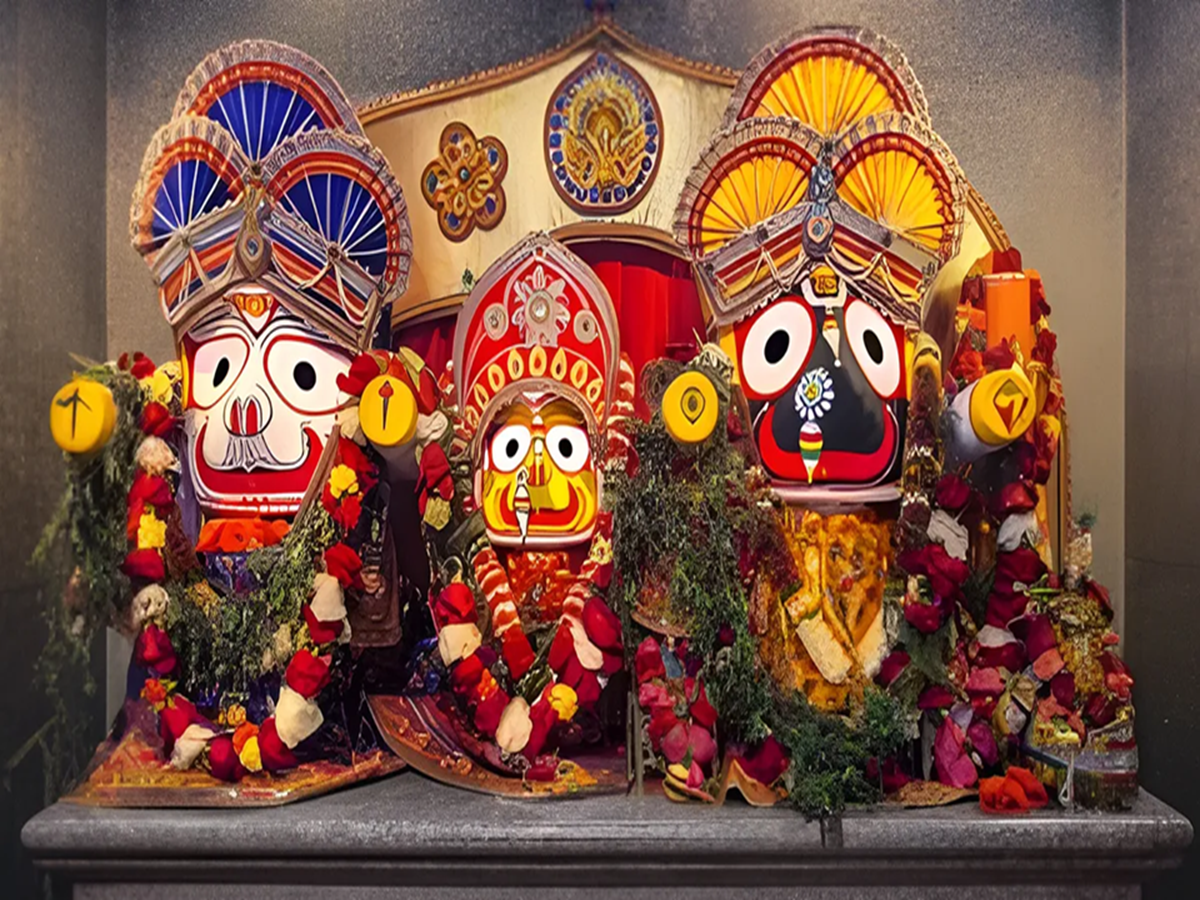
Many ancient scriptures mention that the eyes are the gateway to the soul; thus, Lord Jagannath’s large eyes symbolize His divine vision and wisdom. They indicate that His gaze is constantly fixed upon His devotees. Additionally, Lord Jagannath is known as 'Chakka Nain'. Let us explore the mystery behind His large eyes and the origin of the name 'Chakka Nain'.
The Mystery of Lord Jagannath’s Large Eyes
A primary mystery regarding Lord Jagannath’s large eyes is the absence of eyelids, signifying a gaze of pure divine vision. It is said that He keeps His eyes wide open—without blinking—to gaze steadfastly at His devotees and protect them from every form of suffering.
In this way, His benevolent gaze extends across the entire universe. As the 'Lord of the Universe' (Jag ke Nath), His large, round eyes demonstrate that He is present everywhere at all times, bearing witness to every particle of creation. The Lord never abandons His devotees and is always ready to protect them.
Why is Lord Jagannath Called 'Chakka Nain'?
The name 'Chakka Nain' arises from the literal meanings of the words: 'Chakka' refers to a round, wheel-like shape, and 'Nain' means eyes. Since Lord Jagannath’s eyes are round like a wheel (chakra), He is addressed as 'Chakka Nain'. This unique form of Jagannath is described in the Skanda Purana. According to a legend, the queens of Dwarka—including Rukmini—once requested Mother Rohini to recount the childhood amorous pastimes (*leelas*) shared by Shri Krishna and the Gopis.
Initially, Mother Rohini refused to share these intimate tales of her son. However, she eventually yielded to the queens' persistent requests; she stationed Subhadra outside the palace to keep watch and began narrating the childhood stories. Just then, Shri Krishna and Balarama arrived. Listening to these tales of his childhood, Krishna recalled how the Gopis would sacrifice their greatest joys simply to bring a moment of happiness to their beloved. Overwhelmed with emotion while reminiscing about these childhood pastimes, Lord Jagannath was filled with awe, and his eyes grew wide. From that moment on, he came to be known as *Chakka Nain* (Wide-Eyed One).
**The Form of the Jagannath Idol**
The idol of Jagannath is carved and decorated from a single piece of wood, featuring large, round eyes and a distinctive face; the idol lacks hands and feet. The worship methods, rituals, and customs associated with Jagannath are a blend of various traditions, including rites not typically seen elsewhere in Hinduism.
Notably, the idol is made of wood and is periodically replaced with a new one. The Rath Yatra festival, celebrated annually in June or July in India's eastern states, is dedicated to Lord Jagannath. During the Rath Yatra, his idol—along with those of two other associated deities—is ceremoniously brought out from the sanctum sanctorum of the main temple in Puri.
Indeed, the form of Lord Jagannath is extraordinary, and his large, round eyes remain a primary focal point of attraction for devotees.
PC Social Media