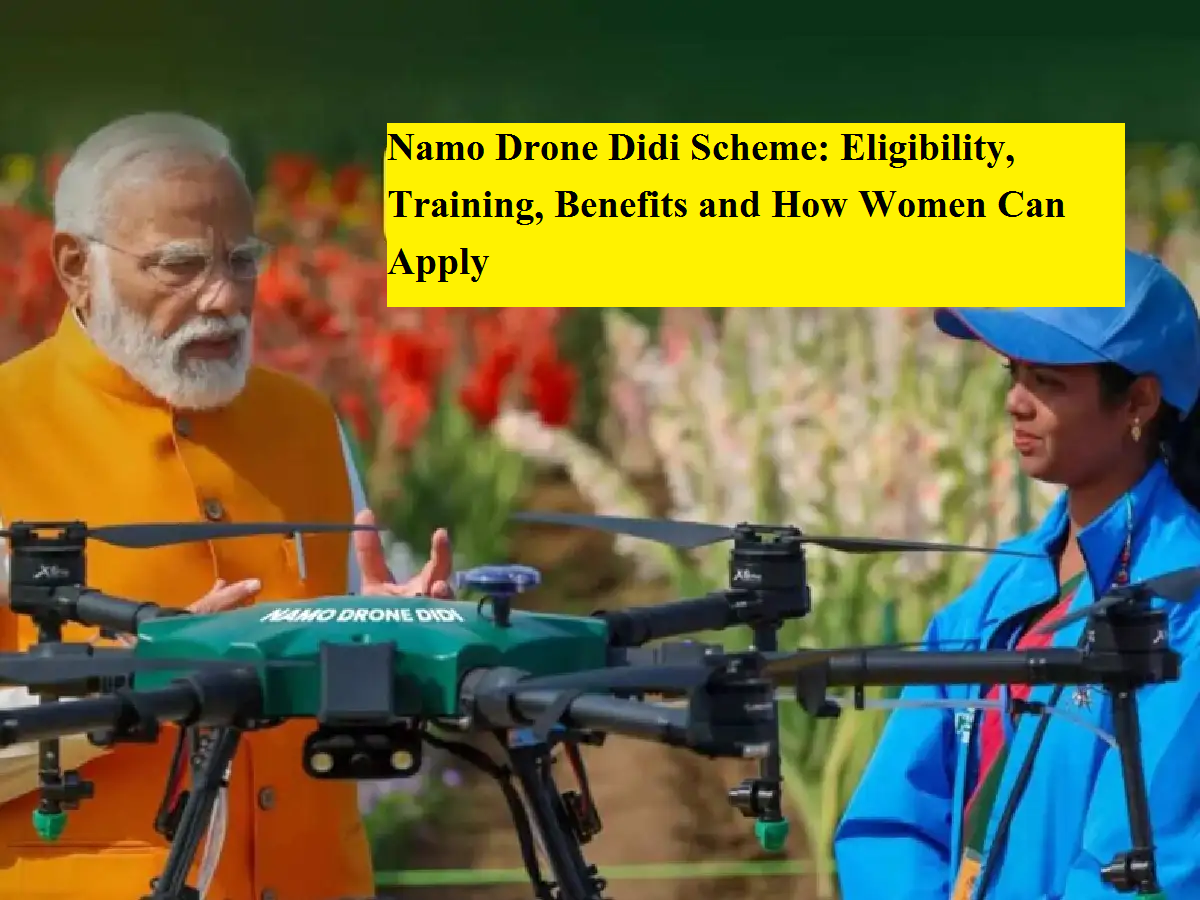
The government initiative aims to empower rural women by providing free drone training and creating new livelihood opportunities in agriculture
Namo Drone Didi Scheme: To promote technology-driven agriculture and strengthen women's participation in rural entrepreneurship, the Central Government has launched the Namo Drone Didi Scheme. The initiative provides eligible women with free drone pilot training, enabling them to offer drone-based agricultural services such as spraying fertilizers and crop protection chemicals.
The scheme is expected to improve employment opportunities for women while helping farmers adopt modern farming techniques.
What Is the Namo Drone Didi Scheme?
The Namo Drone Didi Scheme is designed to train women from Self-Help Groups (SHGs) in operating agricultural drones. After completing the training, beneficiaries can provide drone spraying services to farmers and generate income through service-based rural enterprises.
The initiative also supports the wider use of precision agriculture by introducing drone technology into farming practices.
Who Is Eligible?
The primary beneficiaries of the scheme are women who are members of registered Self-Help Groups (SHGs).
To be considered, applicants generally need to:
- Be a member of a registered Self-Help Group.
- Meet the eligibility conditions prescribed by the concerned authorities.
- Be selected through the implementation process followed by the district administration or other designated agencies.
Selection is carried out in accordance with government guidelines.
How to Apply
There is no separate online application portal exclusively for the Namo Drone Didi Scheme.
Women interested in the scheme can follow these steps:
- Join a registered Self-Help Group (SHG) if they are not already members.
- Contact the District Agriculture Department for information on the scheme.
- Reach out to the District Administration or the National Rural Livelihoods Mission (NRLM) office in their district.
- Submit the required details, if requested, and participate in the beneficiary selection process.
Eligible candidates selected by the authorities are nominated for training.
What Does the Training Include?
Selected participants receive practical and classroom training covering various aspects of drone operations.
The programme typically includes:
- Safe drone flying techniques.
- Agricultural spraying using drones.
- Fertilizer and crop protection chemical application.
- Drone maintenance and basic troubleshooting.
- Operational safety guidelines.
- Compliance with applicable regulations.
After successfully completing the programme, participants receive a training certificate.
How Can Women Earn After Training?
Once certified, trained women can provide drone-based agricultural services to farmers, including:
- Fertilizer spraying.
- Crop protection chemical application.
- Precision spraying for agricultural fields.
These services can help women establish a source of income while supporting modern farming practices in their communities.
Benefits of the Scheme
The Namo Drone Didi Scheme offers multiple advantages:
- Free skill development in drone technology.
- New self-employment and entrepreneurship opportunities.
- Increased earning potential for rural women.
- Encourages technology adoption in agriculture.
- Helps farmers save time and labour.
- Promotes precision farming and efficient crop management.
- Supports women's economic empowerment and self-reliance.
Why the Scheme Matters
The initiative combines rural livelihood development with advanced agricultural technology. By equipping women with drone operation skills, the scheme not only creates employment opportunities but also contributes to improving agricultural productivity through modern farming solutions.
Women interested in participating should stay in touch with their local SHG, Agriculture Department, or NRLM office for updates on beneficiary selection and training schedules.
Disclaimer: Eligibility criteria, beneficiary selection, training schedules, and implementation may vary by state and district. Applicants should verify the latest information with the District Agriculture Department, NRLM office, or other relevant government authorities before applying.