FASHION
Diwali Footwear Styling: Wear these 3 trendy footwear options with your suits, sarees, and lehengas this Diwali..
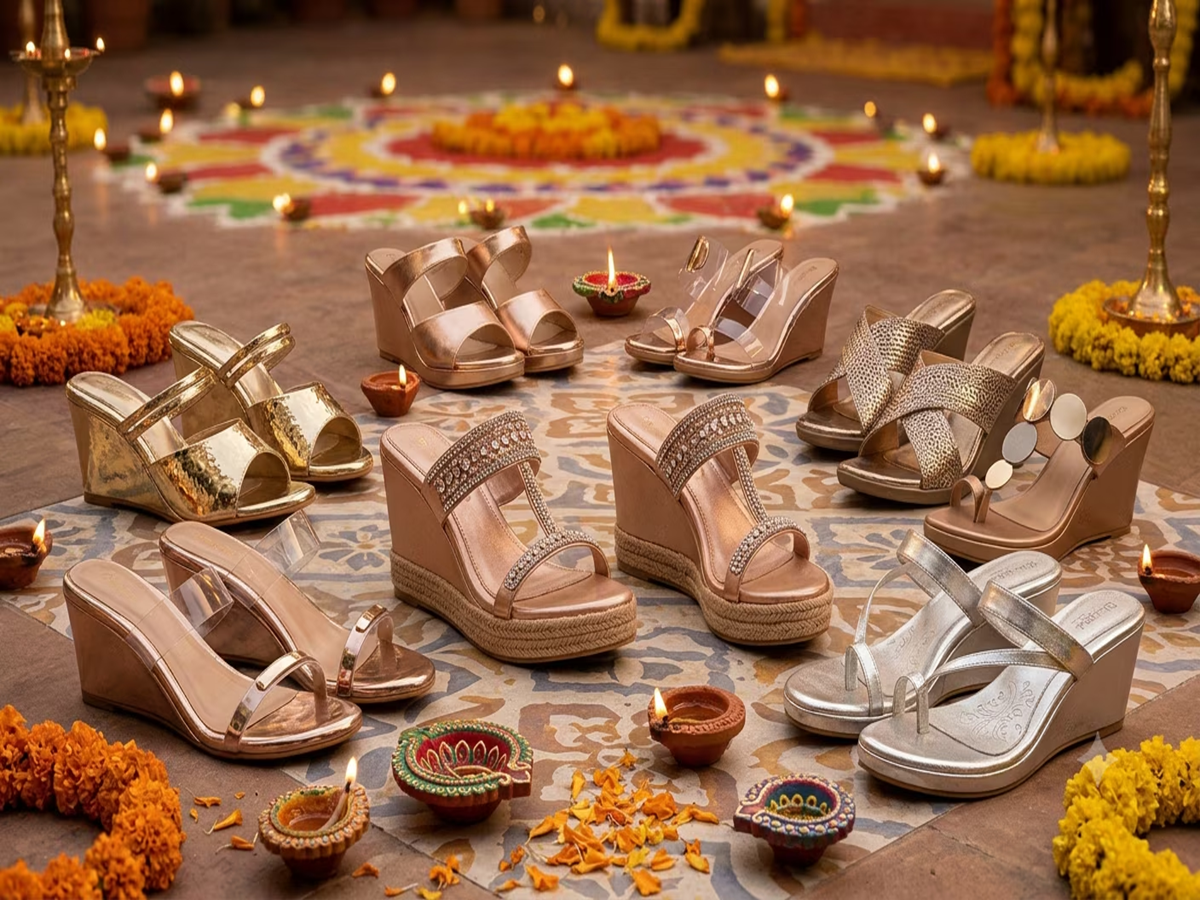
Best Footwear for Diwali: The occasion of Diwali brings a unique excitement for dressing up in new clothes. Some might choose a Banarasi saree, while others might opt for a lehenga or their favorite Anarkali suit. From outfits to jewelry and makeup, every little detail is carefully considered. Yet, in all this preparation, one essential element is often overlooked: footwear. Sometimes, we end up pairing a beautiful outfit with shoes or sandals that become uncomfortable to walk in after just a short while.
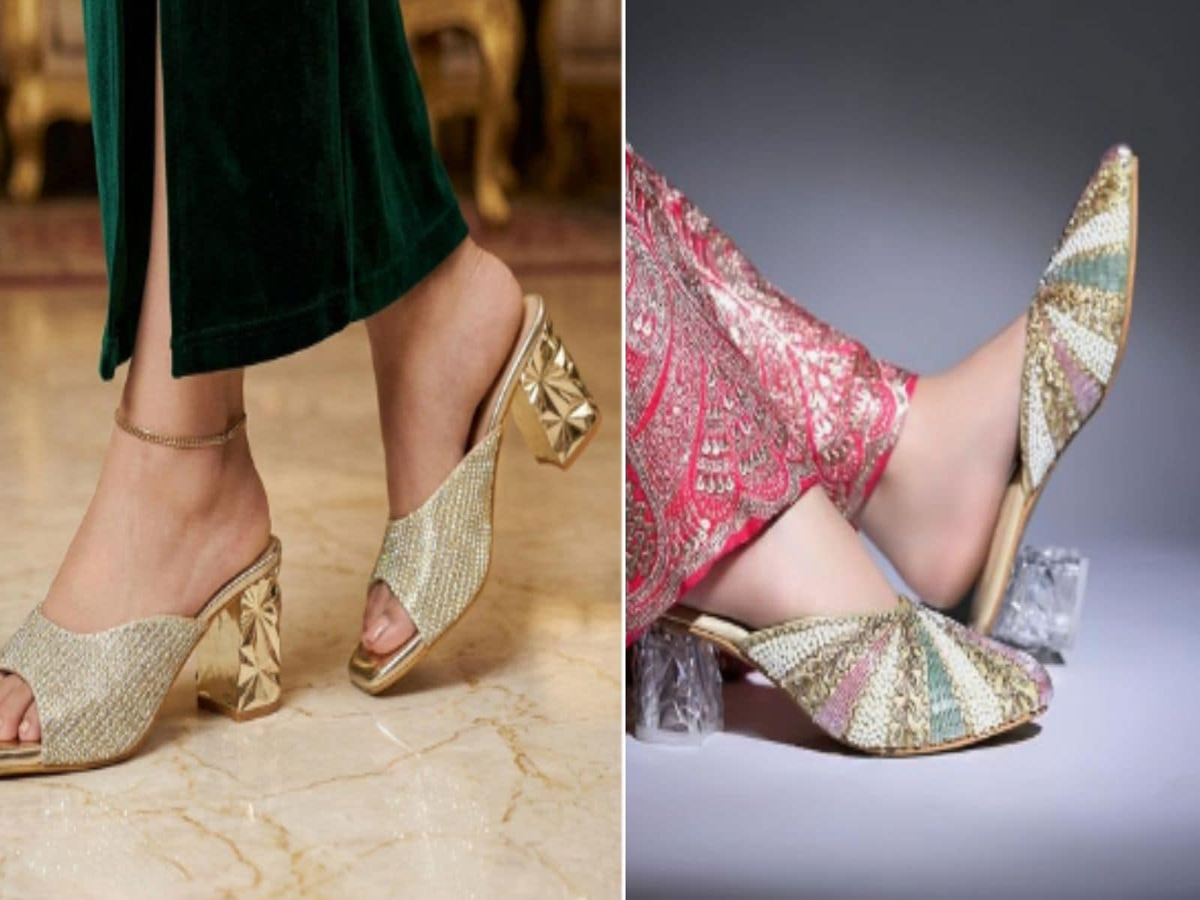
Diwali involves rituals (puja), hosting guests, and managing various household tasks. Given this, it is important that your footwear is not only stylish but also comfortable to wear. If you are looking to try something different this year with your saree, lehenga, or an Indo-Western outfit, consider these three types of footwear.
These are the best footwear options for your Diwali ethnic attire:
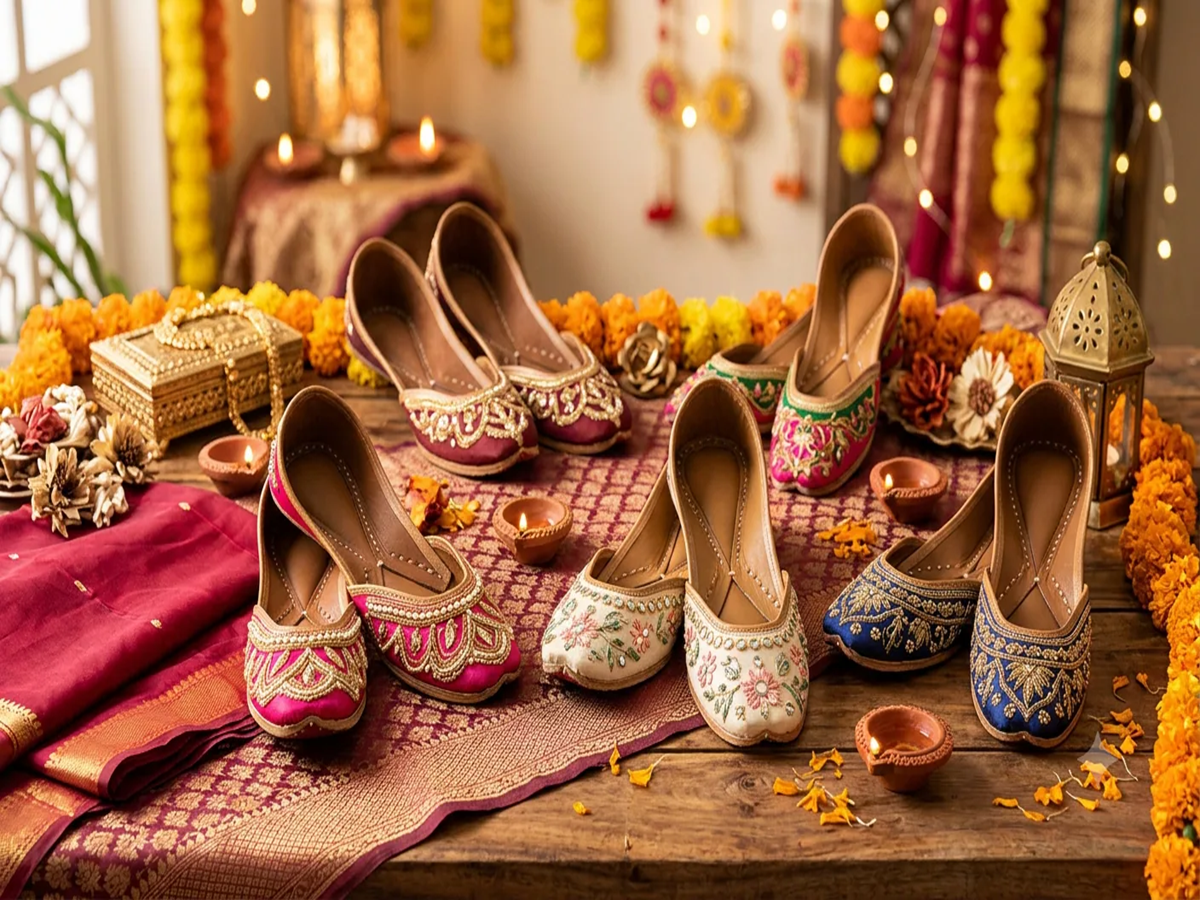
1. Embroidered Juttis and Mojaris for Sarees and Suits:
If you enjoy wearing traditional clothing, beautifully embroidered juttis or mojaris are an excellent choice. They pair effortlessly with outfits like sarees, salwar suits, Anarkalis, and shararas. A major advantage is that they don’t require heels.
Styling with a Saree: Colorful, embroidered juttis complement silk, cotton, or lightweight georgette sarees. If your saree already features elaborate work, opt for juttis with a more subtle, understated design.
Styling with a Suit: You can pair Punjabi juttis or mojaris with straight-cut suits, Anarkalis, or sharara sets. This will give your look a traditional and elegant appeal. Design Variety: Nowadays, *juttis* (traditional Indian footwear) featuring silk-thread embroidery, mirror work, beads, and colorful threadwork are highly popular. You can choose them based on the colors and designs of your outfits.
2. Wear Block Heels with *Lehengas* and Heavy Sarees—
If you plan to wear a heavy *lehenga* or a long saree this Diwali, block heels are an excellent choice. Their heels are wide, providing better stability while walking compared to slender pencil heels—especially useful if you need to stand for long periods or move around frequently during the festivities.
Styling with a *Lehenga*: If your *lehenga* is quite long, wearing heels can prevent its hem from dragging on the ground. You could opt for block heels that match the color of your *lehenga* or choose a gold-toned pair.
Styling with a Saree: Metallic block heels pair beautifully with Banarasi, silk, or georgette sarees. They enhance the overall look of the saree while also providing a bit of extra height, if desired.
Design Variety: Look for block heels featuring *zardosi* work, gold or silver finishes, or delicate embroidery. Square-toe designs are also a great option.
3. Wear Wedge Sandals with Indo-Western and Fusion Outfits—
If you are planning to wear something unique this Diwali—such as *dhoti* pants, a cape set, a co-ord set, or a fusion-style gown—consider trying wedge sandals. Since the sole extends continuously from the heel to the front, many women find them more comfortable than thin-heeled footwear. Styling with Indo-Western Outfits: Wedge sandals pair well with modern draped sarees, dhoti pants, and asymmetrical kurtis. If your outfit is simple, you can opt for sandals with some detailing or embellishments.
Variety in Designs: Wedge sandals in rose gold, shiny gold, or silver finishes can complement festive attire. Meanwhile, neutral-colored sandals are versatile and can be paired with a wider range of outfits.
Keep these points in mind when purchasing footwear:
If you are buying new footwear for Diwali, don’t just focus on the design. Ensure you choose the correct size and check that the footwear doesn’t cause any pressure or friction while walking. Avoid choosing pairs that are too tight or too loose. Try wearing your new footwear at home a day or two before the festival; this will help you gauge whether they will be comfortable to wear for an extended period. If a pair of juttis or sandals causes friction in any specific area, you can use blister pads as needed.